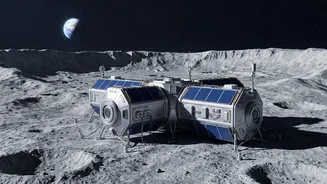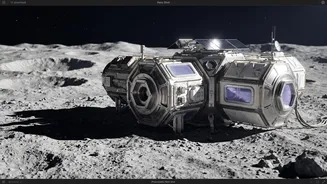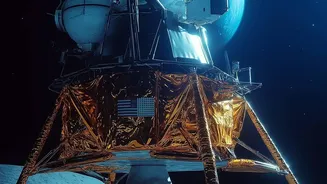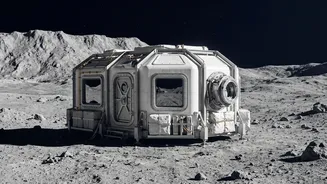






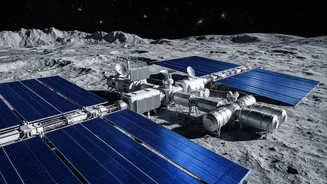
NASA is once again looking to the stars, not just with its own engineers, but by tapping into the nation's brightest minds. The agency has opened a new competition, signalling a major push toward building a sustainable human presence on the Moon.
What is the New Lunar Challenge?
NASA
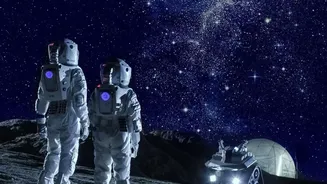
recently announced the 'Moon Base Challenge', a multiphase competition with $1 million in prize money. It invites teams of students from high schools and post-secondary institutions across the United States to design and develop innovative solutions for long-term living on the Moon. This isn't just a theoretical exercise; it's a direct call to action for the next generation of explorers and engineers to contribute to the Artemis program's goal of establishing a permanent base at the lunar South Pole. The competition is managed by the Institute of Competition Sciences and focuses on solving the very real problems astronauts will face. The announcement was made in early November 2026, marking a significant step in the agency's strategy to crowdsource ideas for its ambitious lunar plans.
Six Pillars for a Lunar Home
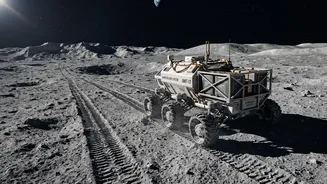
The competition is structured around six critical areas essential for a functioning lunar outpost. These categories represent the fundamental pillars required to overcome the challenges of living and working in the harsh lunar environment. The categories are: power generation and storage; habitat construction; life-support systems; surface mobility; communications networks; and astronaut safety. By breaking the immense task of building a Moon base into these specific fields, NASA is encouraging focused, practical solutions. Participants are expected to create designs that are lightweight, energy-efficient, and robust enough to handle the Moon's extreme temperatures, radiation, and abrasive dust. This framework gives innovators a clear roadmap of the technological gaps NASA needs to fill.
The Artemis Program Connection
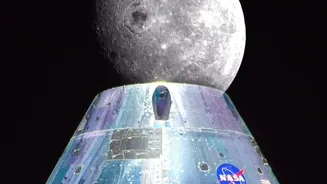
This challenge is deeply integrated with NASA's overarching Artemis program, which aims to return humans to the Moon and eventually send astronauts to Mars. A permanent lunar base is a cornerstone of this vision, serving as a proving ground for deep space technologies and a hub for scientific research. Technologies developed through this competition could directly influence the hardware used in future Artemis missions. NASA has consistently emphasized its reliance on commercial and academic partners to drive innovation and reduce costs. Initiatives like the Commercial Lunar Payload Services (CLPS), where NASA contracts private companies to deliver science and technology to the lunar surface, are already a key part of this strategy. The Moon Base Challenge extends this collaborative model to the student level, fostering a pipeline of talent and ideas.
Fostering a Cislunar Economy
Beyond the immediate goals of the Artemis program, this competition is about building a sustainable economic ecosystem in space. By engaging with private companies, startups, and now students, NASA is acting as an anchor customer, stimulating the development of a commercial market for lunar services. Success in areas like in-situ resource utilization (ISRU)—the ability to extract and use resources like water ice and oxygen from the lunar soil—could revolutionize space exploration. It would reduce the need to launch everything from Earth, making long-duration missions more affordable and feasible. Legal frameworks like the Artemis Accords are being established in parallel to govern the commercial extraction of space resources, paving the way for a future where lunar mining and manufacturing are a reality. This challenge is another step toward that future, encouraging innovators to think about not just exploration, but also enterprise.