





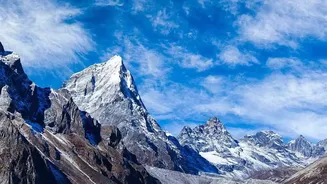
The Core of the Crisis: Melting Ice
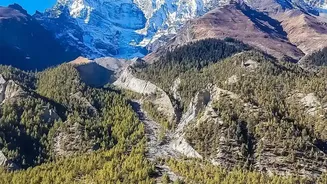
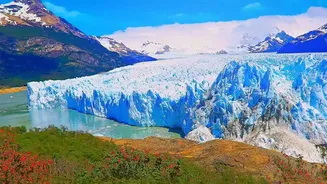
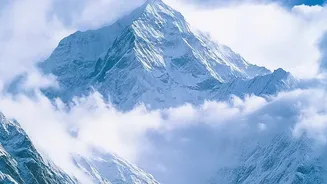
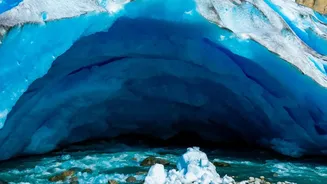
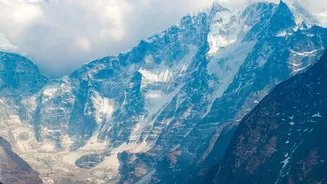
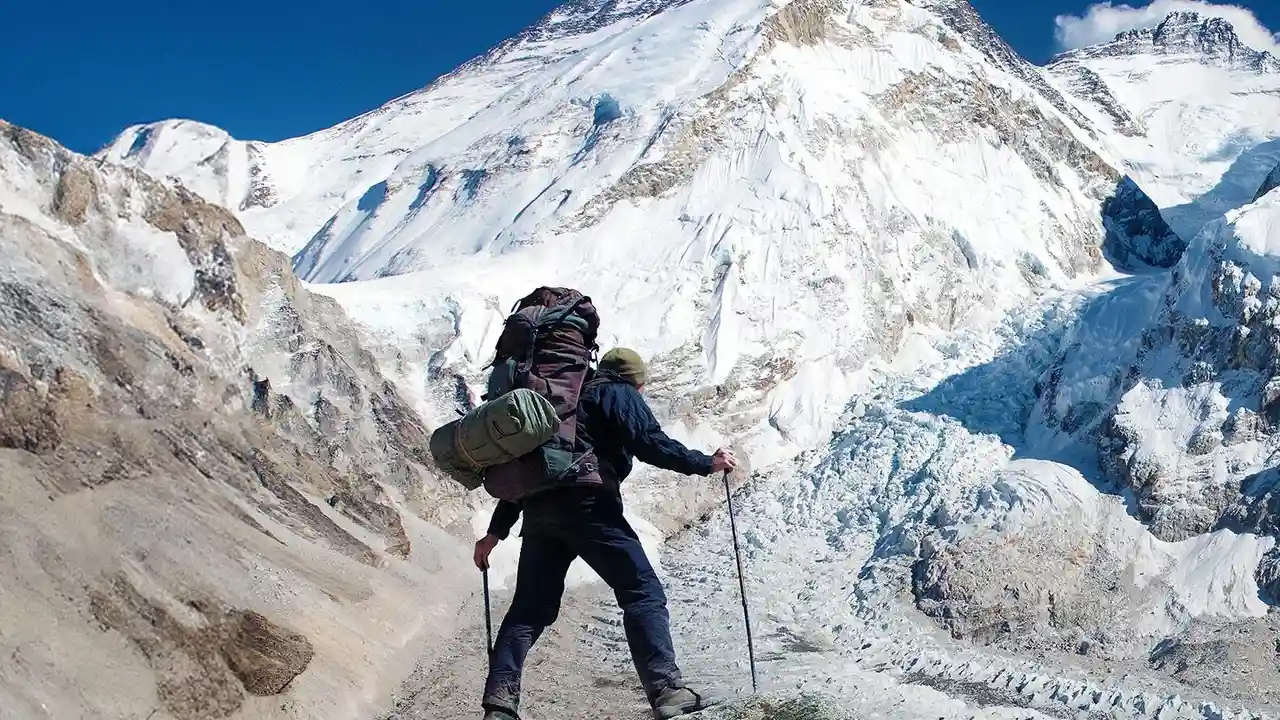
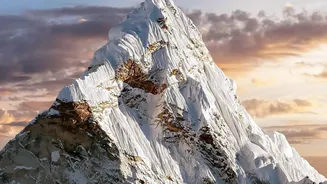
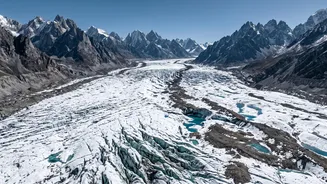
The fundamental problem is that the Himalayan region is warming faster than the global average. This accelerated warming is causing glaciers to retreat and thin at an unprecedented pace. Studies indicate that glaciers in the Hindu Kush Himalayan region lost
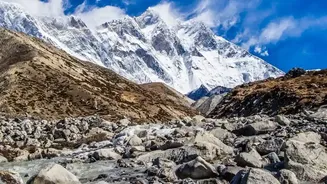
ice 65% faster between 2011 and 2020 than in the previous decade. This isn't just a slow melt; it's a profound destabilisation of the entire mountain ecosystem. As the ice that has acted like a 'cryospheric glue' holding rock and debris together for millennia weakens, the very slopes of the mountains become more fragile and prone to collapse.
GLOFs: The Ticking Time Bombs
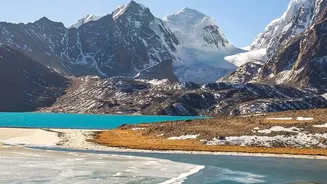
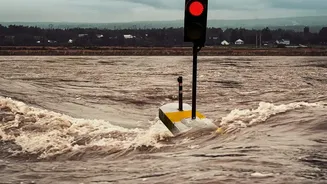
The most significant development stemming from this instability is the increased threat of Glacial Lake Outburst Floods, or GLOFs. As a glacier retreats, it leaves behind a void that often fills with meltwater, forming a new lake. These lakes are frequently dammed by nothing more than unstable mounds of loose rock and sediment called moraines. When these weak natural dams fail—triggered by an avalanche, an earthquake, or simply the pressure of the rising water—they can release millions of cubic meters of water in a matter of hours. This unleashes a catastrophic torrent of water, mud, and boulders downstream, capable of wiping out entire villages, bridges, and critical infrastructure like hydropower plants with little to no warning.
Nepal: On the Frontline of Disaster
Due to its geography, with steep valleys situated below thousands of glaciers, Nepal is particularly vulnerable. The country has experienced at least 24 GLOF events in the past, and scientists have identified dozens of other potentially dangerous glacial lakes that pose a direct threat to downstream communities. A recent disaster in August 2026 in Nepal's Langtang region served as a horrific example, where a massive glacier collapse triggered a flood that killed over a thousand people and showcased the extreme vulnerability of Himalayan communities and infrastructure. Events like these demonstrate that the danger isn't abstract; it's a recurring and intensifying reality for the people of Nepal.
More Than Just Floods: A Cascade of Hazards
The risk isn't limited to GLOFs. The same forces—melting glaciers and thawing permafrost—are increasing the frequency of landslides and rock avalanches. These events can occur independently or as part of a devastating chain reaction, where a landslide can trigger a flood, or a glacial collapse can turn into a massive debris flow that reshapes the landscape for kilometers. This 'cascading disaster' scenario means that infrastructure and communities are not just facing one type of threat, but a complex and interconnected web of hazards that are becoming more frequent and severe as the climate changes. This makes disaster planning incredibly complex, as historical data is no longer a reliable guide for the future.
Racing Against the Melt: Mitigation and Adaptation
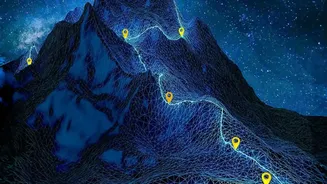
In response, Nepal's government and international partners are taking action. Efforts are underway to identify the most dangerous lakes and implement risk-reduction strategies. These can include complex engineering projects to carefully drain water from high-risk lakes, though these operations are themselves dangerous. Another critical focus is the development of early warning systems that use sensors and satellite monitoring to provide downstream communities with precious minutes to evacuate before a flood hits. Community training and disaster preparedness are also key components, empowering local populations to respond to the growing threats. However, the scale of the challenge is immense, requiring significant investment and cross-border cooperation, particularly with neighbouring countries like India and China, as many river systems cross international boundaries.