




An Eruption with Major Consequences
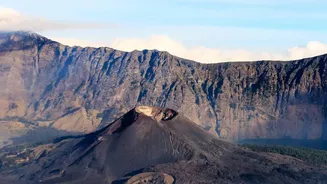
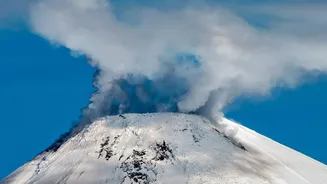
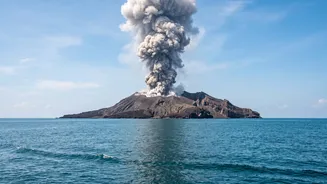
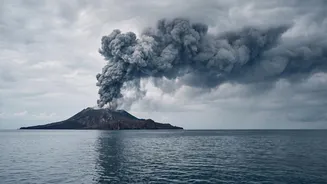
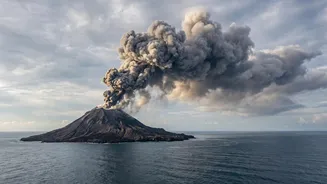
Since erupting late last week, Mount Anak Krakatau, located in the Sunda Strait between the islands of Java and Sumatra, has caused widespread disruption. A 25-hour continuous eruption phase ended early on Sunday, September 6, but the volcano remains
highly active, with Indonesian authorities maintaining a Level III alert status, the second-highest level. This has led to the temporary closure of at least seven airports, including Jakarta's main international hub, Soekarno-Hatta. As of Monday, nearly 3,000 domestic and international flights had been cancelled, delayed, or diverted, affecting an estimated 341,000 travellers. The ash plume reached altitudes of up to 50,000 feet, right in the path of commercial airliners.
Why Ash and Airplanes Are a Dangerous Mix
Volcanic ash isn't like the soft soot from a fire; it's a cloud of tiny, jagged particles of rock and glass. For an aircraft, flying through it is catastrophic. The abrasive particles can sandblast cockpit windows, damaging visibility. More critically, when this ash is ingested by jet engines, it can melt in the high-temperature combustion chamber and then fuse onto the cooler turbine blades. This can cause the engines to lose power or fail completely. One of the most famous incidents of this kind happened near Jakarta in 1982, when a British Airways 747 lost all four engines after flying through an ash cloud from the Mount Galunggung eruption. This history is why aviation authorities take a zero-tolerance approach to volcanic ash, leading to immediate flight cancellations for safety.
The Official Response and Monitoring
Aviation authorities don't guess when it comes to safety. The decision to close airspace is guided by advisories from specialised bodies like the Volcanic Ash Advisory Centre (VAAC) in Darwin, Australia, which monitors the region. These centres use satellite data and weather models to predict the movement and concentration of the ash cloud. Based on these reports, Indonesia's transport ministry and airport operators issue NOTAMs (Notices to Airmen) to ground flights. While the main continuous eruption has subsided, officials remain cautious, extending airport closures as winds can continue to shift the ash cloud. Flights from Jakarta began resuming on Tuesday, September 8, after conditions were deemed safe.
Impact on Travellers and Regional Connectivity
The fallout for passengers has been immense, with an estimated 341,000 people stranded. Airports like Soekarno-Hatta saw huge crowds as travellers sought information, refunds, or alternative routes. The disruption has had a cascading effect, hitting key regional routes. Dozens of flights between Jakarta and Singapore were cancelled. While Bali's airport remained open for most international travel, 41 domestic flights to Jakarta were cancelled on Sunday alone. To manage the chaos, Indonesian authorities designated five alternative airports to operate 24/7 to help clear the backlog of stranded passengers.
What Happens Next and What to Do
Although the most intense eruption phase appears to be over, the volcano remains at a high alert level, and authorities warn that further eruptions are possible. Travellers with upcoming flights to or through western Indonesia should remain vigilant. The most crucial step is to check directly with your airline for the latest status of your flight before heading to the airport. Conditions can change rapidly depending on volcanic activity and wind direction. Passengers affected by cancellations are typically entitled to refunds or rebooking. This event is a powerful reminder that even in our hyper-connected world, the forces of nature still have the final say.