






The Basics of Taking a Cutting
Propagating from cuttings is a simple way to clone a plant you already love. The goal is to take a healthy piece of the parent plant and encourage it to grow its own roots. For most leafy houseplants, this means taking a stem cutting. Using a clean, sharp
pair of scissors or pruners, snip off a 4- to 6-inch section of a healthy stem. The most crucial part of the cutting is the node—a small bump on the stem where leaves and roots grow. Your cut should be made just below a node. Once you have your cutting, remove the lowest leaves to prevent them from rotting and to expose the node, which is where the new roots will sprout.
Water vs. Soil Propagation
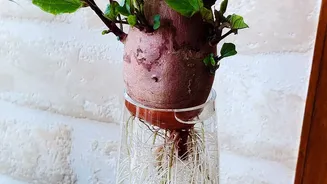
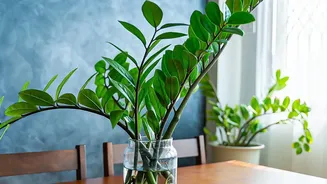
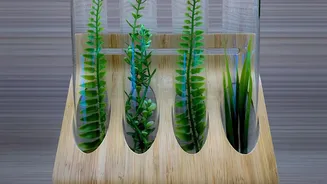
You have two main options for rooting your new cutting: water or soil. Water propagation is often the easiest method for beginners because you can visually track root development. Simply place your cutting in a glass jar of water, ensuring the node is submerged, and place it in a spot with bright, indirect light. Change the water weekly to keep it fresh. The downside is that water-grown roots can experience some shock when transplanted to soil. Propagating directly in soil leads to a stronger root system from the start. For this method, you can dip the end of the cutting in a rooting hormone to speed up the process, though it's not always necessary for easy-to-root plants. Plant the cutting in a small pot with moist, well-draining potting mix. Keep the soil consistently moist but not soggy until roots are established and you see new growth.
Pothos (Epipremnum aureum)
Often hailed as the perfect plant for beginners, Pothos is incredibly forgiving and one of the easiest to propagate. Its trailing vines are eager to grow, and cuttings root exceptionally fast in water. Just snip a section of vine that includes a few leaves and at least one node. Place it in a jar of water, and you'll likely see white roots begin to sprout within a week or two. Once the roots are a couple of inches long, you can transfer the new plant to a pot with soil.
Snake Plant (Dracaena trifasciata)
Snake plants are known for their resilience and can be propagated in a few ways, including from leaf cuttings. You can cut a healthy leaf into several sections and place them upright in soil. Roots and new pups will eventually emerge from the base of the cuttings. Alternatively, you can place a leaf cutting in water. It's a slower process, but seeing the roots and tiny plantlets form at the base of the leaf is fascinating. Another easy method is division, where you separate the small offshoots, or "pups," that grow from the base of the parent plant.
Spider Plant (Chlorophytum comosum)
Spider plants do the work for you by producing small plantlets, often called "spiderettes" or "pups," which hang down from the mother plant. These are essentially baby plants ready to be rooted. You can simply snip off a plantlet and place it in a jar of water or plant it directly into soil. They root with very little effort, making spider plants one of the most rewarding species to propagate, quickly filling your home with more of their arching, striped leaves.
Tradescantia (Inch Plant)
Known for its vibrant, often purple or striped, foliage, Tradescantia (or Inch Plant) is another vigorous grower that roots with remarkable ease. Similar to Pothos, you can take stem cuttings, remove the lower leaves, and place them in water. They root very quickly, and the cuttings often continue to produce new leaves even while sitting in the glass. Due to their fast growth, propagating Tradescantia is also a great way to make a leggy parent plant fuller and bushier.
Coleus and Geraniums
These colourful plants, often grown outdoors but also kept as houseplants, are fantastic candidates for propagation. Coleus might be one of the easiest of all; a stem cutting will root quickly in either water or moist soil, showing new growth in record time. Geraniums (Pelargonium) also root well from 4-inch stem cuttings planted in soil. Taking cuttings in late summer is a popular way to preserve your favourite geraniums over the winter and have new plants ready for spring.