







A Project of Unprecedented Scale
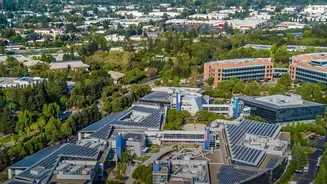
OpenAI has announced plans for a massive data center campus in Effingham County, Georgia, dubbed Project Camellia. This isn't just another server farm; it's a statement of intent about the future of AI. The company has contracted with local utility Georgia Power
for 3.2 gigawatts (GW) of electricity, set to be delivered in phases between 2028 and 2032. The initial investment is reported to be at least $20 billion, with the total cost potentially exceeding $30 billion once fully built out. This project marks a significant strategic shift for OpenAI, moving from primarily leasing computing power from cloud providers to designing and developing its own large-scale infrastructure. The goal is to create the immense capacity needed to train and operate the next generation of advanced AI models.
The Insatiable Energy Appetite of AI
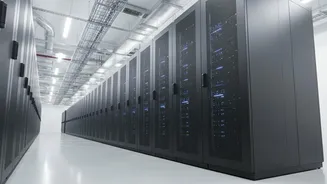
Why does a software company need an amount of power comparable to a major city? The answer lies in the mechanics of modern artificial intelligence. Training and running large language models (LLMs) and other advanced AI systems are incredibly energy-intensive processes. These models rely on vast clusters of specialized chips, or GPUs, which consume huge amounts of electricity as they perform trillions of calculations. According to some estimates, a single ChatGPT query uses roughly ten times more electricity than a standard Google search. OpenAI's CEO, Sam Altman, has repeatedly spoken about the immense infrastructure required to meet the world's growing demand for AI, highlighting the need to build out power generation and data center capacity at an unprecedented rate. Project Camellia is the physical manifestation of this need, securing the energy required to stay at the forefront of the AI race.
Putting 3.2 Gigawatts in Perspective
The 3.2 GW (or 3,200 megawatts) figure is hard to conceptualize, but it's a truly colossal amount of energy. For context, it is more than the entire power output of the two new nuclear reactors at Georgia's Plant Vogtle, which combined produce around 2 GW. This single OpenAI campus will consume a significant portion of Georgia's new power generation capacity. The agreement with Georgia Power is one of the largest single-facility power deals in the United States, underscoring the project's unique scale. This move is part of a larger trend, with some projections suggesting that by 2030, data centers could consume over 10% of all electricity in the U.S., a threefold increase from today, largely driven by AI. OpenAI's plan is so large that it has been quickly followed by reports of even larger potential projects, including a 10-gigawatt site being discussed in Ohio.
A New Deal for Tech and Communities
Aware of the potential for local backlash against such a massive project, OpenAI has built its announcement around community-focused commitments. The company has pledged that its project will not cause electricity rates to rise for local residents, as it will pay the full cost of the required infrastructure upgrades. A key part of the 25-year agreement with Georgia Power includes a demand-response mechanism. This allows the utility to reduce power to the data center by up to 1,000 megawatts during periods of peak grid demand, helping to ensure stability for residential customers. Additionally, OpenAI has pledged $80 million in community benefits for local priorities like schools and healthcare, and will provide up to $71 million in credits for its Codex coding tool to students in Georgia.