


The Silent Skies: A Global Crisis
A comprehensive new study has delivered a stark warning: the world's migratory birds are in trouble. The report, a collaboration among leading global researchers, found that approximately 51% of migratory bird species are experiencing population declines.
This isn't a problem confined to one or two regions; the trend holds true across every major avian superhighway, known as a flyway, on Earth. Nearly 300 migratory species are already globally threatened. Even species that were once common are seeing significant drops in their numbers, highlighting a widespread biodiversity crisis. The findings paint a worrying picture of skies slowly falling silent as these marathon travellers face mounting pressures at every stage of their journey.
Why Are They Vanishing?
The decline is not due to a single cause but a relentless combination of human-driven threats. The most significant factor identified is habitat loss and degradation. Wetlands are drained for construction, forests are cleared for agriculture, and coastlines are developed, leaving birds with fewer places to rest, refuel, and breed. Beyond habitat loss, climate change is altering migration timings and conditions, while pollution, including pesticides, contaminates their food and water sources. Collisions with human infrastructure like buildings and power lines also claim a shocking toll. These threats create a dangerous obstacle course that spans entire continents, making survival an ever-greater challenge.
India's Connection to the Crisis
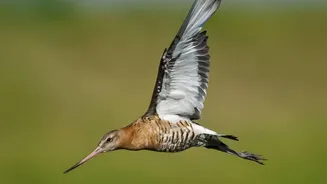
India is a crucial stopover and wintering ground for countless birds using the Central Asian Flyway (CAF), a migratory route that spans 30 countries from the Arctic to the Indian Ocean. The new report has specific and concerning findings for the country: long-distance migrants that travel from the Arctic to India are declining more rapidly than resident birds. This affects iconic species that birdwatchers and nature lovers eagerly await, such as shorebirds, ducks, and cranes. The degradation of wetlands in the Delhi-NCR region, for example, has been linked to falling waterbird counts. Because these birds connect ecosystems across vast distances, their decline is a direct signal that the health of India's natural habitats is under threat.
More Than Just Birdwatching
The disappearance of migratory birds is more than an emotional loss for nature enthusiasts; it has tangible consequences. These birds are vital components of a healthy ecosystem. They act as natural pest controllers for agriculture by feeding on insects, help in pollinating plants, and disperse seeds to regenerate forests. Their decline disrupts these essential services, potentially impacting farming yields and natural landscapes. Furthermore, eco-tourism centred around birdwatching is a significant source of income for many communities near sanctuaries and wetlands. Fewer birds mean fewer tourists, affecting local economies that have come to depend on these seasonal visitors. The birds are, in effect, a barometer for the health of our environment; if conditions are not healthy for them, they are unlikely to be healthy for us.
A Path Forward Through Cooperation
The report stresses that these declines are not inevitable. Because migratory birds know no borders, conservation efforts must also be international. A major step forward is the recently established Central Asian Flyway Initiative, a framework supported by the Government of India to coordinate conservation among the 30 countries along the route. The goal is to protect and restore critical habitats like wetlands and grasslands, which act as vital stepping stones for the birds. This requires protecting key sites, mitigating threats like power lines, and reducing pollution. Locally, citizen science initiatives where birdwatchers contribute data are becoming increasingly important for monitoring populations and informing conservation strategies. Protecting these global travellers requires a united front, from international agreements down to local community actions.