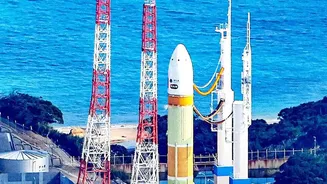










A New Hub for Rocket Innovation
On September 8, 2026, Agnikul Cosmos inaugurated two cutting-edge facilities at its Chennai headquarters, a move that vastly expands its in-house capabilities. The first, the Stage Testing & Inspection Facility (STIF), is designed to test complete rocket
stages in conditions that mimic an actual flight. The second, the Pressurant Tank Realisation, Over-wrapping and Outfitting Facility (PROOF), enables the company to manufacture its own high-pressure vessels, which are critical rocket components. The inauguration, attended by Gaganyaan astronaut Group Captain Shubhanshu Shukla, underscores the national importance of this development. With these additions, Agnikul has positioned itself as one of the few private companies in India with the end-to-end infrastructure needed to not only build and test rockets, but also to inspect and requalify them after they return from a mission.
Why Reusability Is a Game-Changer
For decades, rockets were single-use machines. The most expensive and complex parts would be discarded after just a few minutes of flight, falling into the ocean. This is akin to flying a passenger plane from Mumbai to Delhi and then throwing the entire aircraft away. The concept of a reusable rocket, pioneered globally by companies like SpaceX, fundamentally changes this economic equation. By designing a rocket's first stage—the largest and most powerful part—to land safely back on Earth, it can be refurbished and flown again. This dramatically cuts the cost of accessing space, making it more feasible to launch satellites, conduct research, and eventually, enable more ambitious missions. Achieving reusability is the key to unlocking a high-frequency, commercially viable launch industry, transforming space from a government-led frontier into a bustling economic sector.
The Challenge: From Flight to Re-Flight
Making a rocket reusable involves more than just a soft landing. The process of "requalification" is where the real technical challenge lies, and it's what Agnikul's new STIF facility is built for. After a rocket stage is recovered, it must undergo rigorous inspection to check for structural fatigue, engine wear, and damage from the intense heat and pressure of re-entry and landing. Engineers need to certify that every component is fit for another flight. The STIF allows Agnikul to perform full-duration test burns of these recovered stages, simulating an entire mission profile on the ground. It supports a repeatable cycle: build, test, fly, recover, inspect, requalify, and fly again. This capability is crucial for ensuring safety and reliability, as reusing components without proper validation could lead to catastrophic failures. Agnikul's investment in this area shows a deep understanding of the long-term engineering required for a truly sustainable launch system.
Agnikul's Journey to This Point
This latest development is a logical next step for a company that has already notched several significant achievements. Incubated at IIT Madras, Agnikul made headlines in May 2024 with the successful launch of its 'Agnibaan SOrTeD' (SubOrbital Technological Demonstrator). This mission was a landmark event for several reasons: it was the first launch from a private launchpad in India, the first flight of a semi-cryogenic engine in the country, and featured the world's first single-piece 3D-printed rocket engine, the Agnilet. That successful test flight proved the viability of its core propulsion and control systems, gathering crucial data that is now informing the development of its full-scale orbital vehicle. This new facility will help the company prepare for its next major objective, Mission-02, which aims to further demonstrate its capabilities on the path to orbital launches.
Heating Up India's Private Space Race
Agnikul is not operating in a vacuum. The opening of India's space sector to private participation in 2020 has ignited a dynamic startup ecosystem. Companies like Skyroot Aerospace are also making strides, creating a healthy sense of competition that accelerates innovation. By building in-house requalification infrastructure, Agnikul gains a significant competitive advantage, reducing reliance on external partners and tightening control over its production timelines and quality. This vertical integration is vital for competing in the global small satellite launch market, which is projected to grow substantially. As India aims to increase its share of the global space economy from its current valuation of around $9 billion, the success of private players like Agnikul will be essential. Their progress is a direct result of policy reforms designed to let private industry scale up mature technologies, allowing ISRO to focus on more advanced, exploratory missions.