






The Mission in Question
The project at the heart of this decade-long plan is the Mars Sample Return (MSR) mission. It is not a single spacecraft but a complex, multi-stage campaign orchestrated primarily by NASA and the European Space Agency (ESA). Its objective is as simple
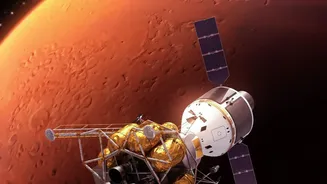
to state as it is difficult to achieve: collect scientifically selected rock and soil samples from Mars and bring them to Earth for detailed analysis. The mission involves several moving parts, including a rover already on the Martian surface, a future lander, a small rocket, and an orbiter, all working in a carefully choreographed sequence across millions of miles.
What Samples Are Being Collected?
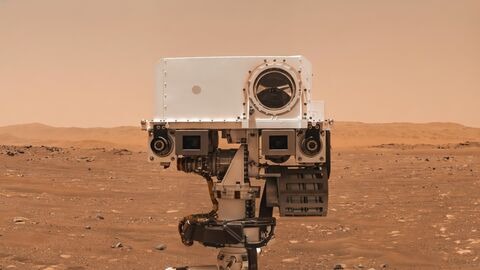
The first phase of the mission is already underway. NASA's Perseverance rover, which landed on Mars in 2021, has been diligently exploring the Jezero Crater. Scientists believe this crater was once home to a river delta and a lake, making it a prime location to search for potential signs of ancient microbial life, known as biosignatures. As it roams, Perseverance is using a drill to extract finger-sized cores of the most promising rocks. It then seals these precious samples in airtight titanium tubes. The rover is strategically dropping some of these tubes on the surface to create a depot, a collection of samples that can be retrieved by a future mission, while keeping others on board.
Humanity's First Interplanetary Delivery Service
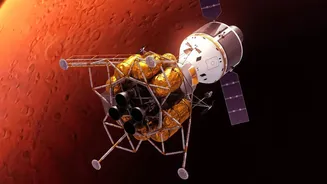
Getting these samples home is where the true complexity begins. The plan calls for a Sample Retrieval Lander to touch down near the Perseverance rover's location. This lander will carry two small helicopters, similar to the successful Ingenuity helicopter, tasked with flying out, picking up the sample tubes from the depot, and returning them to the lander. As a backup, Perseverance could also drive the samples it has retained directly to the lander. Once secured, a robotic arm will load the tubes into a small but powerful rocket called the Mars Ascent Vehicle (MAV). The MAV will then perform the first-ever rocket launch from the surface of another planet, carrying the sample container into orbit around Mars.
The Final Leg of the Journey
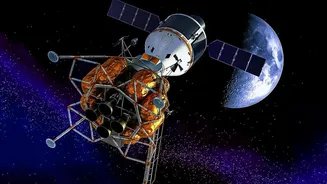
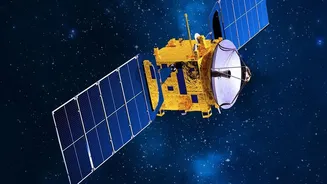
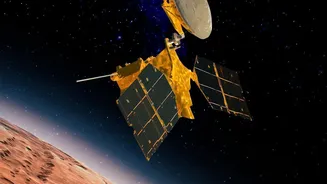
The challenge does not end there. Waiting in Mars orbit will be the Earth Return Orbiter, built by the ESA. Its job is to perform a delicate cosmic catch, locating, capturing, and safely sealing the orbiting sample container. After securing its precious cargo, the orbiter will fire its engines to leave Mars's orbit and begin the long cruise back to Earth. As it approaches our home planet, the orbiter will release the sample-entry capsule on a precise trajectory. This capsule, protected by a heat shield, is designed to withstand a fiery atmospheric entry before landing in a designated zone, likely the Utah desert. The 2031 target date reflects this long, multi-launch timeline, where each step must be executed flawlessly over several years.
Why Go Through All This Trouble?
The scientific payoff for this extraordinary effort could be monumental. While rovers like Perseverance carry impressive suites of instruments, they are no match for the sophisticated, state-of-the-art laboratory equipment available on Earth. Bringing Martian samples home will allow scientists from around the world to analyze them with a level of precision that is impossible to achieve with a remote-controlled robot. The primary goal is to search for indisputable evidence of past life, but the benefits extend far beyond that. These pristine samples will offer unparalleled insights into the planet's geology, climate history, and evolution. They will also help engineers better understand the Martian environment, which is critical for planning future human missions to the Red Planet.