





The Core Challenge: Instability
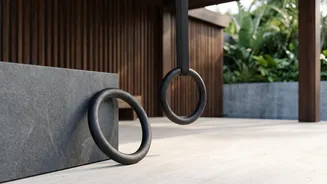
The fundamental difference between a dip on parallel bars and a dip on gymnastic rings is one word: instability. Parallel bars are fixed, providing a solid, predictable base to push from. Rings, on the other hand, are free to move in any direction. This
freedom means your body isn't just fighting gravity; it's fighting to keep the rings from straying outwards, inwards, forwards, or backwards. This turns a simple pressing movement into a complex test of total body control. Even people who can comfortably perform many bar dips are often shocked to find they can barely manage a single, shaky rep on the rings.
Waking Up Your Stabilizer Muscles
On a fixed bar, your triceps, chest, and shoulders (the primary movers) do most of the work. On rings, an entire host of smaller, stabilizing muscles are forced to join the party. To keep the rings from flying apart and maintain balance, your rotator cuffs, scapular stabilizers, and even your core must engage intensely throughout the entire movement. This demand for stabilization is what causes the signature shaking many people experience when first trying ring dips. It's your nervous system and muscles learning to coordinate in a new, highly demanding environment. Over time, this builds exceptional shoulder health and functional strength that's hard to replicate with other exercises.
A Deeper, More Honest Repetition
The freedom of movement on rings offers another distinct advantage: a more natural and potentially deeper range of motion. Unlike wide-set parallel bars that can sometimes strain the shoulder joint, rings allow your hands to rotate and move to a path that is optimal for your individual body structure. You can turn the rings as you descend and press, keeping your elbows tucked in a way that feels more natural and often safer for the shoulder joint. This unrestricted path also makes it much harder to cheat. You are forced to control every inch of the movement, leading to greater time under tension and a more significant stimulus for muscle growth.
The Ultimate Triceps Gauntlet
So, what does all this mean for your triceps? It means they have to work exponentially harder. While the primary function of the triceps is to extend the elbow, on rings they must perform this duty while everything around them is unstable. The constant fight for stability from your shoulders and core creates a challenging environment where the triceps cannot rely on a solid base. They must fire with greater intensity not only to lift your body but also to assist in controlling the unstable rings. This combination of pressing and stabilizing makes ring dips a far superior exercise for developing dense, powerful triceps compared to its stable-surface counterparts.
How to Approach the Rings Safely
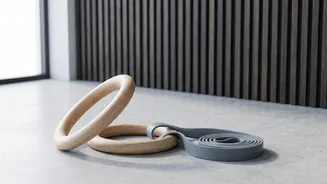
Given their difficulty, it's crucial to approach ring dips with a smart progression. Rushing into them without the prerequisite stability can lead to frustration or injury. Start by mastering the top support position, simply holding yourself up on straight arms with the rings close to your body for time. From there, you can progress to negative dips, where you lower yourself as slowly and with as much control as possible. Using resistance bands for assistance is another excellent way to build the necessary strength and coordination. By building your foundation, you can safely work toward unlocking one of the most effective upper-body exercises you can do.