





Perplexity, known for its powerful AI answer engine, is making a bold move beyond simple search. The recent launch of 'AI Teammates' signals a major push into the enterprise space, aiming to automate complex and ongoing work for entire teams.
Meet Your New AI Teammates
Perplexity
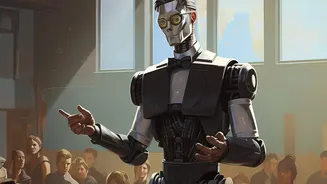
recently unveiled 'Teammates', a new class of AI agents designed to function less like a one-off tool and more like a persistent digital employee. Instead of just answering a single prompt, you can assign a Teammate an ongoing role, such as 'market researcher' or 'sales tracker'. These agents are built to take ownership of long-running projects, remember previous tasks, monitor developments, and even collaborate with other AI Teammates or human colleagues through integrations with tools like Slack. For example, a Teammate could be tasked with monitoring competitor activity, and it would autonomously investigate, track new information, and refine its analysis over time without needing constant new instructions. Announced in early November 2026, this feature is initially rolling out as a research preview for users on Perplexity's premium 'Max' subscription plan.
The Engine: Perplexity Computer
The foundation for these new Teammates is the 'Perplexity Computer' system. This isn't a physical piece of hardware, but a cloud-based platform that functions as a powerful, general-purpose digital worker. Introduced earlier, Perplexity Computer was designed to unify various AI capabilities into a single system that can tackle multi-step workflows. It can browse the web, read documents, write code, and interact with different software tools. Rather than just providing text answers, it deconstructs a high-level goal into a series of smaller tasks, assigns them to specialized sub-agents, and executes them in a coordinated way to produce a finished deliverable, like a report or a functional app. Each task runs in an isolated, secure cloud environment, giving the AI the tools it needs to complete real-world digital work safely.
The Crucial Link Between Teammates and Computer
The headline's claim is simple: the new Teammates are directly linked to and built upon the Perplexity Computer system. Think of Perplexity Computer as the underlying operating system and the Teammates as the advanced applications running on it. The Computer system provides the core infrastructure—the ability to reason, delegate tasks, and use tools—while Teammates add a new layer of persistence and autonomy for ongoing work. The Teammates leverage the Computer's ability to orchestrate multiple AI models and run complex workflows, but they extend that capability over longer timelines. This integration means a Teammate can not only perform a task but also remember the context for the next time, learn from feedback, and manage other agents to get a bigger job done.
A Strategic Play for the Enterprise Market
This move clearly positions Perplexity as a serious contender in the lucrative enterprise AI market, aiming to compete with giants like Microsoft and Google. While Perplexity started as a superior answer engine for individuals, its strategy has increasingly focused on business applications. Features like Teammates are designed to solve real business problems by automating repetitive and researchheavy workflows. The company is betting that organizations will pay for AI systems that can reliably handle entire workstreams, freeing up human employees for more strategic tasks. By offering AI that can be integrated into existing business tools like GitHub, Slack, and Salesforce, Perplexity is aiming to embed its technology deep into the daily operations of companies.
The Future of Collaborative, Agentic AI
The launch of Teammates reflects a broader industry shift from simple AI chatbots to 'agentic' AI systems—tools that don't just answer questions but actively complete work. The key innovation is persistence and autonomy. These agents are designed to work 24/7 in the background, handling tasks and notifying their human counterparts only when a decision is needed. Perplexity's approach, combining specialized agents with a powerful, integrated computer system, suggests a future where teams of humans and AIs collaborate on complex projects. This move away from the 'prompt-'and-'response' model toward assigning ongoing responsibilities could fundamentally change how knowledge work is performed across industries,' from marketing and sales to software development and finance.