




A Challenge for the Red Planet
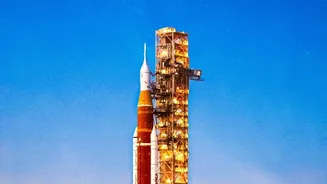
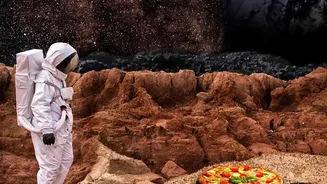
Sustaining a human crew on a mission to Mars presents countless hurdles, but one of the most fundamental is food. With a round trip potentially lasting three years, packing enough meals is impractical. This requires a radical shift from simply storing
pre-packaged food to producing it in-situ with minimal resources and waste. To accelerate innovation, NASA, in coordination with the Canadian Space Agency, launched the Deep Space Food Challenge. The competition invited teams to develop novel technologies capable of creating safe, nutritious, and appetizing food for long-duration space missions, effectively asking them to reinvent the cosmic kitchen. The solutions needed to be efficient, reliable, and capable of operating in the extreme, closed-loop environment of a spacecraft.
From Plastic Waste to Protein
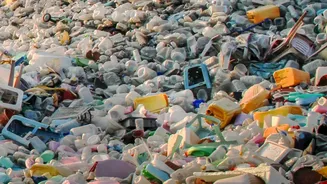
Among the many proposals was a particularly novel concept from researchers at Southern Illinois University Carbondale: what if you could turn waste, including plastics, back into food? This idea became the basis for the µBites (pronounced 'microbites') project. The team developed a process that begins by breaking down carbon-based waste materials like PET plastic bottles and inedible plant biomass. Using high temperature, pressure, water, and oxygen, these materials are deconstructed into smaller, water-soluble carbon molecules. This resulting liquid feedstock is essentially a nutrient broth, ready for the next, transformative step.
Enter the Engineered Microbes
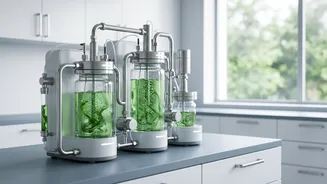
The true innovation of the Microbites project lies in microbiology. The carbon-rich liquid created from waste is fed to genetically engineered microbes, specifically various strains of yeast. To these tiny organisms, the liquid is an all-you-can-eat buffet. The team programmed different yeasts to consume these carbon molecules and convert them into essential nutrients like proteins and fats, as well as compounds that provide flavor. This is a sophisticated form of fermentation, not unlike how humans have used microbes for centuries to make bread, beer, and yogurt. In this case, the microbes act as microscopic factories, building complex, edible biomass from the basic building blocks of waste.
3D-Printing a Cookie
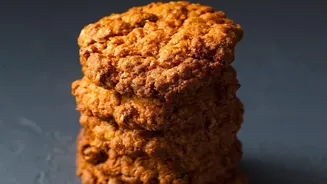
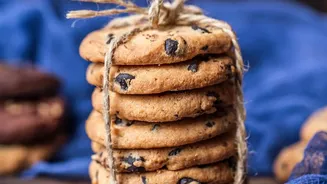
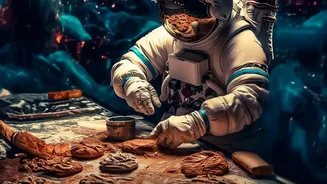
Once the yeast has produced a nutrient-rich biomass, the process isn't over. The team blends this microbial protein with other ingredients like starch and fiber to create a dough-like substance. This paste is then loaded into a 3D printer, which extrudes it into familiar shapes, such as a cookie. The final product is a protein-rich, edible item created almost entirely from recycled materials. While the µBites project did not win the top prize in the Deep Space Food Challenge, its groundbreaking approach earned it recognition and encouragement from NASA to continue development. Researchers have emphasized that while the cookie is derived from plastic, it contains no plastic particles; the original material is completely broken down and reassembled at a molecular level.
Earthly Applications and the Future
The ultimate goal of the Microbites project extends far beyond space travel. Such a system could be a game-changer for food security on Earth. Because it uses minimal water and space and relies on waste as a feedstock, it's an ideal solution for extreme or remote environments like military submarines or Antarctic research stations. It also has the potential to provide a crucial food source in disaster zones where supply chains are broken. Researchers believe the technology could help address world hunger and reduce plastic pollution simultaneously. While formal taste tests are still pending approval, initial feedback on the aroma has been positive. The team hopes the cookies could be ready for public consumption within a few years, demonstrating how the quest to conquer space often yields powerful solutions for the challenges we face right here at home.