



A Different Kind of Journey
Imagine a journey through Europe defined not by ancient cities, but by ancient wilderness. This is the premise behind an emerging network of conservation-led travel experiences that connect protected habitats from the mountains of Romania to the wetlands
of Spain. Rather than a single road, this 'route' is a web of interconnected landscapes championed by organisations like Rewilding Europe and The European Nature Trust (TENT). Their goal is to create wildlife corridors that allow nature to recover and to develop tourism that directly funds this restoration. Instead of just visiting a place, travellers become active participants in its preservation, supporting a model where thriving ecosystems and local economies go hand-in-hand.
Doñana: The Southern Jewel
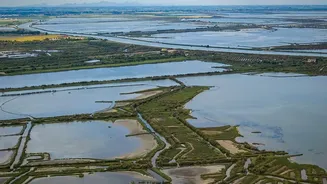
At the heart of this movement lies the Doñana National Park in Andalusia, Spain. As one of Europe's largest and most important wetlands, Doñana is a crucial sanctuary. A vast mosaic of marshes, shifting dunes, and pine forests, it serves as an essential stopover for hundreds of thousands of migratory birds travelling between Africa and Europe. More critically, it is one of the last strongholds for the endangered Iberian lynx, the world's most threatened feline species. Recent conservation efforts, backed by significant investment, have focused on restoring dried-up lagoons and fighting the effects of water extraction for agriculture, reinforcing Doñana's status as a cornerstone of European biodiversity. Its inclusion in this continental network highlights its role not just as a Spanish treasure, but as a vital piece of a much larger ecological puzzle.
Connecting a Continent's Wilderness
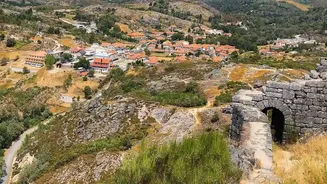
The power of this new approach lies in its scale. While Doñana is a critical anchor, the network stretches far beyond. In the Central Apennines of Italy, efforts focus on creating safe corridors for the Marsican brown bear. In Portugal's Greater Côa Valley, a 120,000-hectare wildlife corridor is being developed to connect mountain ranges and support wolf populations. To the east, in the Carpathian Mountains of Romania and Bulgaria, projects are reintroducing species like European bison and black vultures to restore the natural balance of Europe's largest unfragmented forest. These are not isolated parks but 'rewilding landscapes' designed to function as a cohesive whole, allowing wildlife populations to move, mix, and grow stronger, making them more resilient to threats like climate change.
What 'Conservation-Led' Really Means
The term 'conservation-led' is more than a buzzword; it represents a fundamental shift in the relationship between tourism and nature. On these trips, a significant portion of the cost often goes directly to local conservation partners. Travellers might find themselves guided by ecologists and researchers, gaining deep insight into the work being done to protect species like the Iberian wolf or Cantabrian brown bear. This model moves beyond simply 'seeing' wildlife. It's about supporting communities to build nature-based economies, reducing human-wildlife conflict with practical solutions like bear-proof bins or by restoring habitats to give animals the space they need. It transforms a holiday into a meaningful investment in the future of Europe's wild places, proving that tourism can be a powerful force for ecological good.