





The Final Gauntlet Before Flight
Before any astronaut steps into the Gaganyaan crew module for its journey into low-Earth orbit, the capsule must prove it can handle every conceivable stress. The Indian Space Research Organisation (ISRO) is leaving nothing to chance, subjecting the module to a punishing
regime of tests designed to validate its integrity during the mission's most perilous phases. Recently, ISRO announced the successful completion of three major qualification tests that are fundamental to ensuring the crew can return to Earth safely. These aren't just minor checks; they are full-scale simulations of moments in the mission where the crew has limited to no control, and the automated systems must perform flawlessly. The tests put the spotlight on the module's ability to survive splashdown, separate cleanly from its service module, and withstand the violent forces of parachute deployment.
Test 1: Staying Upright After Splashdown
One of the most critical post-mission moments is when the crew module splashes down in the ocean. There's no guarantee it will land perfectly upright. To counter this, ISRO has developed the Crew Module Up-righting System (CMUS). This system uses a stored cold-gas inflation mechanism to deploy floats that automatically turn the capsule to the correct orientation. This is vital for the crew's safety and for the recovery teams from the Indian Navy who need to retrieve the module. The recently completed qualification test successfully demonstrated that the inflation system works within the required time and performance parameters, ensuring the crew won't be trapped in an inverted capsule in the sea.
Test 2: A Clean Break Before Re-entry
Before the crew module begins its fiery descent through Earth's atmosphere, it must separate from the Service Module, which contains the propulsion and power systems not needed for re-entry. This separation is managed by the Crew Module-Service Module Connect Disconnect System (CSCDS), a complex umbilical link carrying electrical and fluid lines. A failure to separate cleanly could be catastrophic. The qualification test validated this umbilical separation process, ensuring not only a clean break but also confirming the structural stability of the crew module's panels during the event. This ensures the capsule maintains its aerodynamic integrity as it prepares to face the intense heat and pressure of re-entry.
Test 3: Surviving Parachute Deployment
Slowing a capsule from orbital speeds is a violent process. The final stage of deceleration relies on a complex parachute system. This system is protected during launch and orbit by an Apex Cover. To deploy the parachutes, this cover is jettisoned using pyrotechnic thrusters, an event that creates significant structural loads on the crew module. The third major qualification test simulated these forces, applying approximately 1.75 times the estimated reaction loads to a test version of the crew module. The successful outcome confirmed the module's structural integrity, proving it can withstand the shock of the Apex Cover separation without any damage that could compromise the subsequent parachute deployment. This validation is a crucial step in a broader series of parachute evaluations, which have included integrated air-drop tests to perfect the multi-stage deceleration process.
A Culture of Redundancy and Safety
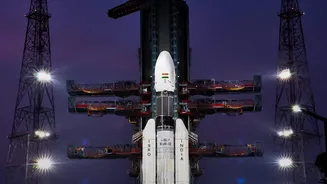
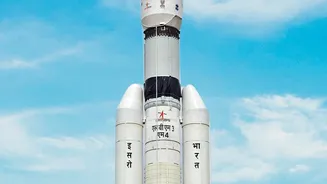
These three tests are part of a much larger safety framework for Gaganyaan. The entire program is built on a philosophy of redundancy and rigorous validation, from the human-rating of the LVM3 launch vehicle to the development of a Crew Escape System designed to pull the astronauts to safety in case of a launchpad emergency. A series of abort missions have been designed to test this escape system under various conditions, including a successful test in late 2023. With the first uncrewed Gaganyaan mission targeted for the near future, every successful test builds confidence that when Indian astronauts finally fly, they will be aboard one of the most thoroughly vetted spacecraft ever built.