



The Unseen Toll of Microgravity
For decades, space agencies have known that long-duration missions take a toll on the human body. One of the most significant and perplexing issues is Spaceflight-Associated Neuro-ocular Syndrome, or SANS. On Earth, gravity pulls bodily fluids down toward
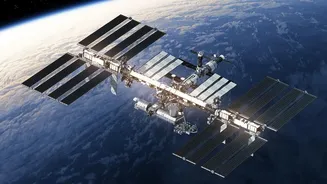
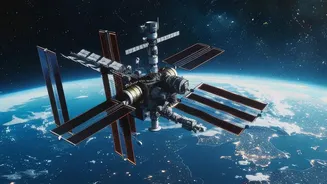
our feet. In the microgravity of space, these fluids, including blood and cerebrospinal fluid, shift upward, increasing pressure in the head. This elevated pressure can have strange effects on the eyes. It can cause the optic nerve to swell, physically flatten the back of the eyeball, and create folds in the retina. As a result, astronauts can experience blurred vision and become farsighted, issues that can persist long after they return to Earth. With up to 70% of astronauts on missions to the International Space Station (ISS) reporting some form of these symptoms, SANS is a major concern for NASA, especially as it plans for longer journeys to Mars.
The Challenge of In-Flight Monitoring
Understanding and tracking SANS is critical, but conducting medical exams in space is not easy. Traditionally, the equipment used to measure vision and the structure of the eye, like optical coherence tomography (OCT) machines or large autorefractors, is bulky, heavy, and requires specialized training to operate. While systems like the SPECTRALIS scanner have been used on the ISS to get high-resolution images, they are not ideal for quick, routine checks performed by the astronauts themselves. To effectively study how SANS progresses, researchers need a way for astronauts to frequently and easily monitor their own vision without taking up valuable time that could be spent on other critical mission tasks. The existing tools, designed for a clinical setting on Earth, present a logistical challenge for the constrained environment of a spacecraft.
A Breakthrough in Portability
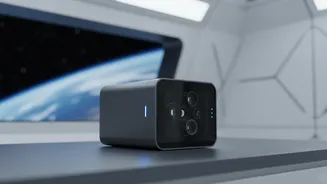
The solution may come from an unexpected place: technology designed to make eye care more accessible on Earth. Space agencies are now assessing a new generation of compact, handheld eye scanners to provide a clearer picture of SANS. One such device is the QuickSee, a portable and self-operable autorefractor developed by PlenOptika. Originally created to help provide vision tests in remote or underserved communities where eye care professionals are scarce, its design principles are perfectly suited for space. It's lightweight, durable, and designed to be used by someone with minimal training to get an accurate reading of their eye's refractive error. This allows astronauts to conduct their own eye exams quickly and regularly, a significant leap from previous methods.
From Terrestrial Clinics to the ISS
The advantage of a device like QuickSee is its simplicity and efficiency. Instead of a complex, multi-step procedure requiring assistance, an astronaut can simply hold the device up to their eye and get a measurement in seconds. This enables the collection of a steady stream of data, allowing scientists on the ground to track vision changes almost in real-time. By gathering more frequent data points, researchers can better understand the timeline of SANS, determining if the effects worsen over time or eventually stabilize during a long flight. This preventative tracking is crucial not only for astronaut health but for mission success, as clear vision is essential for performing complex tasks. Adapting this technology for space required ensuring it could operate in zero gravity and transmit its data securely to mission control, but its core function remains the same as on Earth.
A Vision for the Future of Spaceflight
Solving the SANS puzzle is a top priority for human space exploration. An astronaut suffering from severely compromised vision could jeopardize an entire multi-year mission to Mars. The adoption of this portable scanner marks a significant step forward in managing the health risks of space travel. It demonstrates a clever approach to problem-solving: leveraging an existing, proven technology and adapting it for one of the most extreme environments imaginable. The data gathered will be invaluable for developing countermeasures, whether that involves nutritional supplements or mechanical devices designed to reverse fluid shifts. In turn, the research conducted in space could provide new insights into eye conditions on Earth related to intracranial pressure, creating a cycle of innovation where technology designed for humanity's benefit at home helps us reach for the stars, and vice versa.