





The Twin Lifelines: Hormuz and Malacca
India's energy security is geographically tied to two of the world's most important maritime passages: the Strait of Hormuz and the Strait of Malacca. The Strait of Hormuz, connecting the Persian Gulf to the open ocean, is India's energy lifeline. A staggering
amount of India's crude oil and LNG imports, sourced from Middle Eastern producers, travels through this narrow waterway. Further east, the Strait of Malacca serves as a primary artery for trade connecting the Indian Ocean to the Pacific. While not as dominant for India's energy imports as Hormuz, it is a critical route for trade with Southeast and East Asia and for energy supplies sourced from beyond the Gulf. Together, these two chokepoints form a funnel through which a massive portion of the energy fuelling India's economy must pass.
A Dependency Measured in Barrels
India is one of the world's largest consumers and importers of oil, with its dependence on foreign crude recently touching record highs of nearly 89%. This heavy reliance makes the country highly susceptible to global price shocks and supply disruptions. Around half of India's crude imports, and a significant share of its LNG, must pass through the Strait of Hormuz, making it the single most critical vulnerability in the nation's energy supply chain. Any disruption in this single passage can have immediate and severe consequences. The Strait of Malacca, while more of a trade artery for India, sees over a third of its global trade transit through it. Any instability there would have profound economic impacts, even if the direct energy effect is less pronounced than a Hormuz closure.
The Current Status: Geopolitical Flashpoints
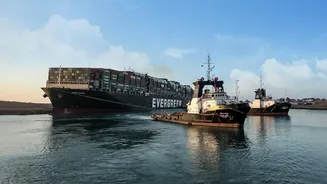
The risks are far from theoretical. The Strait of Hormuz has been a center of geopolitical tension for decades, and recent events have only amplified the danger. Since early 2026, conflicts involving Iran, the US, and Israel have led to a near-total disruption of traffic through the strait, with Iran asserting unprecedented control and effectively closing the passage to normal shipping. This has caused severe shocks to global energy markets. The Strait of Malacca faces different but equally serious threats, including piracy, terrorism, and the strategic risk of being blocked during a regional conflict. Piracy incidents and kidnappings for ransom remain a persistent problem, highlighting the security challenges in one of the world's busiest shipping lanes.
India's Mitigation Strategy
New Delhi is acutely aware of this dual vulnerability and is pursuing a multi-pronged strategy to mitigate the risk. The foremost effort is diversifying energy suppliers. India has been actively increasing crude purchases from Russia, the United States, and nations in the Atlantic basin like Brazil and Guyana. This strategy aims to reduce dependence on any single region, particularly the volatile Gulf. Another key pillar is building up the nation's Strategic Petroleum Reserves (SPR). Currently, India's government-controlled reserves provide a buffer of only about 9.5 days of import cover, a figure considered critically low compared to other major economies. In response, India is working on a Phase-II expansion to add 6.5 million metric tonnes of capacity in Odisha and Karnataka, with further sites being explored in other states to move closer to the 90-day stock requirement recommended for major importers. Finally, a long-term push towards renewable energy aims to reduce the overall structural dependence on imported fossil fuels.