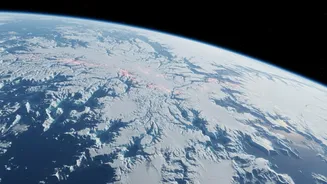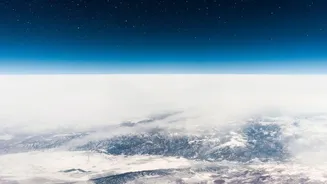






A New View From Above
The new insights come from NASA's Polar Radiant Energy in the Far-InfraRed Experiment, or PREFIRE, mission. Launched in 2024, this mission consists of two shoebox-sized satellites called CubeSats. For the first time, these satellites are systematically
measuring a part of the energy spectrum that has largely been a mystery: far-infrared radiation. While scientists have long known this type of energy accounts for about 60% of the heat the Arctic loses to space, it had never been comprehensively measured before. The PREFIRE mission, a collaboration between NASA and the University of Wisconsin-Madison, has now collected two years of data, providing a complete picture of two full seasonal cycles at both the Arctic and Antarctic.
What Is 'Seasonal Heat Release'?
Think of Earth as having a complex energy budget. The planet absorbs a massive amount of solar energy in the tropics. Ocean and atmospheric currents then act like a global circulatory system, transporting this excess heat toward the poles. The poles, in turn, radiate this heat back out into space, a process that helps keep the planet's temperature stable. This radiation is the 'heat release'. How and when this happens is governed by the seasons. For example, summer in the Arctic sees vast stretches of tundra and sea ice thaw, while Antarctica's summer temperatures rarely climb above freezing. These differences dramatically affect how much heat is retained versus how much escapes. The PREFIRE data visualizes these seasonal pulses, showing the dramatic temperature swings over a full two years.
Far-Infrared: The Missing Piece
The key to PREFIRE's groundbreaking work is its focus on the far-infrared part of the spectrum. Most of the heat radiated away by the Earth's surface, especially in cold, icy regions, is in the form of this invisible light. Factors like clouds and water vapor in the atmosphere can trap this radiation, preventing it from escaping and contributing to the greenhouse effect. Before PREFIRE, climate models had to rely on theories and assumptions about how much far-infrared radiation was being released. By directly measuring it, scientists can now fill in this critical gap in our knowledge, creating much more accurate models of our planet's climate.
Why This Matters for India and the World
What happens at the poles does not stay at the poles. The Arctic is warming at a rate roughly four times the global average, a phenomenon known as Arctic Amplification. This rapid warming has global consequences. The release of heat influences the jet stream, which can lead to more prolonged and extreme weather events in the mid-latitudes, affecting regions far from the Arctic. Furthermore, the melting of the Greenland and Antarctic ice sheets is a primary driver of global sea-level rise, which poses a direct threat to coastal communities worldwide, including India's extensive coastline. Understanding the precise mechanics of polar heat loss is crucial for predicting the pace of these changes and preparing for their impacts.