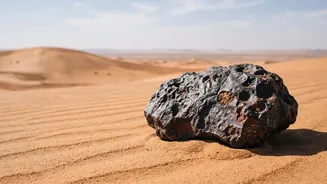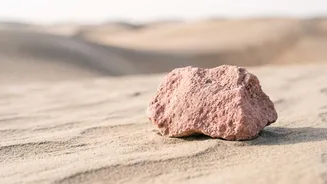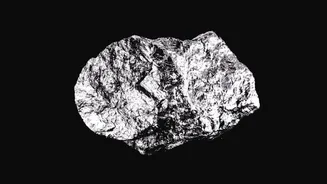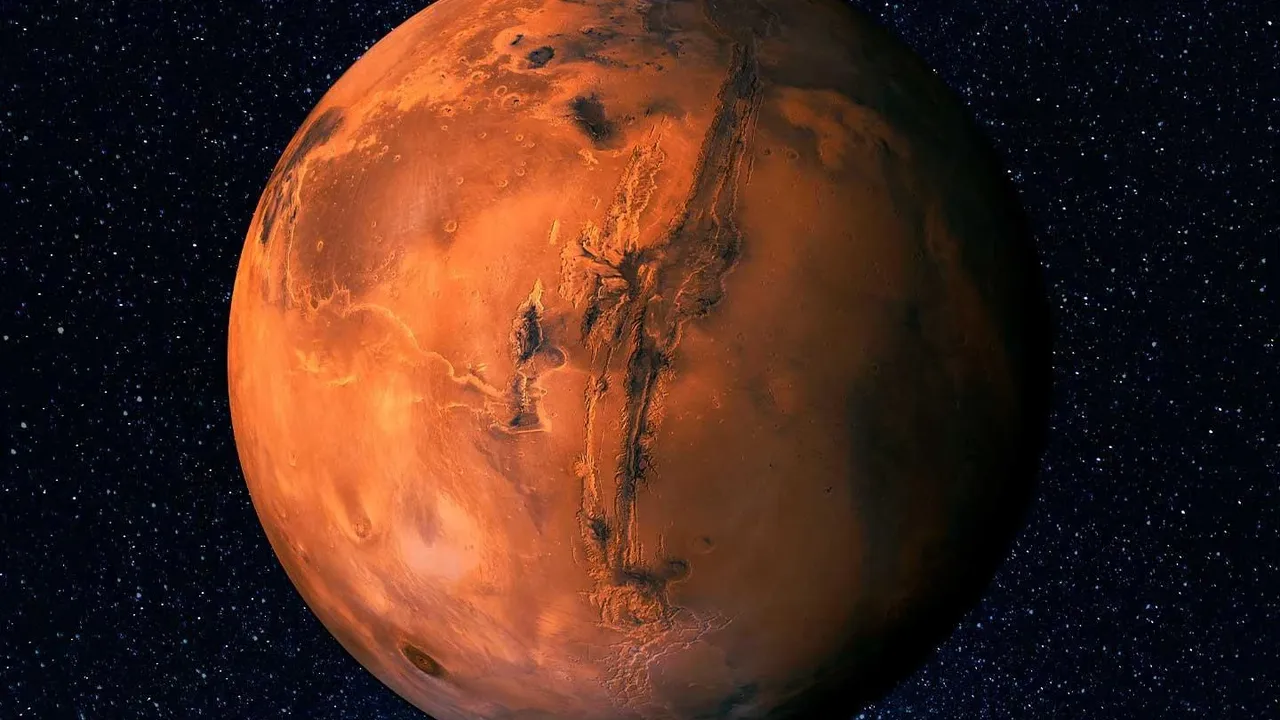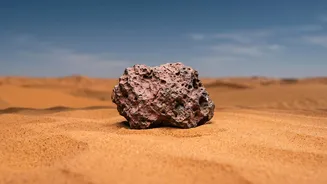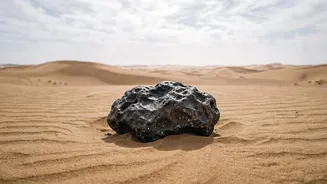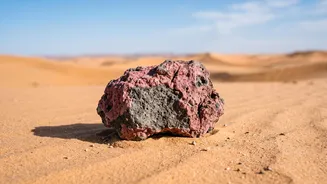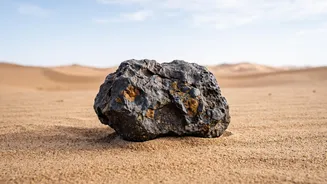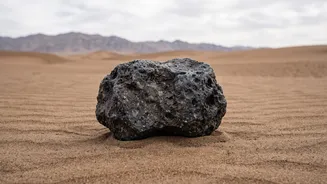




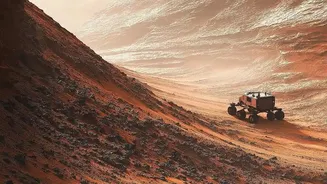
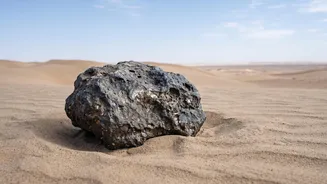
Imagine holding a rock that is almost as old as Mars itself. A rare, rose-coloured meteorite, blasted from the Red Planet and discovered in the Sahara Desert, is offering scientists an unprecedented look into the birth of a world.
A Messenger From Ancient Mars
Discovered in a salt
plain in Mali in 2022, the meteorite known as Teghaza 001 is not just any space rock. It is one of the oldest known pieces of Mars ever to land on Earth. Weighing nearly two pounds (about 800 grams), it was born from magma more than 4.1 billion years ago, during the Red Planet's infancy. Unlike many other Martian meteorites, which are much younger, Teghaza 001 is a direct sample from a part of Mars's crust that scientists have never been able to study up close before. An ancient asteroid or comet impact on Mars launched it into space millions of years ago, sending it on a long journey before it was eventually captured by Earth's gravity.
The Zircon Time Capsule
The key to unlocking the meteorite's secrets lies within tiny, resilient crystals called zircons. Planetary scientist Yang Liu of NASA's Jet Propulsion Laboratory noted that zircons are like time capsules, allowing for precise dating of a rock's formation. Using advanced dating techniques on these crystals, researchers confirmed the rock's incredible age. But the zircons told another story. Their chemical composition revealed that they had been altered by liquid water around 4.1 billion years ago. This finding is monumental, as it suggests the rock itself must be even older and provides some of the strongest evidence yet for a dynamic water cycle on a very young Mars.
A Different Kind of Red Planet
The existence of water so early in Mars’s history challenges previous assumptions. It paints a picture of a primordial Mars that was far from the cold, dry world we see today. The evidence from Teghaza 001 suggests an active water cycle, where water interacted with and altered the planet's newly formed crust. The meteorite’s unique blend of igneous minerals, formed from cooling magma, also provides a window into the planet’s mantle and early volcanic processes. Its chemistry is a match for what NASA's Mars Reconnaissance Orbiter has seen from space in the planet's heavily cratered southern highlands, one of the oldest regions on Mars. This allows scientists to finally connect a physical sample to a specific type of Martian terrain.
Rewriting the Martian Timeline
For decades, most of our knowledge of Martian geology came from younger meteorites, many less than 600 million years old. Teghaza 001, along with a few other ancient samples like 'Black Beauty' (NWA 7034), pushes the timeline back dramatically. It demonstrates that Mars formed a solid crust and had liquid water present within the first 400 million years of its existence, a period concurrent with the emergence of life on Earth. This discovery helps scientists understand why Mars became the arid planet it is today, while Earth remained a water world. Studying this divergence is crucial for understanding planetary habitability in a broader sense.
Clues for the Hunt for Life
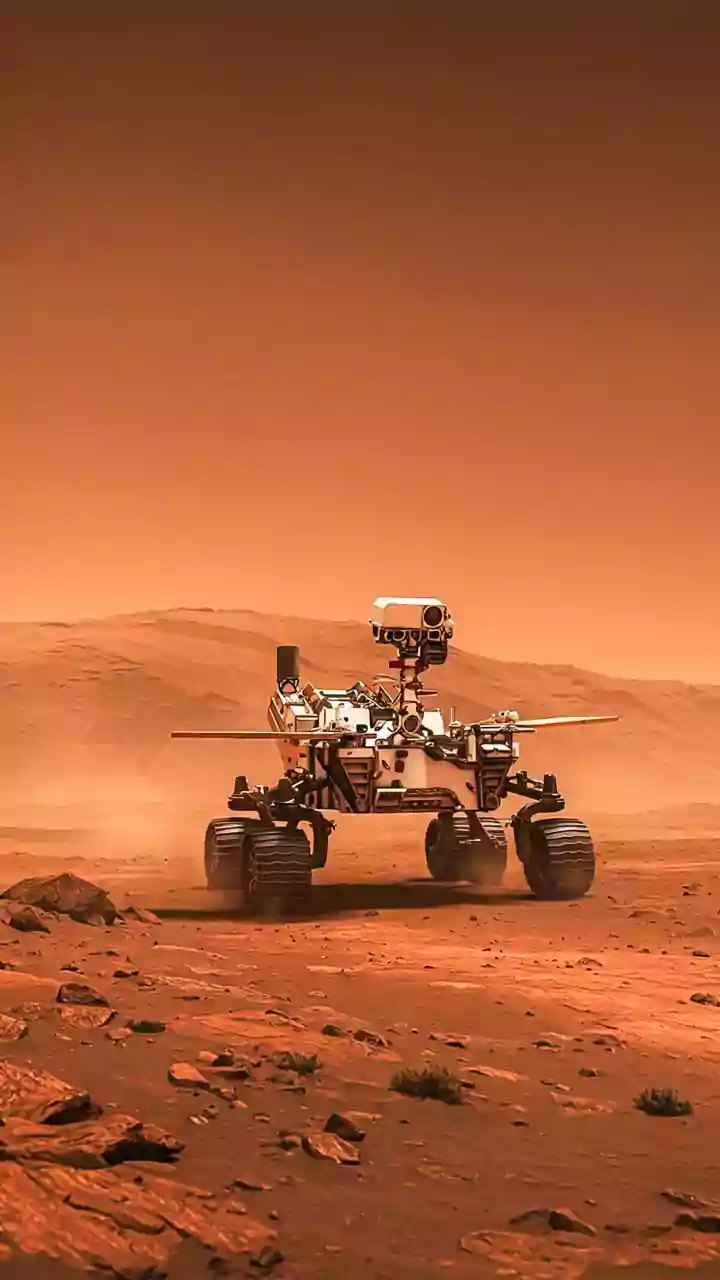
While this rock contains no evidence of life, it significantly boosts the case that ancient Mars had the necessary ingredients for it. The confirmation of liquid water interacting with rocks so early on points to an environment that could have been habitable. This information is invaluable for current and future missions. For example, it helps rovers like Perseverance know what kind of rocks to look for and where to sample. The mineralogy of Teghaza 001 suggests that there might even be an imprint of Mars's ancient atmosphere preserved within the rock, offering clues about how the planet lost its water over eons. Each new insight from this ancient visitor helps refine the search for past life on our planetary neighbour.