

A New Cosmic Masterpiece
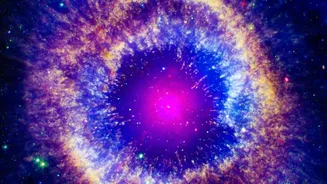
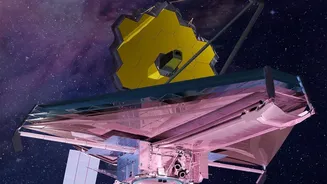
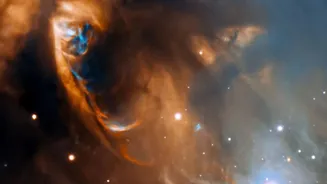
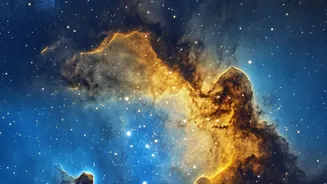
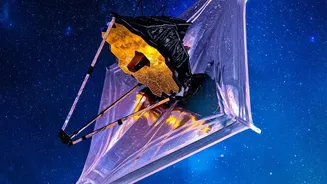
The latest image from the James Webb Space Telescope (JWST) showcases the Lion Nebula, formally known as NGC 2392, in unprecedented infrared detail. While the Hubble Space Telescope gave us a beautiful view in visible light years ago, Webb's powerful
infrared cameras cut through the haze to reveal the intricate structures within. The nebula's 'mane' is shown as a glorious, glowing collection of gas and dust. Webb’s image highlights dense clumps of dust and hazy regions of ionized gas that are harder to see with other telescopes. These features are not just chaotic clouds; they are comet-like tails and fluffy structures of dust that have so far survived the intense radiation from the central star, creating a complex and dynamic environment.
Meet the Lion Nebula
So, what exactly are we looking at? The Lion Nebula is a planetary nebula, which, despite its name, has nothing to do with planets. It's the stunning aftermath of a dying star similar to our own Sun. Located thousands of light-years from Earth, this celestial object is formed when a star in its final stages sheds its outer layers of gas and dust into space. These ejected materials are then illuminated by the star's hot, exposed core, creating the glowing spectacle we see. The entire structure is in constant motion, with the gas and dust expanding away from the central star. Astronomers estimate that the Lion Nebula's current form is temporary on a cosmic scale and that it will likely disperse in about 10,000 years.
The Star Powering the Show
At the very centre of the Lion Nebula lies the 'nose' of the lion—a small but incredibly powerful stellar remnant known as a white dwarf. This is the super-dense, hot core left behind after the star shed its outer layers. Though small, this white dwarf is a powerhouse, blasting out intense radiation that heats the surrounding gas, causing it to glow, or ionize. This outflow of energy is what carves out the intricate shapes we see, including the bubble of gas that forms the 'face' and the filamentary structures of the 'mane'. The radiation is so strong that it destroys some of the dust in its path, while denser clumps manage to survive, shielding the material behind them and creating the streaky, comet-like features that make the nebula so distinctive.
Why Webb's View Is Groundbreaking
The James Webb Space Telescope’s ability to observe in infrared light is what makes this new image so scientifically valuable. Infrared vision allows Webb to see the faint heat signatures from the dust itself, including from complex molecules called polycyclic aromatic hydrocarbons (PAHs), which are similar to soot. These molecules are crucial building blocks in the cosmos, and studying them helps scientists understand the chemistry of how stars and even planets form. By capturing the Lion Nebula in such detail, Webb provides a snapshot of stellar death, allowing astronomers to study the physical processes that distribute heavy elements created inside stars back into the galaxy. These materials will one day form new stars and planets, making images like this not just a portrait of an end, but also of a new beginning.