




The Green Revolution and the Rise of the Monoculture
The story begins in the mid-1960s with the Green Revolution. To achieve food self-sufficiency, India focused on high-yielding varieties (HYVs) of wheat and rice. Punjab, with its fertile land and enterprising farmers, became the epicentre of this transformation.
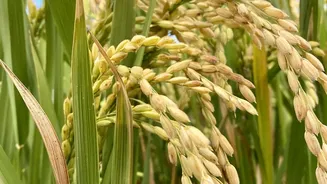
Before this period, Punjab had a diverse cropping pattern, with significant acreage under maize, pulses, oilseeds, and cotton. However, the combination of HYV seeds, chemical fertilisers, and, crucially, a Minimum Support Price (MSP) with assured government procurement created a powerful incentive for farmers to adopt a wheat-paddy cycle. Paddy, traditionally not a major crop in the state, saw its cultivated area explode from just under 5% of the total cropped area in 1960-61 to over 38% in subsequent decades.
The First Push for Diversification: Enter Cotton
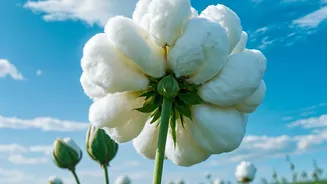
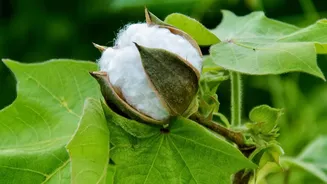
By the 1980s and 90s, the environmental alarms began to sound. The intensive wheat-paddy rotation was depleting the groundwater table at an alarming rate. In response, experts and policymakers began advocating for crop diversification. Cotton, a traditional crop in the semi-arid Malwa belt of Punjab, emerged as a prime candidate. It was less water-intensive than paddy and suited the region's climate. For a time, it thrived. In the 1990s, cotton cultivation was robust, covering up to 7.58 lakh hectares and offering farmers a profitable alternative. This period represented the first serious attempt to break the chokehold of the wheat-paddy cycle, with the state government encouraging the shift.
The Decline of the 'White Gold'
The promise of cotton, however, proved fragile. A combination of factors led to its steady decline over the last two decades. Farmers faced increasingly erratic weather patterns and severe pest infestations, most notoriously from the whitefly and pink bollworm, which devastated yields. Unlike paddy, the market for cotton was volatile, with prices often falling below the MSP, leaving farmers financially vulnerable. The availability of spurious seeds and a lack of consistent canal water during the crucial sowing period further eroded farmer confidence in the crop. Faced with unstable yields and unpredictable income, many farmers found the risks associated with cotton to be too high compared to the guaranteed returns of paddy.
The Unshakeable Reign of Paddy
The retreat from cotton led farmers right back to paddy, reinforcing its dominance. The reasons are overwhelmingly economic and structural. The government procures nearly 100% of the paddy crop at an assured MSP, providing a financial safety net that no other Kharif crop can match. Decades of the wheat-paddy cycle have created a deeply entrenched ecosystem, from mechanised tools for sowing and harvesting to a well-established network of markets (mandis). Furthermore, policies like free electricity for agricultural tube wells, in place since 1997, have effectively subsidised the high water consumption of paddy, masking its true environmental cost and disincentivizing a shift to less thirsty crops.
Present-Day Crisis and Renewed Efforts
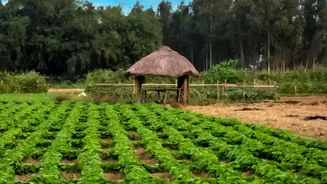
Today, the situation is critical. Punjab's groundwater is depleting by an average of half a meter every year, a crisis directly linked to paddy cultivation. Despite numerous committees and diversification schemes over the years, a significant shift has not materialized. The state government continues to push for alternatives. In 2026, a scheme promoting maize cultivation, offering a financial incentive of ₹17,500 per hectare to farmers who switch from paddy, was expanded to 16 districts. However, experts argue that these incentives are often not enough to compete with the profitability and security of paddy. The story of diversification in Punjab has become a cycle of recognizing the problem, attempting solutions, and ultimately being pulled back by a powerful system of incentives that makes paddy the only rational choice for millions of farmers.