

What Exactly Is a 'Fire Rainbow'?
Despite its dramatic name, a fire rainbow has nothing to do with fire. The proper scientific term is a circumhorizontal arc. It's an optical phenomenon that appears as a vibrant, rainbow-coloured band running parallel to the horizon, often looking like
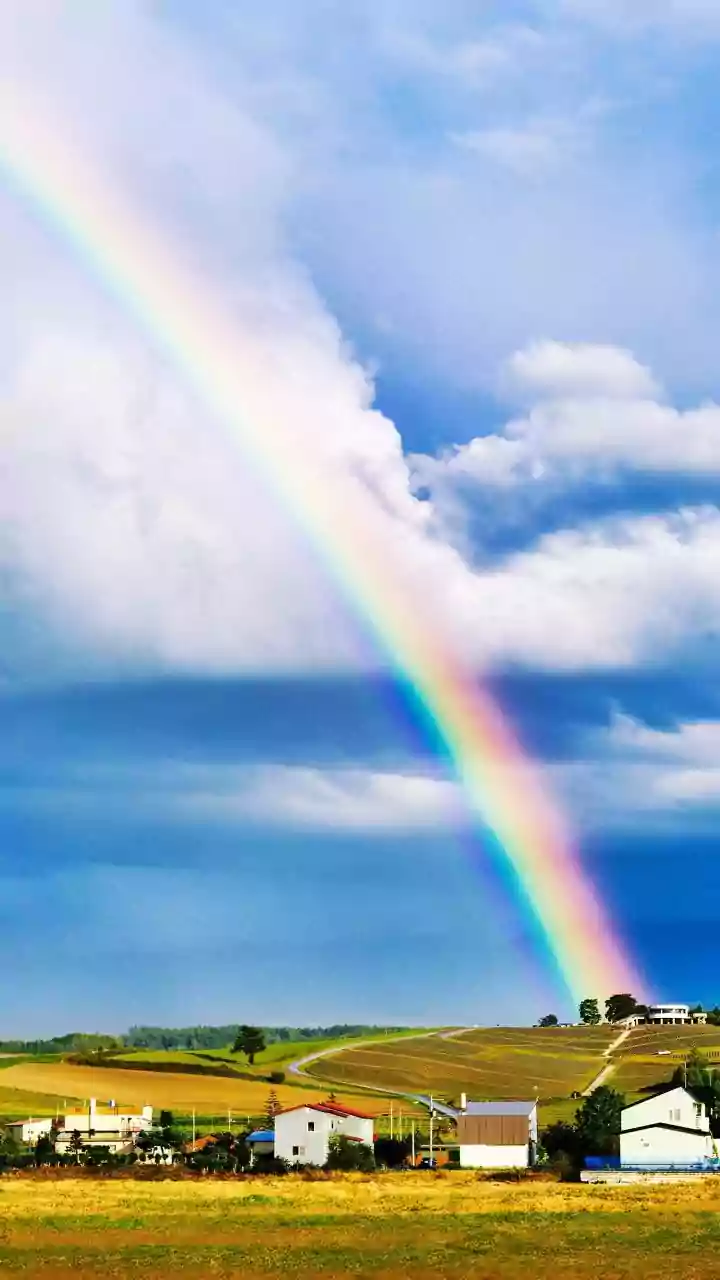
a section of a rainbow has been painted onto a wispy cloud. The name likely comes from the way the colours can shimmer within high-altitude cirrus clouds, giving them an appearance reminiscent of flames in the sky. Unlike a true rainbow, which is caused by the refraction and reflection of light in water droplets and always appears opposite the sun, a circumhorizontal arc is an ice halo, formed by light passing through ice crystals. The colours are often purer and more intense than those in a typical rainbow.
The Science of Sun and Ice
For a fire rainbow to appear, a very specific set of ingredients must come together. First, you need high-altitude cirrus or cirrostratus clouds. These clouds exist so high in the atmosphere (upwards of 16,500 feet) that they are composed not of water droplets, but of millions of tiny, plate-shaped hexagonal ice crystals. For the effect to work, these flat, six-sided crystals must be oriented horizontally, like tiny plates floating parallel to the ground. Sunlight then enters through a vertical side face of an ice crystal and exits through its lower horizontal face. This 90-degree bend acts like a prism, splitting the white sunlight into its constituent colours and projecting a spectrum across the cloud.
Why the Sun's Angle Is Crucial
This is where the headline's mention of the sun's angle becomes critical. A circumhorizontal arc can only form when the sun is very high in the sky—specifically, at an altitude of at least 58 degrees above the horizon. If the sun is any lower than this, the light will not strike the ice crystals at the necessary angle to produce the effect. The phenomenon reaches its maximum intensity and brightness when the sun is at an elevation of about 68 degrees. This strict requirement is why fire rainbows are relatively rare and why their visibility is heavily dependent on your geographical location and the time of year.
How to Spot This Rare Phenomenon
Your chances of seeing a fire rainbow are highest during the summer months in mid-latitude locations, where the sun can reach the required height in the middle of the day. In fact, for locations north of 55° latitude (which includes parts of northern Europe), the sun never gets high enough in the sky for a circumhorizontal arc to be visible. To hunt for one, your best bet is to look for thin, wispy cirrus clouds on a bright, sunny day when the sun is near its peak. The arc will appear below the sun and parallel to the horizon. Wearing polarized sunglasses can sometimes help make a faint arc more visible by reducing glare from the sky. A recent image featured by NASA's Astronomy Picture of the Day on August 2, 2026, showcased a spectacular example over West Virginia, reminding us of the beauty that waits for those who look up at just the right time.