






The Big Picture: A Market in Overdrive
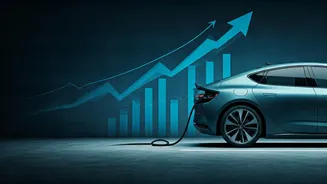
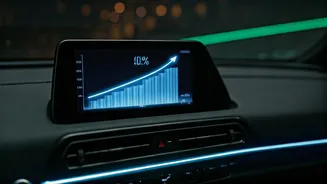
India's electric vehicle market continued its impressive run in the first quarter of the 2027 financial year (April-June 2026), demonstrating robust health and accelerated adoption. Total EV registrations across all segments hit a record 8.1 lakh units.
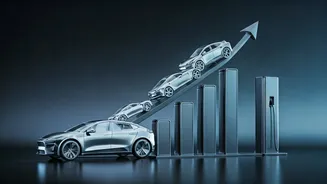
More specifically for the passenger vehicle (PV) segment, registrations nearly doubled compared to the same period last year, surging by approximately 90% to reach 82,737 units. This significant jump pushed EV penetration to about 9% of total automobile sales, indicating that electric mobility is firmly transitioning from a niche interest to a mainstream consideration for Indian buyers. This growth isn't just a flash in the pan; it's fueled by a combination of factors including more model availability, improving charging infrastructure, and attractive ownership economics, especially with fluctuating fuel prices.
The Four-Wheeler Arena: New Challengers Emerge
For years, the electric passenger vehicle story was written almost single-handedly by Tata Motors. In Q1 FY27, while Tata consolidated its leadership by more than doubling its sales to 32,283 units and increasing its market share to 39%, the real story is the rising competition. Mahindra & Mahindra has firmly solidified its number two position, nearly doubling its registrations to over 20,000 units, driven by strong demand for its electric SUV portfolio. The quarter also marked the arrival of serious new players who are already shaking up the rankings. Maruti Suzuki, a notable latecomer to the EV space, made an immediate impact with its e-Vitara, registering nearly 4,900 units. Perhaps more surprisingly, Vietnamese manufacturer VinFast recorded almost 4,000 registrations in its first full quarter, signalling strong initial traction and a consumer base willing to look beyond established names. This influx of competition is a clear sign that consumers now have a real choice, moving beyond early adoption to a more competitive, feature-driven market.
Two-Wheeler Tussle: A Major Shake-Up
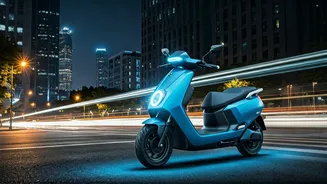
The electric two-wheeler segment, which accounts for the lion's share of EV volumes, experienced a dramatic reshuffling. For the first time, quarterly sales in this category crossed the five-lakh mark, hitting 5.1 lakh units in Q1 FY27. The data points to a significant shift in leadership. Legacy automakers are now dominating the sales charts, with TVS Motor and Bajaj Auto cementing their positions at the top. TVS retained its leadership position in June with strong sales of its iQube scooter. In stark contrast, Ola Electric, once the undisputed leader, has seen its market share erode significantly. While the company reported a sequential doubling of registrations in Q1, its standing against competitors has slipped. Analysts suggest this shift reflects a growing consumer preference for brands with established service networks and a reputation for reliability, indicating a maturing market where after-sales support is becoming as important as the initial product.
What's Driving the Change?
The changing dynamics are not happening in a vacuum. A key driver is the sheer expansion of choice. The number of electric car models available has doubled over the past two years, with many new launches concentrated in the more accessible sub-Rs. 15 lakh segment. This, coupled with advancements in battery technology that offer driving ranges of 300-450 kilometres even in mid-range models, is effectively tackling consumer range anxiety. Furthermore, innovative ownership models are lowering the barrier to entry. Strategies like Battery-as-a-Service (BaaS), which allows customers to lease the battery separately, reduce the high upfront cost of an EV. As consumers become more educated about the long-term economic benefits, their purchasing decisions are evolving from being purely price-sensitive to a more holistic evaluation of technology, reliability, and brand trust.