




A Cosmic Fingerprint Match
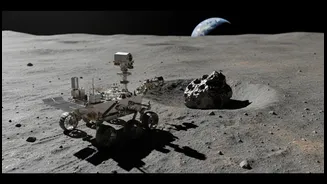
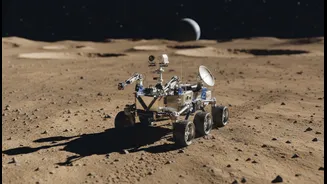
Scientists from the Physical Research Laboratory (PRL), Ahmedabad, have revealed that soil analysed by the Pragyan rover has a chemical composition that closely resembles ALHA 81005, the very first meteorite found on Earth to be confirmed as originating
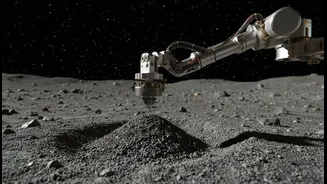
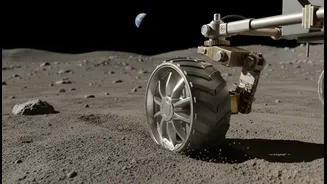
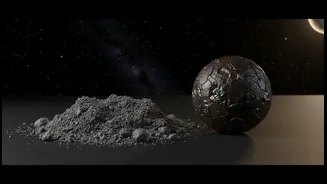
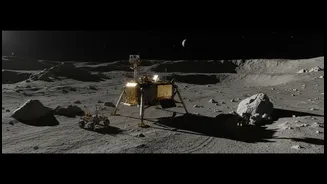
from the Moon. The discovery was made using the Alpha Particle X-ray Spectrometer (APXS) instrument on the rover, which zapped the soil at the Shiv Shakti landing site near the lunar south pole to determine its elemental makeup. The analysis showed the soil and the meteorite share a rare composition, with similar concentrations of aluminium oxide (26.1% in the soil vs. 25.8% in the meteorite) and a combination of iron and magnesium oxides. This finding connects a sample analysed on the Moon with one that has been studied in Earth-based labs for decades.
The Meteorite from Antarctica
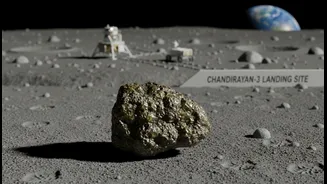
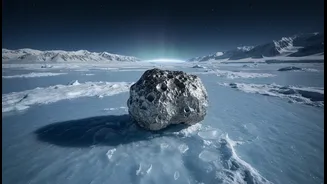
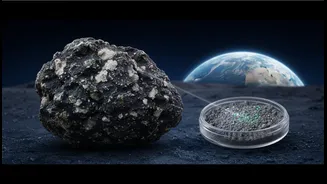
So, what is this cosmic twin? ALHA 81005 is a small, 31.4-gram rock discovered in the Allan Hills of Antarctica during an expedition in 1981-82. In 1983, scientists confirmed it was a lunar meteorite, a piece of the Moon knocked into space by an asteroid impact before eventually falling to Earth. It is classified as a lunar anorthosite breccia, a type of rock rich in a mineral called plagioclase feldspar. Anorthosites are believed to be the primary building blocks of the Moon’s ancient, original crust. Finding such a close match between the soil at the Chandrayaan-3 site and this specific meteorite helps validate decades of research into these rare space rocks.
Unravelling the Moon’s Birth
This discovery provides powerful evidence for the leading theory of the Moon's creation: the Giant-Impact Hypothesis. This theory proposes that about 4.5 billion years ago, a Mars-sized planet named Theia collided with a young Earth. The cataclysmic impact ejected a massive cloud of molten debris into orbit, which eventually coalesced to form the Moon. As this colossal magma ocean cooled, lighter materials, like anorthosite, floated to the surface, forming the Moon's primordial crust. The fact that Chandrayaan-3 found soil consistent with this ancient crust, and that it matches a known piece of that crust which fell to Earth, strongly supports this dramatic origin story. ISRO scientists noted, however, that the match doesn't mean the meteorite came from the exact landing spot, but rather that they both represent a similar type of magnesium-rich crustal material.
India's Triumph at the South Pole
This isn't just a discovery about rocks; it's a testament to the advanced capabilities of the Indian Space Research Organisation (ISRO) and the Chandrayaan-3 mission. By landing in the rugged, unexplored south polar region, India gained access to a geologically unique area. The soil at the Shiv Shakti site appears to be a mixture of materials from different crustal layers, possibly including deeper rock excavated by ancient, massive impacts like the one that formed the South Pole-Aitken basin. This research, which compared APXS data against 66 known lunar meteorites, showcases the mission's ability to produce world-class science that helps answer fundamental questions about our solar system. It firmly places India at the forefront of lunar exploration and planetary science, connecting a national achievement with a global scientific quest.