



A Snapshot of Cosmic Dust
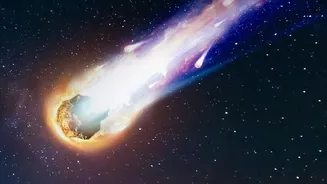
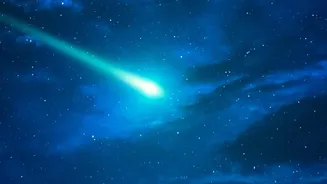
The image causing a stir in the scientific community is a composite masterpiece, capturing a meteor as it blazes across the sky. But unlike a typical photograph, this one is enhanced with data that shows the chemical composition of the material burning
away. The technique, known as spectroscopy, breaks down the light from the meteor's trail into a rainbow of signals. Each element—like iron, magnesium, and sodium—glows with a unique color signature as it vaporizes, allowing scientists to essentially read the meteor's recipe from millions of miles away. This new view transforms a fleeting streak of light into a detailed forensic analysis of a visitor from outer space.
The Science of a Vapor Trail
When a space rock, or meteoroid, hits Earth's atmosphere at blistering speeds, the intense friction heats it and the air around it, creating the bright flash we call a meteor. For decades, scientists have studied this light to learn about meteors. However, the most pristine information lies in the rock itself, which instantly begins to vaporize. This creates a short-lived, invisible cloud of gaseous minerals. Until now, capturing a clear picture of this vapor has been incredibly challenging. This new development uses advanced spectroscopic cameras that are sensitive enough to map the distinct elements in the vapor cloud before they dissipate, essentially catching the ghost of the meteor just after it passes. This gives us a direct look at the object's composition, uncontaminated by a long journey to the ground.
Reading the Solar System's Recipe
So why is seeing vaporized minerals a big deal? Because most meteoroids are remnants from the birth of our solar system, over 4.5 billion years ago. They are time capsules containing the original mix of materials that formed the planets, including Earth. Iron, nickel, and silicate minerals are the most common ingredients. By studying the precise ratio of these elements in a vaporizing meteor, scientists get a pure sample of this primordial recipe. It's like getting a free sample of an asteroid without the multibillion-dollar price tag of a sample-return mission. Analyzing this data helps researchers understand the conditions in the early solar nebula and the processes that led to planetary formation.
Building Blocks of Our World
The implications go even deeper. Some of these ancient rocks, known as carbonaceous chondrites, are known to carry water and organic compounds, including amino acids—the building blocks of life. The theory that meteorites and comets delivered water and key organic ingredients to early Earth is a powerful one. By analyzing the vapor trails of incoming meteors in real time, scientists can build a massive database of the chemical makeup of objects entering our atmosphere. This could reveal just how common these life-bringing materials are in the small bodies that constantly rain down on our planet. It provides a new tool to probe one of science's most profound questions: how did life get started here, and could it start elsewhere?
A New Era of Meteor Science
This breakthrough isn't just about one picture; it's about a new capability. Armed with this enhanced spectroscopic technique, scientists can turn meteor showers into large-scale experiments. Networks of automated cameras around the globe can now be outfitted to not only spot fireballs but to analyze their chemical makeup on the fly. This will create an unprecedented map of the chemical diversity within the asteroid belt and beyond. Each flash in the night sky becomes a data point, helping to refine our models of the solar system's evolution and better understand the inventory of materials—from simple metals to complex organics—that built our planetary home and continue to arrive on our doorstep.