








A Megacity's Thirst
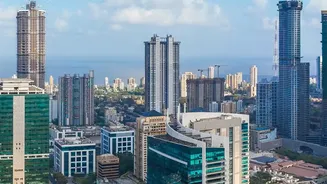
Every year, Mumbaikars watch the skies and the levels of the seven lakes that supply the city with its drinking water. A weak or delayed monsoon often means water cuts and uncertainty. The Brihanmumbai Municipal Corporation (BMC) supplies approximately
3,850 million litres per day (MLD) against a demand that is significantly higher, creating a daily shortfall that affects millions. With the city's population projected to grow, this gap is only expected to widen, pushing the existing infrastructure to its limits and making a compelling case for a drastic new strategy. The city's reliance on rain-fed reservoirs has long been a precarious situation, prompting officials to look for a consistent, climate-independent water source.
The Manori and Versova Solution
In response, the BMC is advancing plans for two major seawater desalination plants at Manori and Versova, both intended to have a capacity of 200 MLD each. The Manori project, located on a 12-hectare site in the city's western suburbs, is the more advanced of the two. After receiving crucial environmental clearances in 2026, initial work like geotechnical surveys has begun. The plant is slated to produce 200 MLD in its first phase, expected to be operational by late 2029, with provisions to double its capacity to 400 MLD in a second phase. The Versova plant is also planned with a 200 MLD capacity, and the BMC is pursuing a model where a private entity will design, build, finance, and operate it, with the city purchasing the treated water.
How It Turns Seawater Drinkable
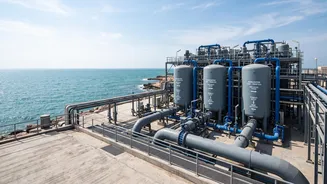
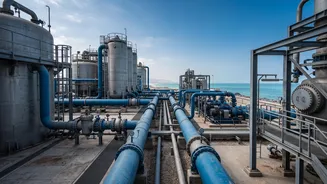
The technology at the heart of these projects is Seawater Reverse Osmosis (SWRO). In simple terms, this process involves taking seawater and pushing it through extremely fine membranes at high pressure. These membranes act like a microscopic filter, allowing water molecules to pass through while blocking larger salt molecules and other impurities. The result is fresh, potable water on one side and a highly concentrated salt solution, known as brine, on the other. For the Manori plant, this process will involve drawing seawater through a 2.4-kilometre-long intake tunnel deep in the sea and then distributing the fresh water into the city's network via another long tunnel.
The High Price of Water Security
This ambitious solution comes with a significant price tag. The total contract for the Manori plant, including construction and 20 years of operations and maintenance, is estimated at a staggering ₹11,166 crore. Desalination is also an incredibly energy-intensive process. The Manori facility alone is projected to require about 45MW of electricity, prompting the BMC to plan for significant investment in solar power to meet this demand sustainably. These high capital and operational costs mean that producing water this way is far more expensive than traditional methods, a cost that may eventually be passed on to consumers.
Environmental Concerns and Community Opposition
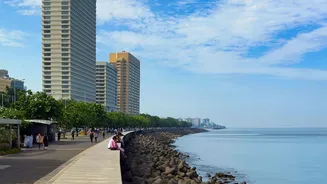
The projects are not without controversy. A primary concern is the environmental impact of discharging large quantities of highly concentrated brine back into the Arabian Sea. Local fishing communities and environmental groups fear this could harm marine ecosystems, disrupt fish breeding grounds, and damage their traditional livelihoods. Protests have been organized by residents of coastal villages like Manori and Gorai, who argue they were not adequately consulted. In response, the BMC has stated that advanced engineering, including tunnelling instead of dredging and using diffusers to disperse the brine far from the coast, will be employed to minimise ecological damage. The authorities also note that the site was chosen after studies found no coral reefs or turtle nesting grounds nearby.