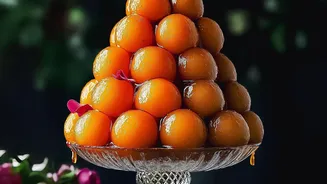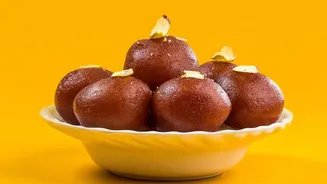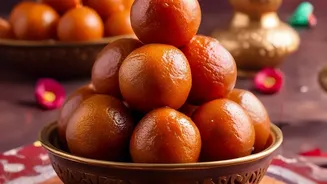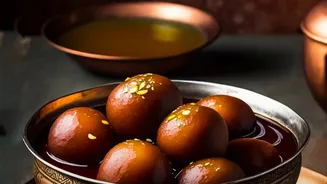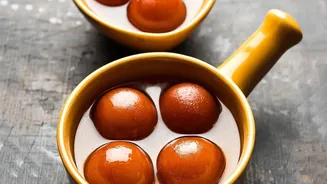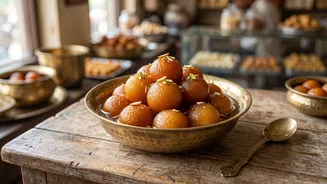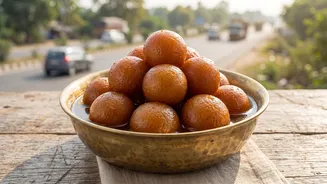


On the long stretch of highway connecting Delhi and Lucknow, a small town offers a sweet, syrupy detour that has become a legend. Maigalganj's claim to fame isn't monuments, but a perfect gulab jamun that stops travellers in their tracks.
The Highway's Sweet Secret
For those journeying
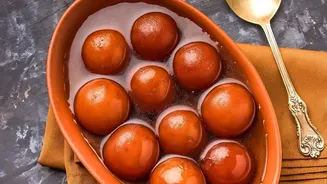
on National Highway 30 (formerly NH 24), Maigalganj in Uttar Pradesh's Lakhimpur Kheri district is less a town and more a mandatory ritual. It appears as a sudden burst of activity—a half-kilometre stretch packed with dozens of shops, each with a singular, delicious focus. The air is thick with the aroma of cardamom and sugar, as vendors call out to passing cars and buses, offering a taste of their iconic gulab jamuns. It's a scene that has played out for decades, transforming this otherwise nondescript village into a celebrated culinary landmark, known to regulars as 'Gulab Jamun Street'. For many, passing through without stopping for a hot, fresh gulab jamun served in a traditional earthen bowl is almost unthinkable.
A Legacy Born on the Roadside
The story of Maigalganj’s sweet supremacy began in 1941. This was when Dhanpal Gupta set up a small sweet shop, Dhanpal Misthan Bhandar. At the time, the area was undeveloped and the road was little more than a dirt track. Yet, the gulab jamuns he sold became a hit with the few travellers who passed through. The idea was simple but revolutionary: provide a fresh, hot, and delicious sweet to weary travellers. The trend caught on. Inspired by Dhanpal’s success, other sweet makers set up their own shops along the same stretch. By the 1970s, Maigalganj had firmly established its identity as the go-to destination for gulab jamuns, a reputation that has only grown stronger with time.
What Makes Them Special?
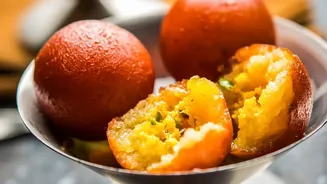
While gulab jamun is a beloved sweet across India, the Maigalganj version has a distinct appeal. The magic lies in its freshness and texture. The sweet is made from khoya (milk solids), which is kneaded with a bit of flour and then shaped into balls. These are deep-fried in ghee or oil until they achieve a perfect golden-brown hue, with a slightly crisp exterior giving way to a soft, spongy inside. The fried balls are then soaked in a sugar syrup that is not overly sweet, often delicately flavoured with cardamom. What truly elevates the experience is that they are always served piping hot, often in eco-friendly earthenware bowls called 'kulhads', which impart a subtle earthy aroma. This commitment to serving them fresh is what sets them apart from pre-packaged alternatives.
An Entire Economy of Sweetness
The gulab jamun business is the lifeblood of Maigalganj. The stretch of highway is dotted with anywhere from 25 to over 100 shops, depending on the report, from established names like Dhanpal Misthan Bhandar and Sundar Misthan Bhandar to numerous others, some humorously named 'Mashoor Gulab Jamun ki Purani Dukaan' (Famous Old Gulab Jamun Shop). This cottage industry provides a livelihood for hundreds of local families, from the shop owners to the sweet makers and servers. As one long-time worker noted, if you were to remove the gulab jamuns from the equation, Maigalganj would be just another anonymous village on a highway. The sweet has given the town a unique identity and a sustainable local economy built entirely on taste and tradition.