






What is an Earth Observation Satellite?
Before diving into EOS-05, it helps to understand what an Earth-observation (EO) satellite does. In simple terms, these are satellites designed to monitor our planet from orbit. They are equipped with powerful sensors and cameras that collect data about
the Earth's physical, chemical, and biological systems. This information is incredibly valuable for a wide range of applications, including weather forecasting, climate change monitoring, disaster management, agriculture, and urban planning. While many EO satellites operate in Low Earth Orbit (LEO), circling the globe and capturing images of different areas with each pass, some, like the EOS-05, are designed for a much higher geosynchronous orbit.
The Promise of EOS-05
EOS-05, also known as GISAT-2, was designed as India's first geo-imaging satellite. Its destination was a geosynchronous orbit approximately 36,000 kilometres above the Earth. At this altitude, the satellite's orbital period matches the Earth's rotation, allowing it to remain seemingly stationary over a specific region. This unique vantage point would have enabled it to provide near real-time, continuous imagery of the Indian subcontinent and its surrounding areas. The satellite was intended for a host of critical applications, from quick monitoring of natural disasters like cyclones and floods to obtaining detailed spectral data for agriculture, forestry, and water body management. Described as a 'strategic satellite', it was poised to significantly enhance India's monitoring capabilities.
The 'Heaviest' Distinction Explained
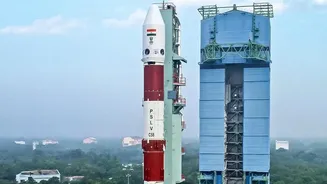
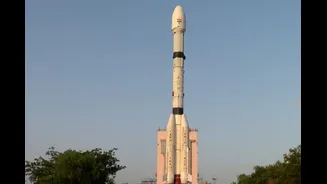
A key part of the EOS-05 story is its weight. At 2,367 kg, it was the heaviest satellite ever launched by India's Geosynchronous Satellite Launch Vehicle (GSLV). This milestone highlighted the increasing capability of the GSLV rocket, which had been steadily improved by the Indian Space Research Organisation (ISRO) over the years. The very first GSLV mission carried a payload of just 1,536 kg. The successful launch of a heavier satellite like EOS-05 demonstrated ISRO's progress in optimizing the rocket's structure and enhancing its propulsion systems, particularly the complex cryogenic upper stage. This ability to lift heavier payloads is crucial for launching more advanced communication and observation satellites into high orbits, reducing reliance on foreign launch providers.
Redemption for the GSLV
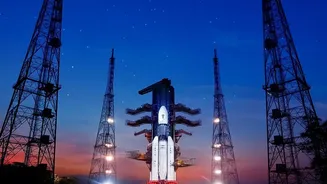
The successful launch of EOS-05 on September 4, 2026, was a moment of redemption for both the satellite program and the GSLV rocket. An earlier, nearly identical satellite, EOS-03 (also called GISAT-1), was lost in a launch failure in August 2021. In that mission, the GSLV-F10 rocket's first and second stages performed perfectly, but a technical anomaly prevented the cryogenic upper stage from igniting. A detailed investigation revealed the most likely cause was a leak in a valve within the liquid hydrogen tank, which prevented the engine from receiving enough fuel. The failure was a significant setback. However, ISRO implemented comprehensive corrective measures, including strengthening the valve systems and adding more monitoring parameters, which paved the way for the triumphant return-to-flight with the GSLV-F17 carrying EOS-05.
A Journey Just Begun
While the launch was successful, the journey for EOS-05 didn't end when the rocket's engine cut off. The GSLV-F17 placed the satellite into a sub-geosynchronous transfer orbit, an elliptical path around the Earth. From there, the satellite had to use its own onboard propulsion system to perform a series of orbit-raising manoeuvres over several days. These carefully calculated engine burns gradually raised its orbit, pushing it higher until it reached its final destination in the geosynchronous orbit, ready to begin its mission as India's vigilant eye in the sky.