







Choose a Weather-Resistant Bag
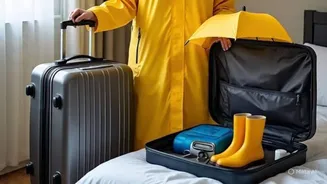
Your first line of defence is your luggage itself. While hard-shell polycarbonate suitcases are excellent at repelling water, they can be cumbersome. A more versatile option for navigating varied terrain is a water-resistant backpack or duffel bag. Look
for materials like PVC or coated nylon. For bags you already own, a high-quality, elasticated rain cover is an essential and affordable accessory. These covers are lightweight, pack down to almost nothing, and can be deployed in seconds during a sudden downpour, keeping your entire bag shielded from the rain.
Pack Lightweight, Packable Rain Gear
A heavy, traditional raincoat can take up significant space and weight. Instead, opt for modern, lightweight rain gear. A packable rain jacket or a full-coverage poncho made from waterproof-breathable fabric offers excellent protection without the bulk. While a sturdy umbrella is useful for city walks, it can be unreliable in the strong winds that often accompany monsoon storms. A good jacket frees up your hands and provides better overall protection. This single item is your most important piece of personal gear, so choosing a quality one that is both light and effective is a worthy investment for any traveller.
Embrace Quick-Drying Fabrics
Cotton is a traveller's enemy in humid and rainy conditions. It absorbs a huge amount of moisture and takes a very long time to dry, leaving you with damp, heavy, and musty-smelling clothes. Instead, build your travel wardrobe around quick-drying synthetic fabrics like polyester and nylon, or natural options like merino wool and linen blends. These materials wick moisture away from your skin and dry out rapidly, often overnight in a ventilated room. This means you can pack fewer items, wash them on the go, and be confident you'll have something dry to wear each morning.
The Golden Rule: Pack Extra Socks
This might sound simple, but it is the most crucial advice for monsoon travel. Wet feet are not just uncomfortable; they can lead to painful blisters and fungal infections. Cotton socks, once wet, will stay wet and lose all insulating properties. Pack multiple pairs of wool-blend or synthetic socks, which retain warmth even when damp and dry much faster. Consider keeping a spare pair in a small waterproof bag in your daypack for emergencies. Having a guaranteed dry, clean pair of socks to change into at the end of a long, wet day is a massive boost for both your health and morale.
Waterproof from the Inside Out
Even with a good bag and rain cover, moisture can find its way in. The ultimate strategy is to compartmentalize and waterproof your contents. Use dry bags, which feature a roll-top closure to create an airtight seal, for your most important items like electronics, documents, and a spare change of clothes. Even simple zip-top plastic bags can provide an effective barrier for smaller items. Furthermore, use a separate waterproof bag to store wet or dirty clothes, preventing them from contaminating the dry items in your luggage. This internal organisation ensures that even if your main bag gets damp, your essentials remain perfectly protected.