




1. Mehrangarh Fort, Jodhpur
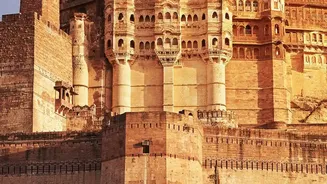
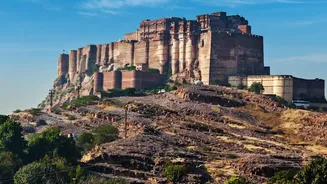
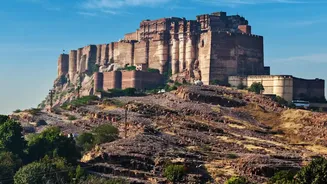
Perched on a 400-foot hill, Mehrangarh, the 'Fort of the Sun', dominates the Jodhpur skyline. Founded in 1459 by Rao Jodha, its imposing walls, which seem to grow organically from the rock, have witnessed centuries of Marwar history. Inside, the fort
is a maze of intricate palaces like the Moti Mahal (Pearl Palace) and Phool Mahal (Flower Palace), showcasing the delicate latticework and opulent style of Rajput artisans. The fort’s museum holds an impressive collection of royal artifacts, but its greatest offering is the panoramic view of Jodhpur’s famous blue houses, a breathtaking sight against the desert landscape.
2. Chittorgarh Fort, Chittorgarh
Sprawling across 700 acres, Chittorgarh is not just a fort but a symbol of Rajput pride, resilience, and tragic valour. As the capital of Mewar, it withstood three major sieges, each ending in heartbreaking acts of Johar, where women chose self-immolation over dishonour. The story of Queen Padmini and Alauddin Khilji's 1303 siege is etched into its very soul. Key structures like the Vijay Stambha (Tower of Victory), built by Rana Kumbha, and the serene Rani Padmini's Palace, stand as testaments to its glorious and tumultuous past. This UNESCO World Heritage site is the largest fort complex in India, a must-visit for anyone wishing to understand the spirit of Rajputana.
3. Red Fort, Delhi
The Lal Qila, or Red Fort, is a powerful symbol of India's sovereignty and Mughal grandeur. Commissioned by Emperor Shah Jahan in 1638 when he moved the capital from Agra, its magnificent red sandstone walls enclosed the city of Shahjahanabad. Designed by the same architect as the Taj Mahal, Ustad Ahmad Lahori, the fort complex blends Persian, Timurid, and Hindu architectural styles. Today, it is from the ramparts of this UNESCO World Heritage Site that India's Prime Minister addresses the nation on Independence Day, continuing a tradition that began in 1947 and cementing the fort's place in the heart of the nation.
4. Gwalior Fort, Gwalior
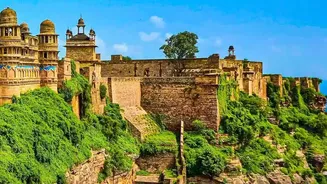
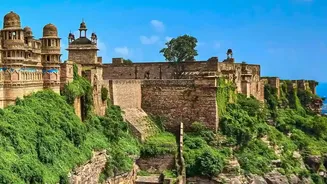
Dubbed 'the pearl among the fortresses of Hind' by Mughal emperor Babur, Gwalior Fort has a history stretching back to the 6th century. Its imposing walls, standing on a steep sandstone plateau, have been controlled by numerous dynasties, from the Tomars to the Mughals and Scindias. The fort is a treasure trove of architectural diversity, featuring the vibrant Man Mandir Palace with its tiled facade, ancient temples like the Teli-ka-Mandir, and massive Jain sculptures carved into the rock face. Its strategic importance and architectural beauty make it one of India's most invincible and culturally significant forts.
5. Golconda Fort, Hyderabad
Once the capital of the Qutb Shahi dynasty, Golconda Fort is renowned for its acoustic engineering and its history as a major diamond trading centre. It's famously where the Koh-i-Noor and Hope diamonds were once held. A clap at the grand entrance, the Fateh Darwaza, can be heard at the highest point of the fort, a citadel almost a kilometre away—a testament to its ingenious design. Initially a mud fort under the Kakatiya dynasty, it was transformed into a massive granite fortress, a fortified city with palaces, mosques, and a sophisticated water supply system that has fascinated visitors for centuries.
6. Jaisalmer Fort, Jaisalmer
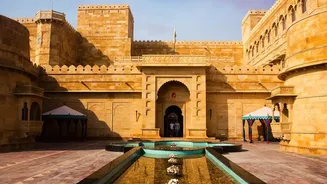
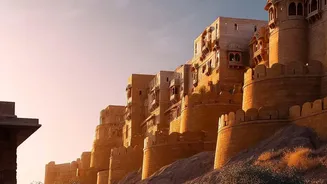
Rising from the Thar Desert like a golden mirage, Jaisalmer Fort is one of the few 'living forts' in the world. Built in 1156 by Rawal Jaisal, its yellow sandstone walls blend into the desert sand, earning it the name Sonar Quila or Golden Fort. What makes it unique is that a significant portion of the old city's population still resides within its walls, amidst a labyrinth of narrow lanes, havelis, temples, and shops. This UNESCO World Heritage site isn’t just a monument to be observed from afar; it's a vibrant, living community where the past and present coexist seamlessly.
7. Amer Fort, Jaipur
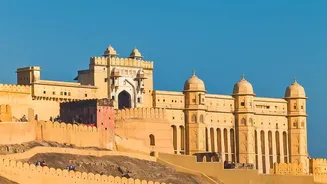
Overlooking Maota Lake, the majestic Amer Fort is a stunning blend of Rajput and Mughal architecture. Built with red sandstone and marble, its construction was initiated by Raja Man Singh I in 1592. The fort is laid out on four levels, each with its own courtyard. A highlight is the Sheesh Mahal (Mirror Palace), where the walls and ceilings are adorned with intricate mirror mosaics that glitter with the light of a single flame. This artistic masterpiece and its grand courtyards, like the Diwan-e-Aam, make it a jewel of Jaipur and a prime example of the opulence of the Rajput rulers.