





A Daring Mission Comes to an End
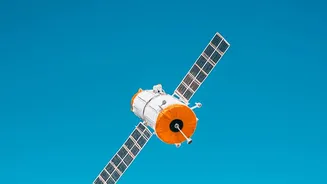
NASA has officially called off the primary goal of the Swift Boost mission after the privately built rescue craft, known as Link, suffered a series of critical failures. Launched on July 3, the spacecraft, designed by Arizona-based Katalyst Space, was
intended to rendezvous with the aging Neil Gehrels Swift Observatory, grab it with robotic arms, and push it into a higher, more stable orbit. However, just weeks after launch, the Link spacecraft began to spin uncontrollably due to multiple equipment malfunctions, including issues with its attitude control system. Despite weeks of effort by engineers to salvage the mission, NASA announced on August 19 that the attempt to boost Swift would be abandoned.
The Enduring Legacy of Swift
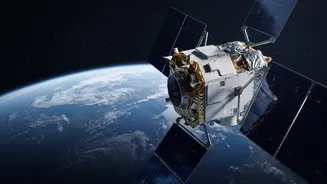
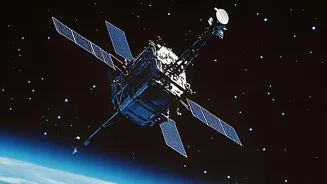
The reason for such a dramatic rescue attempt lies in Swift's incredible scientific legacy. Launched in 2004 for what was planned as a two-year mission, the observatory has operated for over two decades. Its primary purpose was to study gamma-ray bursts (GRBs), the most powerful explosions in the universe, which often signal the birth of a black hole or the collision of massive stars. Swift's unique ability to rapidly pivot and focus its multi-wavelength telescopes on these fleeting events revolutionized astronomy. It has observed around 2,000 GRBs and contributed to our understanding of everything from supernovae to comets. One of its most famous observations was a GRB that took 13 billion years to reach Earth, an echo from the universe's infancy.
What Went Wrong with Link?
The Link spacecraft ran into trouble before it could even approach the observatory. About three weeks after its launch, the craft experienced orientation control issues that caused it to tumble, leading to sporadic communications. A subsequent investigation revealed that two of its three reaction wheels—devices that control a spacecraft's pointing—were inoperable. This was compounded by problems with its cold gas thruster system. Engineers at Katalyst and NASA worked around the clock, even managing to slow the spin using other thrusters, but the damage was done. The persistent control issues made the delicate and precise operation of capturing another satellite impossible to attempt safely.
A Calculated but Costly Risk
Both NASA and Katalyst knew the Swift Boost mission was a long shot from the start. Swift's orbit was decaying faster than expected due to unusually strong solar activity, which caused Earth's atmosphere to expand and create more drag on the satellite. This created an urgent and unforgiving timeline. In 2025, NASA awarded Katalyst a $30 million contract, giving the company less than a year to design, build, and test the first-of-its-kind robotic rescue vehicle. "We knew this was a high-risk, high-reward mission," said Shawn Domagal-Goldman, director of NASA's Astrophysics Division. NASA Administrator Jared Isaacman echoed this, stating, "This is not the outcome we were working toward, but it does not change why this mission was worth attempting."
The Future After Swift
With the rescue mission over, the Swift observatory is now expected to fall into Earth's atmosphere and burn up before the end of the year. While its loss will leave a significant gap in astronomers' ability to rapidly respond to cosmic events, the mission was not a total failure. NASA has stressed that the attempt advanced crucial capabilities for future satellite servicing. As a consolation, the Link spacecraft will still attempt to perform a close flyby of Swift to test its rendezvous and proximity operations, gathering valuable data for future missions. For now, the scientific community will rely on other missions to fill the void left by Swift, while celebrating the incredible two-decade run of one of astronomy’s most agile explorers.