







The Origin: A Famous NASA Study
The idea that houseplants are powerful air purifiers comes from a well-intentioned place: a 1989 NASA study. Scientists were looking for ways to clean the air in sealed environments, like space stations. They placed common houseplants, such as peace lilies
and spider plants, inside small, airtight chambers and injected volatile organic compounds (VOCs) like formaldehyde and benzene. The results were promising. Over hours or days, the plants did indeed absorb a significant portion of these pollutants from the sealed chambers. This landmark study suggested that plants could be a 'promising economical solution to indoor air pollution'. Naturally, the idea took root and has been a staple of home and garden advice ever since.
From the Lab to the Living Room
The problem is that your home is not a sealed space station chamber. Subsequent research has put the original findings into a real-world context, and the results are quite different. A critical 2019 review analyzed decades of research and highlighted the major disconnect between lab conditions and a typical home or office. Our homes have much larger volumes of air and constant air exchange from windows, doors, and ventilation systems. The original NASA experiments were conducted in small, sealed containers, which greatly amplified the plants' effects. When scientists extrapolated the data to a normal-sized room, the numbers told a different story. The rate at which a few plants clean the air is vastly outpaced by the natural ventilation that is already occurring.
The Numbers Don't Add Up
So, how many plants would it actually take to make a meaningful difference in your home's air quality? According to researchers, the number is staggering. To replicate the effects seen in the lab, you would need somewhere between 10 and 1,000 plants per square metre of floor space. To put that in perspective, a small 500-square-foot apartment would require at least 500 plants to have a noticeable impact on air quality. One analysis concluded that a single potted plant cleans the air thousands of times more slowly than a standard HEPA filter or even just opening a window. The scientific consensus is now clear: while plants technically do remove pollutants, their effect in a real-world home environment is negligible.
The Real, Proven Benefits of Plants
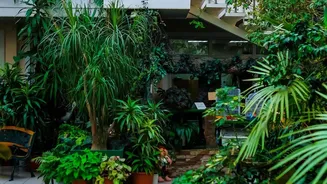
This doesn't mean you should abandon your leafy friends. While they may not be effective air purifiers, the case for having houseplants is still incredibly strong—just for different reasons. Numerous studies have confirmed the significant psychological benefits of being around plants. Having greenery indoors has been shown to reduce stress and anxiety, improve mood, lower blood pressure, and even increase productivity and focus. The act of caring for a plant can be a mindful, calming activity in itself. So, while they aren't scrubbing toxins from the air, they are absolutely contributing to a healthier and happier home environment in a measurable way.
How to Actually Improve Your Air
If you are genuinely concerned about indoor air quality, there are far more effective strategies than buying a few more monsteras. The most effective method is also the simplest: ventilation. Opening windows for even a few minutes a day can dramatically reduce indoor pollutants and CO2 levels. For more targeted cleaning, especially for allergens and particulate matter, using an air purifier with a high-efficiency particulate air (HEPA) filter is a proven solution. You can also reduce pollution at the source by choosing low-VOC paints and cleaning products, using exhaust fans when cooking, and regularly cleaning carpets and rugs to remove dust and dander.