







What Exactly is Urolithin A?
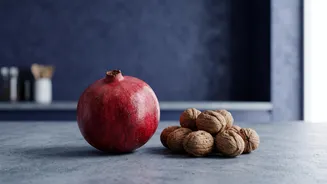
Urolithin A isn't something you eat directly. Instead, it's a special compound your body produces in the gut. This process happens when your gut bacteria break down substances called ellagitannins, which are found in certain foods. The most well-known
sources of these precursors are pomegranates (anar), walnuts, and berries like strawberries and raspberries. However, not everyone's gut microbiome is equipped to make this conversion efficiently. This variability means that even if two people eat the same pomegranate, their bodies might produce very different amounts of urolithin A, making it a topic of intense scientific interest.
The Problem of a 'Stiff' Heart
Many people think of heart failure only as a problem with pumping strength. However, about half of all cases involve a different issue: the heart muscle becomes stiff and loses its ability to relax properly between beats. This condition, known as heart failure with preserved ejection fraction (HFpEF), means the heart struggles to fill with blood. This inefficiency can lead to fatigue, shortness of breath, and reduced exercise capacity. This stiffening, or diastolic dysfunction, is a major challenge in cardiology because effective treatments have been hard to find.
The Cellular Powerhouse Connection
So, why does urolithin A seem to help? The answer lies in our cells' tiny energy factories: the mitochondria. With age and disease, mitochondria can become damaged and inefficient. In heart muscle cells, this mitochondrial dysfunction is a key driver of the stiffness and poor function seen in heart failure. Urolithin A is a known activator of a process called mitophagy, which is the body's quality control system for recycling old, damaged mitochondria. By clearing out the faulty powerhouses and promoting their renewal, urolithin A helps restore cellular energy and function.
What the Experimental Models Show
In recent laboratory studies using animal models of heart failure, administering urolithin A has yielded impressive results. Research showed that the compound helped improve the heart's diastolic function, meaning it could relax and fill with blood more effectively. In some experiments, these improvements in heart function were as high as 80% compared to untreated models. Furthermore, studies have shown that urolithin A can reduce fibrosis—the harmful scarring and stiffening of heart tissue—and limit the unhealthy enlargement of heart muscle cells. These effects were directly linked to its ability to activate specific proteins and clean up damaged mitochondria.
From the Lab to Your Life: A Word of Caution
The findings are exciting, but it is crucial to remember that this research is in its early stages. The benefits have been demonstrated in experimental settings, primarily using animal models and engineered human heart tissue in labs. These results do not mean that eating pomegranates can cure heart failure. Human clinical trials are necessary to confirm if these benefits translate to patients and to determine safe and effective dosages. One small clinical trial has begun evaluating urolithin A in patients with a different type of heart failure, but much more research is needed. For now, the best advice for heart health remains a balanced diet and a healthy lifestyle.