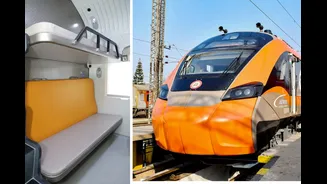









An Impressive Feat of Speed
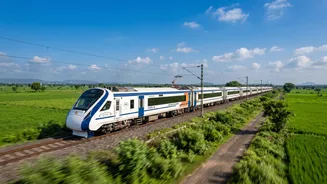
On paper, the Patna-Howrah Vande Bharat Express (22348/22347) is a model of efficiency. It covers the 532-kilometre distance between the capitals of Bihar and West Bengal in approximately 6 hours and 35 minutes. This translates to an average speed of around
81 km/h, a figure that is notably higher than the network-wide average for Vande Bharat trains, which has hovered between 76 and 84 km/h in recent years. When compared to some other services, the performance is even more striking. For instance, the Mumbai-Shirdi service operates at an average speed closer to 65 km/h due to its route characteristics. Even the first Vande Bharat on the celebrated New Delhi-Varanasi route, while one of the fastest, averages around 96 km/h over a longer distance. The Patna-Howrah train’s performance places it firmly in the upper tier of the network's most efficient services, making it a benchmark for consistency.
The Secret: Consistent Track Quality
The primary reason for the Patna-Howrah route's success isn't that the train itself is different, but that the track it runs on is consistently better. It is one of a select few Vande Bharat services authorised to operate at a Maximum Permissible Speed (MPS) of 130 km/h along its entire corridor. This is a crucial distinction. Many other routes, while served by the same high-tech trains, are a patchwork of varying speed limits. A train may run at 130 km/h on one section only to be restricted to 110 km/h or less on another, significantly dragging down its overall average speed. The Patna-Howrah line benefits from upgraded infrastructure, including robust tracks and signalling, allowing for sustained high speeds without the frequent slowdowns that plague other corridors. This consistency is the key differentiator that allows the train's inherent capabilities to shine through.
Why Other Routes Can Be Slower
The gap between Vande Bharat's design speed of 180 km/h and its real-world average speed is a story of infrastructure limitations. Many routes across the country are still in the process of being upgraded to support semi-high-speed travel. The challenges are diverse and significant. On some lines, the terrain itself is a limiting factor, such as the gradual inclines of routes heading toward the Himalayan foothills. Elsewhere, high-density traffic and numerous essential stops slow the pace. The biggest constraint, however, remains track condition. To safely handle speeds above 130 km/h, tracks require specific upgrades like heavier 60kg rails, advanced sleepers, and fencing to prevent cattle from straying onto the line. Until these upgrades are completed network-wide, the average speed will always be a compromise between the train's potential and the track's limitations.
A Blueprint for a Faster Future
The Patna-Howrah route serves as a powerful case study for Indian Railways' ambitious 'Mission Raftaar' initiative, which aims to increase the average speed of passenger trains nationwide. It demonstrates that the Vande Bharat trainsets, a product of the 'Make in India' initiative, are fully capable of delivering on their promise of speed when provided with the right environment. Significant investment is being channelled into track modernisation. The percentage of the rail network cleared for speeds of 130 km/h and above has seen a substantial increase in recent years, rising from just over 6% in 2014 to nearly 22% by 2025. As more sections, particularly on high-density corridors like Delhi-Mumbai and Delhi-Howrah, are upgraded to the 160 km/h standard, the exceptional performance seen on the Patna-Howrah line is set to become the norm rather than the exception.