
A Major Milestone Announced
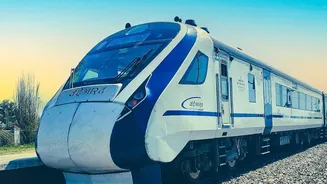
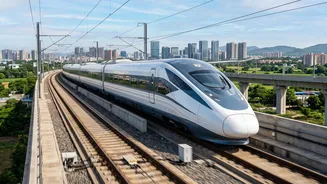
The new timeline was confirmed by Union Railway Minister Ashwini Vaishnaw, who stated that India's first indigenous high-speed train is expected to hit the tracks for testing by the middle of 2027. These trial runs are a critical step before commercial
operations can begin and will be conducted on a section of the nearly complete Mumbai-Ahmedabad corridor. A trial period typically lasts two to four months, after which a phased inauguration is planned. This announcement marks a significant moment for the project, which has faced numerous delays since its inception. While the entire 508-kilometre route will not be operational at once, the start of trials signifies that the most complex construction phases are drawing to a close.
Accelerated Progress on the Ground
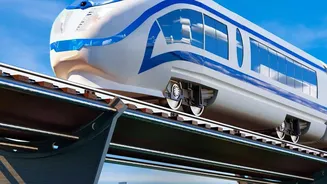
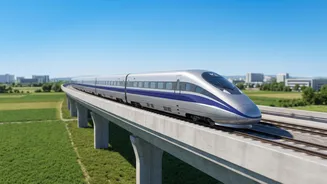
The confidence in the 2027 timeline stems from the rapid construction progress, particularly in Gujarat. As of mid-2026, significant portions of the elevated viaduct, which carries the track, have been completed. Pier work has been finished along over 450 km of the route, and the specialized J-Slab ballastless track system, a first for India, is being laid. Work on key stations, including the diamond-inspired hub in Surat and the multimodal hub at Sabarmati, is also in advanced stages. This progress is the result of a concerted push by the National High Speed Rail Corporation Limited (NHSRCL), the agency executing the project. The project is planned for a phased rollout, with the section between Surat and Bilimora expected to be the first to open for service.
Overcoming the Maharashtra Hurdle
For years, the project's progress was uneven, with construction in Gujarat far outpacing that in Maharashtra. The primary obstacle was land acquisition, which faced significant delays and local opposition, particularly in the Palghar and Thane districts. However, in recent times, these hurdles have been largely overcome, allowing construction to accelerate in the Maharashtra section as well. This includes work on challenging terrain featuring seven mountain tunnels and major river bridges. The section includes India's first undersea rail tunnel, a 7-km stretch that is a major engineering feat for the project. With land acquisition issues largely resolved, work on the final leg of the corridor, including the underground terminal at Bandra Kurla Complex (BKC) in Mumbai, is now underway.
The Shinkansen Technology Powering the Dream
The Mumbai-Ahmedabad corridor is being built using Japan's renowned Shinkansen technology, known for its impeccable safety record and efficiency. The collaboration involves not just the technology for the trains and tracks but also a comprehensive transfer of operational knowledge. The trains are designed for an operational speed of 320 km/h, which will slash the travel time between Mumbai and Ahmedabad from over seven hours to just under two hours. In a push for 'Atmanirbhar Bharat', indigenous manufacturing is also being prioritized. While the initial trains will be based on Japanese models, an Indian-made high-speed train is also under development and is expected to undergo testing in 2027, potentially for use on this very corridor.
What to Expect Next
With trial runs on the horizon for 2027, the next few months will be crucial. The focus will be on completing the remaining civil structures, finishing track laying, and installing the complex overhead electrification and signalling systems. Following successful trials on the initial Surat-Bilimora section, services are expected to be launched in phases across different stretches of the corridor. The full 508-km line is anticipated to be operational by 2029, finally connecting India's financial capital with one of its major business hubs via a world-class, high-speed network. This project is seen as a blueprint for a larger network of high-speed corridors planned across the country, aiming to transform India's transportation landscape.