



Introducing a New Class of Explorer
NASA has officially given the green light for the Probe far-Infrared Mission for Astrophysics, or PRIMA, to enter the next stage of its development. This marks a significant moment, as PRIMA is the very first mission selected for a new category called
Probe Explorers. This new class was recommended by the National Academies' 2020 Decadal Survey to fill a critical strategic gap in NASA’s portfolio. For years, the agency has had two main options: smaller, cost-effective missions under the long-running Explorers Program, or massive, multi-billion-dollar "flagship" observatories like the James Webb Space Telescope (JWST). The Probe Explorer class creates a vital middle ground. With a project cost cap of around $1.2 billion, these missions are ambitious enough to tackle major scientific questions without the decade-spanning timelines and budget pressures of a flagship. By creating this new category, NASA can pursue high-priority science more frequently, providing a more predictable cadence for researchers and industry partners.
Peering into a Cosmic Blind Spot
PRIMA’s primary objective is to survey the universe in far-infrared light, a part of the electromagnetic spectrum that our eyes—and even many other telescopes—cannot see. This is not a capability that JWST, which focuses on near- and mid-infrared, can provide. Far-infrared light is crucial for seeing through the dense clouds of cosmic dust that obscure many of the universe’s most interesting phenomena, such as the birth of stars and the centers of galaxies. Since the European Space Agency's Herschel Space Observatory retired in 2013, astronomers have had a significant capability gap in this area. PRIMA is designed to fill that void. Its observations will complement data from other telescopes like JWST and radio arrays like ALMA, creating a more complete picture of cosmic processes. By studying the faint heat radiated by the coldest objects in the cosmos, PRIMA will essentially give scientists a new set of eyes to reveal what has long been hidden.
Tackling the Universe's Biggest Questions
The science goals for PRIMA are fundamental to understanding our universe. The mission will focus on three main themes. First, it will investigate the origins of planets and their atmospheres, with a specific focus on quantifying the role of water in planet formation. This could offer profound insights into how systems like our own solar system came to be and potentially how water arrived on Earth. Second, PRIMA will trace the evolution of galaxies and the supermassive black holes at their centers. Far-infrared light allows it to peer through the dust shrouding these galactic cores to study how they grow over cosmic time. Finally, the telescope will map the buildup of cosmic dust and heavy elements throughout the universe's history. This will help explain how the chemical building blocks of stars, planets, and even life itself were created and distributed. As Nicky Fox, NASA's associate administrator for science, stated, the mission will "unveil the obscure across cosmic time."
The Technology Behind the Vision
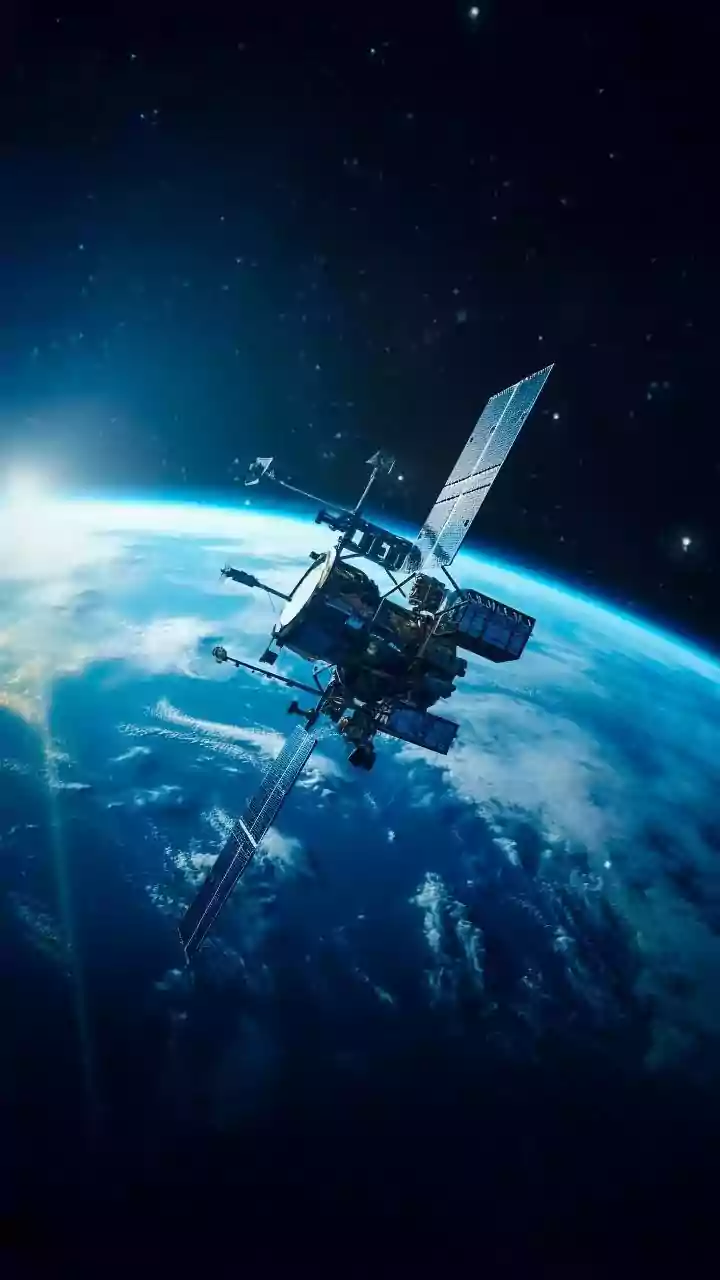
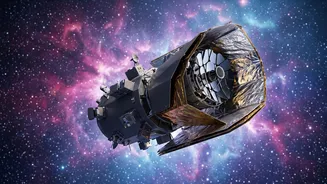
To achieve these ambitious goals, PRIMA will be equipped with state-of-the-art technology. The observatory features a 1.8-meter (5.9-foot) primary mirror that will be cryogenically cooled to just a few degrees above absolute zero. This extreme cold is essential to prevent the telescope's own heat from overwhelming the faint far-infrared signals it is trying to detect from distant cosmic sources. The mission will carry two primary instruments: the Far Infrared Enhanced Survey Spectrometer (FIRESS) and the PRIMA Imager (PRIMAger). Together, these instruments will allow PRIMA to both capture sharp, wide-field images of the sky and perform detailed spectroscopic analysis, breaking down light to study the composition of distant objects. This combination will make PRIMA orders of magnitude more sensitive than previous far-infrared missions like Spitzer and Herschel, representing a massive leap forward in observational capability.
The Long Road to a 2033 Launch
While the selection is a major step, PRIMA is not yet a lock for launch. The mission is now entering Phase B, a period focused on advancing the preliminary design and maturing the necessary technology. Engineers and scientists at NASA's Jet Propulsion Laboratory, which is managing the mission, will work with international partners in Canada, Europe, and Asia to solidify the design. Following this phase, the mission will face a critical confirmation review, where it must demonstrate its readiness based on technical performance, schedule, and cost. If it passes this milestone and moves into Phase C (final design and fabrication), PRIMA will target a launch no earlier than 2033 for a five-year primary mission. This methodical, phased approach is standard for NASA and ensures that this billion-dollar investment is on a solid foundation before major construction begins.