


Meet the Peanut of the Solar System
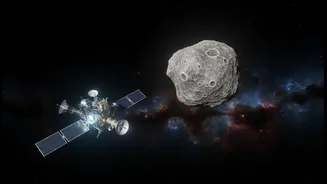
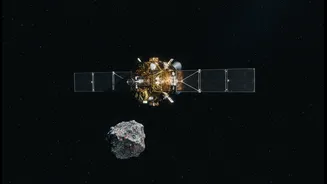
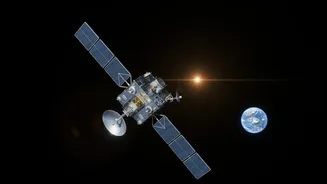
One of the most famous examples of such an object is asteroid 25143 Itokawa. First discovered in 1998, this small, near-Earth asteroid captured global attention when Japan's Hayabusa spacecraft paid it a visit in 2005. The images sent back were remarkable,
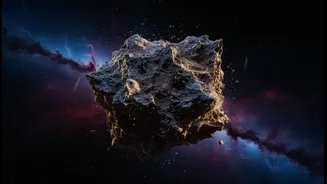
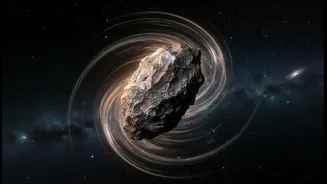
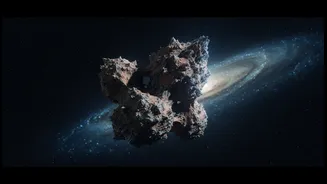
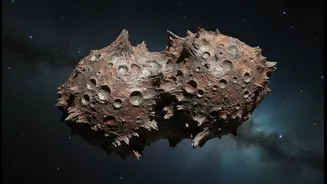
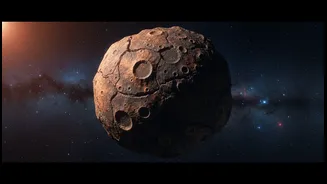
revealing a body approximately 535 metres long that looked less like a majestic sphere and more like a misshapen peanut or sea otter. Its surface wasn't smooth but a chaotic landscape of boulders and gravel. This peculiar shape immediately challenged scientists to understand how such an object could have formed and what its lumpy structure could tell us about the building blocks of our solar system.
A 'Rubble Pile' Held Together by Gravity
Scientists believe Itokawa is not a single, solid rock but what they call a "rubble pile." This means it's a loose collection of numerous smaller rocks and debris, all held together by their weak, mutual gravity. The concept helps explain its low density and high porosity—around 40% of its interior is thought to be empty space. These rubble piles are thought to form after a larger, monolithic asteroid is shattered by a catastrophic impact. Over time, the fragments fall back together, coalescing into a lumpy agglomeration rather than a solid body. This theory is supported by the fact that many small asteroids appear to be rubble piles, suggesting this is a common outcome of cosmic collisions.
Unlocking Secrets from Dust Grains
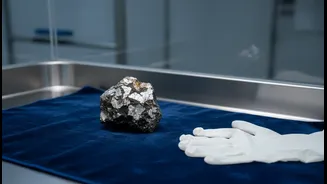
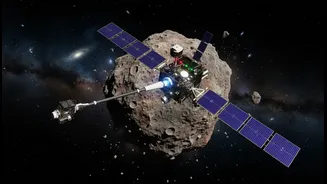
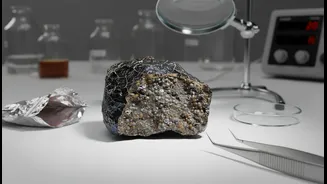
The Hayabusa mission did more than just take pictures; it managed to collect over 1,500 dust grains from Itokawa's surface and return them to Earth. This was a monumental achievement, providing the first pristine samples from a specific, well-characterised asteroid. Laboratory analysis of these tiny particles yielded profound insights. Scientists discovered that the mineral composition of Itokawa, rich in olivine and pyroxene, perfectly matched a common type of meteorite found on Earth known as LL chondrites. This provided the first direct link between a specific asteroid type and meteorites, solving a long-standing puzzle in planetary science. The particles also showed signs of having once been part of a much larger body, at least 20 km in diameter, that was heated to high temperatures before being shattered.
The Precise Questions Posed by an Imperfect Shape
Itokawa's lumpy, dual-lobed shape raises very specific questions about its past. Scientists theorise that it may be a 'contact binary'—two separate rubble-pile fragments that gently bumped into each other and stuck together. By studying the different densities of its two main lobes—the 'head' and the 'body'—researchers can model how these two pieces might have merged. Furthermore, the surprisingly sparse number of craters suggests that the surface is constantly being reshaped. When an object hits Itokawa, the impact likely shakes the whole rubble pile, causing loose gravel to slide into and fill the newly formed crater. This shock-absorbent nature means rubble pile asteroids might survive for billions of years, far longer than their solid counterparts.
Why We Study These Oddballs
Studying lumpy asteroids like Itokawa, and others such as Ryugu and Bennu, is crucial for several reasons. These bodies are like time capsules, preserving material from the very beginning of the solar system 4.6 billion years ago. By analysing their composition, we learn about the ingredients that formed the planets, including our own. The discovery of minerals altered by water on some asteroids hints at how Earth may have received its oceans and the building blocks of life. Understanding the 'rubble pile' structure is also vital for planetary defence. If an asteroid on a collision course with Earth is found to be a loose collection of boulders, attempting to shatter it with an impactor could simply create a wider, more dangerous shotgun blast of debris. Instead, a different strategy would be needed.