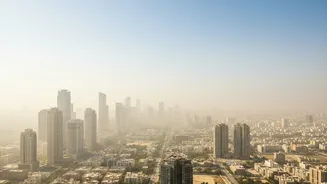









A Spreading, Year-Round Menace
A recent, comprehensive analysis by the Centre for Science and Environment (CSE) has uncovered an alarming trend: dangerous ground-level ozone pollution is intensifying and spreading across India. The study, which analysed six years of data from 2021
to 2026, reveals that ozone is no longer a problem confined to hot summer days in the north. It has become a persistent, multi-season threat in cities across the country, from inland urban centres to coastal regions. The analysis identifies Delhi-NCR as the country's largest regional ozone hotspot but highlights that cities like Chandigarh, Jaipur, Ahmedabad, Mumbai, Chennai, and Bengaluru are also experiencing alarming levels of exposure. This geographical and seasonal expansion transforms what was often seen as a localised winter particulate problem into a widespread, year-round crisis.
What Exactly Is Ground-Level Ozone?
It’s important to distinguish between the “good” and “bad” ozone. The good ozone exists high up in the stratosphere, forming a protective layer that shields us from the sun's harmful ultraviolet rays. Ground-level, or tropospheric, ozone is the bad kind. It's a colourless and highly irritating gas that forms just above the Earth's surface. It is not emitted directly from any source but is a secondary pollutant. It’s created when primary pollutants—specifically nitrogen oxides (NOx) and volatile organic compounds (VOCs)—react chemically in the presence of strong sunlight. This chemical cocktail is cooked by heat and sun, which is why the problem often peaks during warmer months.
The Sobering Health Consequences
Ground-level ozone is one of the most aggressive pollutants when it comes to human health. Exposure can irritate the respiratory system, causing coughing, throat soreness, and chest pain. It can reduce lung function, making it difficult to breathe deeply. For vulnerable populations, the risks are even greater. It can trigger asthma attacks, aggravate chronic conditions like bronchitis and emphysema, and increase susceptibility to respiratory infections. Long-term exposure is linked to the development of chronic obstructive pulmonary disease (COPD) and can even lead to permanent lung damage. Studies have also associated prolonged ozone exposure with premature death, highlighting the silent but deadly nature of this pollutant.
The Urban Recipe for Toxic Air
The ingredients for ground-level ozone are abundant in urban India. The primary precursors, NOx and VOCs, are released from a variety of sources. Vehicular emissions from cars, trucks, and buses are a major contributor. Industrial facilities, power plants, and chemical plants also release vast quantities of these gases. Even everyday activities contribute to the problem, with VOCs being emitted from paints, solvents, and household fuels. The CSE report notes that rising temperatures and intense heatwaves create a dangerous feedback loop, accelerating the chemical reactions that form even more ozone.
Beyond the Usual Suspects
The new data shows that this isn't just a megacity problem anymore. While Delhi-NCR remains a major hotspot, with some areas exceeding the national eight-hour standard on every day of a 71-day study period, the spread is notable. During a summer 2026 analysis, Chandigarh recorded the highest average ozone concentration of all cities studied, followed by Jaipur and Ahmedabad. The report also points to a significant geographical shift, with southern and western cities now recording worrying trends. Mumbai, for example, shows a nearly year-round ozone footprint and persistent levels even at night. Meanwhile, Bengaluru is seeing a wider spatial spread of pollution, and Chennai has logged extremely high episodic concentrations.