




The Ultimate Survival Crop
Imagine a crop that isn't afraid of a drought, isn't bothered by floods, and can grow in poor, neglected soil. That is the grass pea (Lathyrus sativus) in a nutshell. For thousands of years, this remarkable legume has served as an 'insurance crop' for
farmers in Asia and Africa, providing a reliable harvest when staple crops like wheat or rice fail. Its ability to withstand extreme weather conditions has earned it a reputation as a lifesaver during times of famine. This resilience is not accidental; it's built into the plant's biology, making it a subject of intense interest for creating sustainable agricultural systems in a changing climate.
Engineered by Nature for Hardship
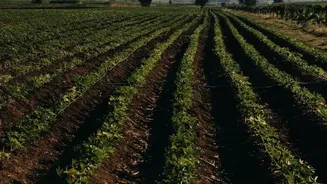
The grass pea’s toughness comes from a combination of powerful traits. It has a deep and efficient root system that can search for water far below the surface, allowing it to survive prolonged droughts. At the same time, it can tolerate waterlogged soil, a condition that would kill many other plants. This makes it uniquely suited for the unpredictable weather patterns, from severe dry spells to intense monsoons, that are becoming more common. Furthermore, like other legumes, grass pea fixes its own nitrogen in the soil, reducing the need for expensive chemical fertilisers and improving soil health for the next crop in the rotation.
A Powerhouse of Nutrition
Beyond its agricultural benefits, grass pea is a nutritional heavyweight. Its seeds are packed with protein, containing levels as high as 31%, which is significantly more than many other common pulses. This makes it an excellent source of plant-based protein, crucial for vegetarian and vegan diets. The legume is also a good source of dietary fibre, essential minerals like iron, magnesium, and potassium, and B vitamins. This impressive nutritional profile means it can play a vital role in combating malnutrition, providing energy and essential nutrients to communities with limited food options.
Addressing the Decades-Old Controversy
The story of grass pea is incomplete without addressing its controversial past. The legume contains a neurotoxin called ODAP (or BOAA). In times of extreme famine, when desperate populations consumed grass pea as their sole source of food for extended periods, it led to a paralytic condition known as neurolathyrism. This risk led to a ban on the sale of khesari dal in India in 1961. However, research has shown that the risk of lathyrism is only present with prolonged over-consumption as a primary part of an unbalanced diet. Consumed in moderate quantities as part of a varied diet, it is considered safe.
Science Paves the Way for a Safer Comeback
The future of grass pea looks bright, thanks to dedicated scientific efforts. Agricultural scientists, including those at the Indian Council of Agricultural Research (ICAR), have successfully developed new varieties with significantly lower levels of the ODAP toxin. Varieties like 'Ratan' and 'Prateek' contain toxin levels well below the safety limit, making them safe for human consumption while retaining the crop's incredible resilience. These improved varieties are being promoted for cultivation, signalling a cautious but optimistic return for a crop that was once sidelined. With these advancements, the grass pea is transforming from a 'famine food' to a 'future-fit food'.