



A Four-Way Tectonic Collision
Japan's fundamental risk is its location. The island nation sits on the Pacific Ring of Fire, a hotbed of seismic activity. Unlike most other places, it is wedged at the meeting point of four massive tectonic plates: the Pacific, Philippine Sea, Eurasian,
and North American plates. The vast Pacific plate grinds westward, sliding beneath northern Japan, while the Philippine Sea plate pushes under the south. This process, called subduction, is not smooth. The plates snag and lock, building up immense stress over decades or centuries. When that stress is suddenly released, the result is a powerful earthquake. This constant, large-scale geological conflict makes Japan account for about 10-20% of the world's most powerful earthquakes.
Deep Trenches Amplify the Danger
Just off Japan's coast lie some of the deepest parts of the ocean, including the Japan Trench and the Nankai Trough. These are not just geographical features; they are the surface expressions of the active subduction zones. When an earthquake occurs here, it is a 'trench-type' or 'megathrust' event. The fault line ruptures near the ocean floor, which can vertically displace a colossal amount of seawater. This is the mechanism that generates devastating tsunamis. The 2011 Tohoku earthquake, a magnitude 9.0 event, ruptured along the Japan Trench, creating a tsunami that caused widespread destruction. Scientists have learned that weak clay layers in these trenches can allow for extreme, shallow slips, moving the seabed dramatically and exacerbating tsunami risk.
A Nation Crowded on the Coast
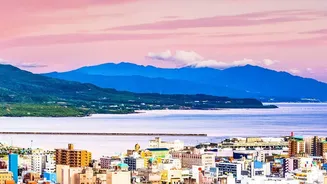
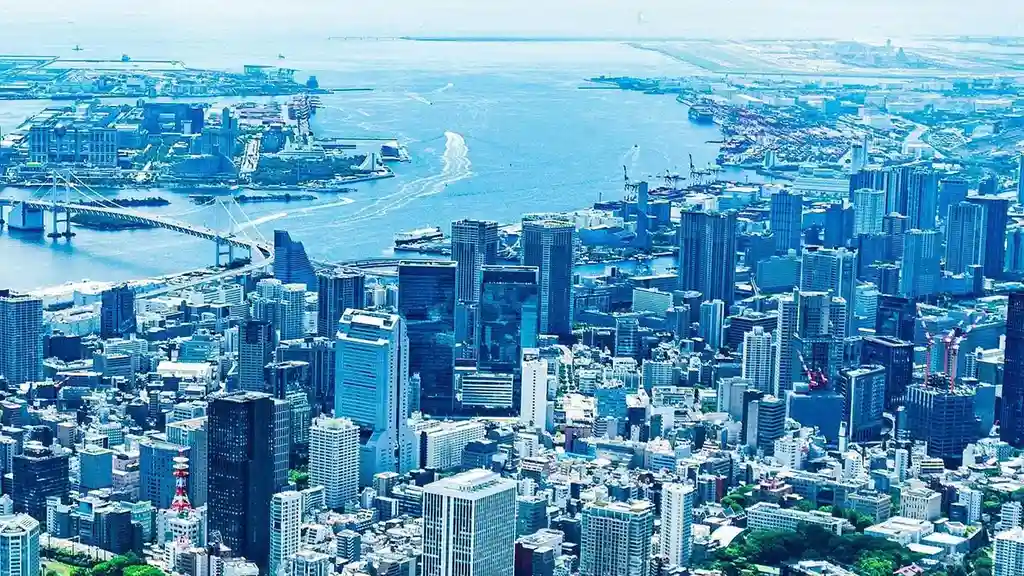
The third critical factor is human geography. Around 80% of Japan is mountainous and unsuitable for large-scale settlement. As a result, the majority of its 125 million people, as well as its most important cities and industries, are concentrated in the flat coastal plains. The Tokyo-Nagoya-Osaka megalopolis is a prime example, housing tens of millions of people and critical infrastructure directly on a coastline vulnerable to seismic events. This density means any major earthquake and subsequent tsunami has the potential to affect a huge number of people and cause massive economic disruption. This clustering of population in low-lying coastal zones is a major amplifier of risk.
Engineering a Culture of Resilience
Faced with this inescapable reality, Japan has become a world leader in disaster preparedness. The country has spent over a century turning past tragedies into life-saving lessons. After major quakes, building codes are meticulously updated. Modern Japanese buildings are designed with three main approaches: basic resistance (taishin), energy-absorbing dampers (seishin), and base isolation (menshin) that allows the building to move separately from the ground. The goal is not just that buildings don't collapse in a major quake, but that they remain functional. This is combined with one of the world's most advanced earthquake early-warning systems, which provides precious seconds for people to take cover and for trains to slow down, as well as regular, nationwide disaster drills that instill a culture of readiness from a young age.