





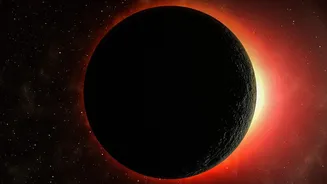
The Majesty of a Cosmic Dance
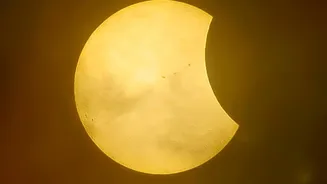
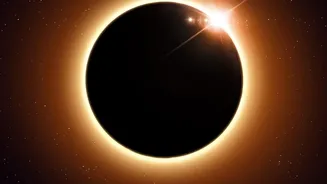
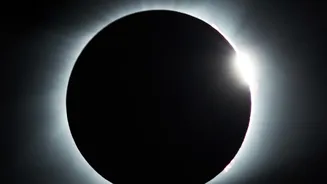
Scientifically, a solar eclipse, or Surya Grahan, is a straightforward and predictable astronomical event. It happens when the Moon passes directly between the Sun and Earth, casting a shadow on our planet. For a few fleeting moments, day can turn into
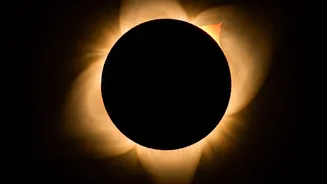
an eerie twilight as the Moon's disk obscures the brilliant face of the Sun. Astronomers can predict these events down to the second, mapping their paths across the globe. For scientists and sky-gazers, it's a chance to study the sun's outer atmosphere, the corona, which is usually hidden by the bright solar disk. It’s a beautiful, natural phenomenon—a reminder of the immense and intricate clockwork of our solar system. The only danger that science universally acknowledges is the risk of severe and permanent eye damage from looking directly at the sun without proper protection. This warning applies to everyone, eclipse or not, and has nothing to do with invisible rays or spiritual omens.
Echoes of Ancient Warnings
In stark contrast to the scientific view, tradition in India regards a solar eclipse as an inauspicious event. The most popular mythological story blames the demon Rahu, who, after being beheaded by Lord Vishnu for illicitly drinking the nectar of immortality, endlessly chases the Sun and Moon to swallow them in revenge. This act of 'swallowing' the sun is believed to unleash negative energies. Consequently, a host of rules and rituals emerge. Many people fast, believing food prepared or eaten during the eclipse becomes impure. Temples often close their doors. Pregnant women are particularly advised to stay indoors to protect their unborn children from supposed harm, and avoiding sharp objects is a common recommendation to prevent birth defects. These practices are not seen as mere superstitions by those who follow them; they are considered vital precautions to ward off misfortune during a period of cosmic imbalance.
When Worldviews Collide
Herein lies the debate. Medical science and astronomy offer clear counterpoints to these traditional beliefs. There is no evidence that eclipses emit special radiation that harms pregnancies or causes birth defects. Food doesn't become poisonous, and fasting without medical reason, especially for pregnant women, can be detrimental. The warnings about using knives or other sharp objects have no scientific basis. Yet, these traditions persist, often within the same households where science is otherwise respected. The debate is less about which side is 'right' and more about how individuals navigate these conflicting narratives. For many, it's not a clear choice. It’s a complex blend of respect for elders, cultural identity, and a 'better-safe-than-sorry' attitude. It highlights a unique aspect of modern Indian life, where a person might develop satellite technology by day but still ask their pregnant partner to stay indoors during an eclipse.
A Modern Indian Dilemma
The conversation is most active within families and online. Younger, urban generations often question the logic behind the rituals their parents and grandparents strictly follow. They might see a global trend of eclipse-watching parties and feel disconnected from the fear-based narratives at home. However, dismissing these traditions entirely is also difficult. They are deeply woven into the fabric of family and community life. Many choose a middle path: observing some rituals out of respect for family harmony while privately holding a scientific view. This internal negotiation reflects a broader societal dynamic. India is a country that has produced world-class scientists and mathematicians, yet its connection to ancient spirituality and mythology remains incredibly strong and vibrant. The eclipse simply brings this everyday duality into sharp focus, making it a recurring moment for national self-reflection.