

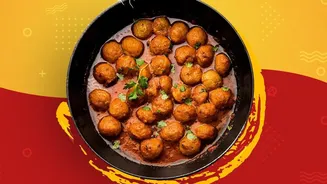

What Exactly is Ghugni?
At its heart, Ghugni is a simple yet profoundly flavourful curry made from dried white or yellow peas, known as 'motor' in Bengali. These peas are soaked overnight, then boiled until tender but still holding their shape. They are then simmered in a fragrant
and robust gravy built on a foundation of onions, ginger, tomatoes, and a special blend of spices. While it is a staple across Eastern India, including Bihar, Odisha, and Assam, the Kolkata version has a unique character. It's this balance of soft peas in a soupy, spiced broth that forms the perfect canvas for the 'chaat' transformation.
The Anatomy of a Perfect Bowl
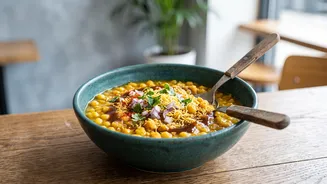
What elevates Ghugni from a simple curry to an unforgettable chaat are the toppings. A generous ladle of the hot, steaming Ghugni is poured into a bowl. Then comes the magic: a liberal sprinkle of finely chopped raw onions, green chillies, and fresh coriander. A squeeze of lime or a drizzle of tangy tamarind water cuts through the richness, while a dusting of 'bhaja moshla'—a quintessential Bengali roasted spice mix—adds a smoky, aromatic depth. Some vendors might add boiled potatoes or even slivers of coconut. The result is a multi-layered experience: the warmth of the curry, the crunch of the onions, the sharp heat of the chillies, and a lingering tangy spice that makes you crave the next spoonful.
More Than Just a Snack
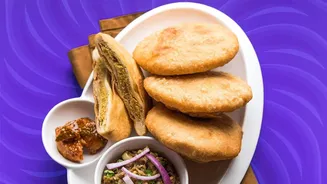
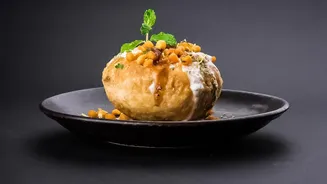
In Bengal, Ghugni is more than just street food; it's a cultural fixture. It's a comforting evening snack on a rainy day, a mandatory item at social gatherings during Bijoya Dashami, and a go-to breakfast when paired with luchi (puffy fried bread). Its versatility is one of its greatest strengths. It can be a light meal on its own or serve as the base for other chaats, like samosa chaat. Nutritionally, it’s a powerhouse. The dried peas are packed with protein and dietary fibre, making it a surprisingly wholesome and filling option. A serving provides slow-burning energy, making it a satisfying dish that keeps you full for longer.
The Great Chaat Debate
So, why hasn't Ghugni achieved the nationwide fame of its counterparts? Part of the reason may be its similarity to other regional dishes. In Mumbai, 'Ragda' (also made from white peas) forms the base of the popular Ragda Pattice. In Delhi and UP, a similar dish is known as 'Matar Chaat'. However, Ghugni stands apart due to its distinct Bengali flavour profile, often featuring the sharpness of mustard oil and the unique aroma of bhaja moshla. While Ragda is often milder and primarily a component of another dish, Ghugni is robust enough to be the star. It has remained a closely guarded secret of the East, a comfort food deeply woven into the local identity.
A Call for Culinary Recognition
In an era where regional Indian cuisines are finally getting their due, Ghugni stands ready for its moment in the spotlight. It embodies the essence of great street food: it's accessible, affordable, and delivers a complex burst of flavour in every bite. While variations exist, including non-vegetarian versions with minced meat which are considered a Kolkata trademark, the classic vegetarian Ghugni is a testament to how simple ingredients can create something extraordinary. It’s a dish that tells a story of a place and its people, a taste of Kolkata's soul served in a humble bowl.