






A Cosmic Origin Story
Before we dive into the colours, it's important to understand just how special Lonar Lake is. Located in Maharashtra's Buldhana district, it is one of the few hypervelocity impact craters in basaltic rock found anywhere on Earth. Formed roughly 50,000
years ago when a meteorite slammed into the Deccan Plateau, the impact created a basin that is both saline and highly alkaline, with a pH level that can reach 10.5. This unique geological and chemical environment sets the stage for the extraordinary biological processes that follow, making it a natural laboratory for scientists.
The Everyday Green
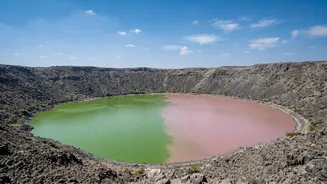
On most days, Lonar Lake presents a familiar greenish hue. This colour is primarily due to the presence of various algae and cyanobacteria thriving in its water. Like plants on land, these microorganisms use photosynthesis to create energy, and the chlorophyll that facilitates this process gives them their characteristic green colour. This green phase represents the lake's baseline ecological state, a vibrant ecosystem teeming with life adapted to its unusual alkaline and saline conditions. During periods of normal rainfall, the water levels are higher and salinity is lower, favouring the growth of these green algae.
When the Water Blushes Pink
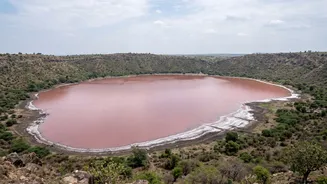
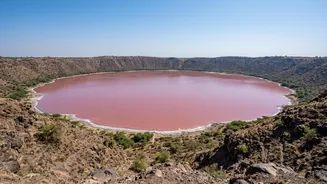
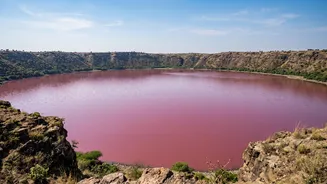
The lake’s transformation to pink is a dramatic event, often occurring during the hot, dry summer months. The primary trigger is a significant increase in the water's salinity. With less rainfall and higher evaporation rates, the water level in the enclosed crater drops, concentrating the salts. This heightened salinity, combined with increased temperatures, creates a stressful environment for the usual green algae, causing them to recede. This change paves the way for a different kind of life to take over and put on a spectacular show.
Meet the Pink Architects
The star of the pink phase is a group of microorganisms called Haloarchaea. These are salt-loving microbes that thrive in extremely saline conditions where other organisms cannot survive. As the lake's salinity peaks, the Haloarchaea population explodes. These microbes produce a pink-red pigment, a type of carotenoid, which acts as a protective shield against the harsh sun and high salt concentration. The sheer density of these blooming microbes forms a thick, pigmented mat on the water's surface, turning the entire lake a stunning shade of pink. Scientists from the Agharkar Research Institute confirmed this was the primary cause of the famous 2020 colour change.
A Delicate Ecological Dance
The switch from green to pink and back again is not permanent; it's a cyclical phenomenon reflecting the lake's dynamic ecosystem. When the monsoon season arrives, the influx of fresh rainwater dilutes the lake, lowering its salinity and pH levels. These new conditions are less favourable for the salt-loving Haloarchaea, causing their population to decline. Their biomass settles to the bottom, and the water begins to clear. Simultaneously, the lower salinity allows the green algae to flourish once more, returning the lake to its default green state. This recurring cycle is a beautiful demonstration of how different forms of life compete and dominate based on changing environmental conditions.