





An Icon of Trust
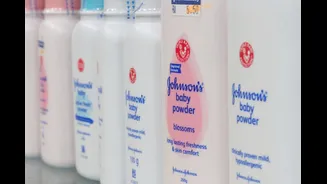
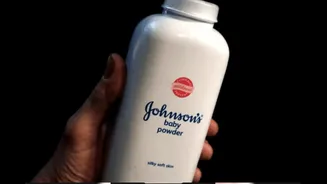
First sold in 1894, Johnson's Baby Powder became a global fixture in nurseries and bathrooms. Its core ingredient, talc, is a naturally occurring mineral praised for its ability to absorb moisture and reduce friction. For generations, Johnson & Johnson marketed
the product as a gentle, pure, and essential part of baby care, creating an image of unwavering trust. This branding was so successful that the product became synonymous with the company itself, a cornerstone of its family-friendly reputation that resonated deeply with consumers in India and around the world.
The Scientific Controversy
The foundation of this trust began to crack when questions arose about talc's safety. Talc is a mineral that is mined from the earth, and its deposits are often found near asbestos, a known carcinogen. Concerns mounted that talc used in cosmetic products could be contaminated with asbestos fibers, which are linked to mesothelioma and other cancers when inhaled or ingested. Further studies suggested a potential link between the use of talcum powder in the genital area and an increased risk of ovarian cancer. While some research bodies state the evidence is not conclusive, others point to a consistent association, creating a contentious scientific debate that would soon spill into the courtroom. J&J has consistently maintained that its talc is asbestos-free and does not cause cancer, citing its own extensive testing.
A Legal Tsunami
The first lawsuits emerged over a decade ago, but the litigation exploded in the late 2010s. Tens of thousands of plaintiffs, primarily women with ovarian cancer, filed claims alleging that J&J knew about the potential asbestos contamination and cancer risks for decades but failed to warn consumers. Landmark verdicts, including a staggering $2.1 billion award to 22 women in 2018, brought national attention to the issue. Though some verdicts were overturned on appeal, the sheer volume of cases—peaking at over 90,000—created a massive legal and financial crisis for the healthcare giant. By July 2026, the company still faced around 76,000 claims.
The Corporate Defense
Facing an unprecedented legal assault, Johnson & Johnson went on the offensive. The company steadfastly denied all allegations, arguing that the claims lacked scientific merit. In a significant business decision, J&J announced it would stop selling its talc-based baby powder in the U.S. and Canada in 2020, before extending that discontinuation worldwide by 2023, transitioning to a cornstarch-based formula. The company framed this as a commercial decision driven by declining sales and what it called "misinformation" about the product's safety, not an admission of fault.
The Bankruptcy Gambit
In 2021, J&J executed a controversial legal strategy known as the "Texas two-step." It created a new subsidiary, LTL Management, and transferred all its talc-related liabilities to it. LTL then immediately filed for bankruptcy, a move intended to halt the thousands of individual lawsuits and force claimants into a consolidated settlement through the bankruptcy court. However, plaintiffs' lawyers cried foul, arguing it was an abuse of the system by a highly profitable corporation to avoid accountability. Courts ultimately agreed, rejecting the bankruptcy filings multiple times and forcing J&J to confront the litigation directly.
A Multi-Billion Dollar Question
After its bankruptcy strategy failed, J&J returned to the negotiating table. In July 2026, after years of courtroom battles, the company announced a proposed settlement worth $5.5 billion to resolve the vast majority of the ovarian cancer lawsuits. This offer is conditioned on at least 95% of claimants agreeing to the terms. If successful, the deal would bring an end to a decade-long legal saga for tens of thousands of plaintiffs. While J&J still does not admit wrongdoing, the massive proposed payout signals a pivotal moment in one of the largest corporate liability battles in history, marking a potential end to a long and painful chapter for both the company and the claimants.