







Earth’s Orbit: A High-Speed Garbage Dump
For decades, every rocket launch and satellite deployment has left something behind. Today, low Earth orbit (LEO) is cluttered with over 31,000 tracked objects larger than 10 cm, including defunct satellites, spent rocket stages, and fragments from past
collisions. Millions more smaller, untrackable pieces zip around at extreme velocities. A tiny paint fleck traveling at orbital speeds can damage a spacecraft, and a collision with a larger piece of debris can be catastrophic, destroying operational satellites worth millions and threatening crewed missions. This isn't just litter; it's a high-speed, high-stakes threat to the critical infrastructure that powers GPS, weather forecasting, and global communications.
The Nightmare Scenario: Kessler Syndrome
The biggest fear among space agencies is a chain reaction called the 'Kessler Syndrome', first proposed by NASA scientist Donald J. Kessler in 1978. The theory posits that if the density of objects in orbit becomes too high, a single collision can create a cloud of debris. Each new fragment increases the probability of more collisions, which in turn generate even more debris. This could trigger a self-sustaining cascade that makes entire orbital regions unusable for generations, effectively trapping us on Earth. Scientists warn that some orbital bands, particularly between 700-1,000 km, may have already reached a critical density where this cascade is inevitable without intervention. The 2009 collision of a defunct Russian satellite and an operational Iridium communications satellite demonstrated this frightening reality, creating thousands of new debris pieces.
Enter the Cosmic Cleanup Crew
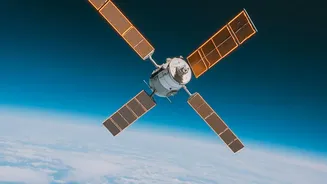
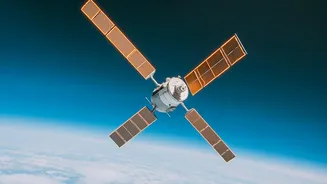
Active Debris Removal (ADR) is the answer to this growing crisis. A new generation of companies is developing a suite of technologies that sound like science fiction but are rapidly becoming a commercial reality. These methods fall into three main categories: tracking, capture, and de-orbiting. Advanced ground and space-based sensors first track and characterize a target. Then, a 'chaser' spacecraft is launched to rendezvous with the junk. Capture technologies vary widely, from robotic arms that grab the object, to nets that envelop it, and even harpoons that spear it. Once secured, the debris is typically moved into a lower orbit where it will burn up harmlessly in the atmosphere, a process known as de-orbiting. Key players like Japan's Astroscale and Switzerland's ClearSpace are already demonstrating these capabilities in orbit.
A Multi-Billion Dollar Opportunity
The urgent need to protect valuable space assets is fueling a massive market opportunity. The global space debris removal market is projected to skyrocket from around $143 million in 2025 to $9.57 billion by 2035, growing at a compound annual growth rate of over 41%. This growth is driven by the sheer number of new satellites being launched—over 2,800 annually—primarily for mega-constellations providing internet services. Commercial satellite operators are the biggest customers, as their business models depend on safe and clear orbits. Governments are also investing heavily, viewing orbital sustainability as a matter of national security and economic stability.
India's Stake in a Sustainable Orbit
As a major space-faring nation, India has a significant stake in this emerging field. The Indian Space Research Organisation (ISRO) is actively developing its own capabilities through its 'Debris Free Space Mission' (DFSM) initiative. The goal is to achieve zero debris creation from all Indian missions by 2030. ISRO is working on precursor technologies for active debris removal, including robotics and rendezvous systems, and has already demonstrated its ability to leave zero debris in orbit on specific missions. This push aligns with a growing domestic startup ecosystem, with at least eight Indian startups working in the space debris management sector, positioning the country to be a key player in both developing and using these vital cleanup technologies.