






A New Wave of Lunar Deliveries
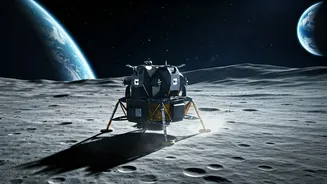
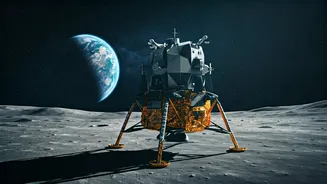
On June 30, 2026, NASA announced it had awarded a total of $590.4 million to three American companies for a series of uncrewed lunar missions scheduled for 2028. The funding, part of the Commercial Lunar Payload Services (CLPS) initiative, tasks these
firms with building and flying robotic landers to ferry NASA's cargo to the Moon's surface. Pittsburgh-based Astrobotic secured the largest share, with $297.9 million for two separate missions. Texas-based companies Intuitive Machines and Firefly Aerospace received $148.3 million and $144.2 million, respectively, each for a single landing. These contracts represent a significant investment in a model where NASA acts as a customer, buying rides from the private sector rather than owning and operating the vehicles itself.
The CLPS Bet: Faster, Cheaper, More Often
The CLPS program is the cornerstone of NASA's plan to create a bustling, commercially-driven presence on and around the Moon. Established in 2018, the initiative was designed to accelerate the return to the lunar surface by leveraging private sector innovation. Instead of the traditional, multi-billion-dollar government-led approach of the Apollo era, NASA is buying payload services at a fixed price. This strategy allows the agency to support the development of a lunar delivery market while sharing the risks and rewards with its commercial partners. The goal is to fly more missions, more frequently and at a lower cost, spurring technological development and creating a sustainable economic ecosystem beyond Earth orbit. These uncrewed missions are crucial for scouting landing sites and testing technologies needed for the ambitious Artemis program, which aims to establish a permanent human outpost on the Moon.
Meet the Winners and Their Landers
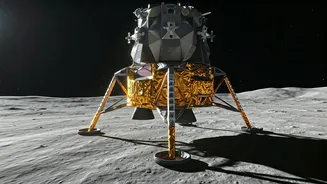
The companies selected are already key players in the nascent lunar economy. Astrobotic, which is in the process of being acquired by Voyager Technologies, will fly two missions using its Peregrine lander. Firefly Aerospace will use an updated version of its Blue Ghost lander, which successfully achieved a landing in 2025. Intuitive Machines, which has also previously reached the lunar surface, will use its Nova-C lander design. By using proven or updated versions of existing landers, the companies aim to reduce development time and increase reliability. The payloads for these specific 2028 missions will include science instruments to study the lunar environment, such as its radiation and the effects of the lander's own plume as it touches down.
Building a Moon Base, Piece by Piece
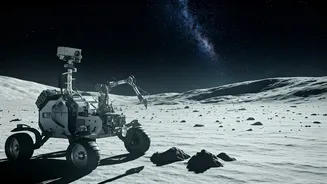
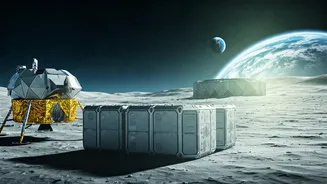
These missions are not isolated science experiments; they are foundational steps toward what NASA now calls its "Moon Base" initiative. Each robotic delivery will carry essential hardware, science instruments, and autonomous rovers that lay the groundwork for a permanent human settlement, likely near the resource-rich lunar south pole. This latest funding round is part of a strategic pivot to prioritize surface infrastructure. The frequent, repeated flights under the CLPS program are designed to prove the reliability of commercial systems before astronauts come to depend on them for their survival. The missions will help answer critical questions about the availability of resources like water ice, which could be converted into drinking water or rocket fuel, further enabling a long-term human presence.
High Risks and Higher Rewards
The path to a commercial lunar market is not without its challenges. The program has seen a mix of spectacular successes and high-profile failures. While Firefly successfully landed its Blue Ghost vehicle, an earlier Astrobotic mission failed to reach the Moon, and two Intuitive Machines landers tipped over upon arrival. This mixed track record highlights the unforgiving nature of spaceflight. However, NASA sees these as learning opportunities. The CLPS model is designed to tolerate some failures in the pursuit of rapid innovation. For every mission that falters, valuable data is gained, contributing to more robust designs for the future. The ultimate reward is a thriving lunar economy where NASA is one of many customers, driving down costs and opening up the Moon for science, exploration, and commerce.