








India's Big Push for Electric Mobility
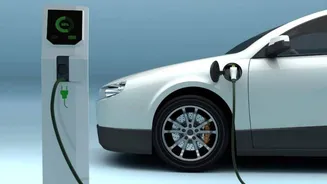
The transition to electric vehicles (EVs) is no longer a distant dream; it's a national priority. Driven by ambitious government targets and robust policy support, India is charging ahead. The government has set a goal for EVs to constitute 30% of private
car sales, 70% of commercial vehicles, and 80% of two and three-wheelers by 2030. Schemes like the Production-Linked Incentive (PLI) for automobiles and advanced chemistry cells are catalysing domestic manufacturing of EV components, aiming to make India a self-reliant global hub. With the EV market projected to grow at a compound annual growth rate (CAGR) of 49% between 2022 and 2030, the industry is not just changing how Indians commute but also creating a massive new economic ecosystem. This rapid expansion is paving the way for a fundamental restructuring of the automotive workforce.
The New Heart of the Automobile
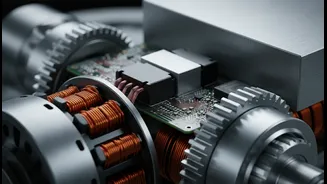
For decades, the internal combustion engine (ICE) was the undisputed heart of the automobile, supported by a complex mechanical transmission. In the electric era, this is replaced by a sophisticated new duo: power electronics and the electric drivetrain. Think of power electronics—which include inverters, converters, and onboard chargers—as the brain and central nervous system of the EV. They manage the entire flow of energy, from the charging port to the battery and out to the motor, ensuring efficiency and performance. The electric drivetrain, which consists of the electric motor and its associated components, acts as the muscle, converting electrical energy into motion. Unlike their mechanical predecessors, these systems are a fusion of high-voltage electrical engineering, intricate software, and thermal management, representing a completely new and high-value area of automotive technology.
A Seismic Shift in Job Profiles
This technological pivot is causing a seismic shift away from traditional automotive jobs. The demand for mechanical engineers specialising in engine blocks, pistons, and exhaust systems is waning. In its place is a surging demand for professionals with a completely different set of skills. The industry now needs electrical engineers, software developers, and battery specialists. According to industry estimates, India's EV sector will need around 200,000 skilled professionals by 2030 to support its growth targets. Job roles like 'EV Powertrain Engineer', 'Battery Systems Specialist', and 'Power Electronics Designer' are moving from the periphery to the core of automotive research and development. This represents a move from the greasy workshop floor to high-tech labs and software development centres, fundamentally altering the profile of an automotive professional in India.
The Race to Bridge the Skills Gap
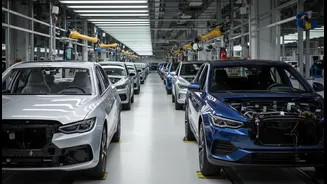
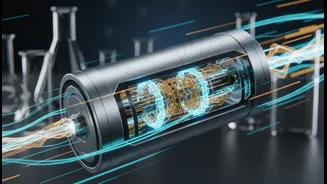
While the opportunity is immense, it comes with a significant challenge: a massive skills gap. India's vast automotive workforce of nearly 19 million is predominantly trained in ICE technology. Reports indicate that less than 3% of this workforce currently possesses the necessary skills for EV-related technologies, and the sector faces a skills deficit of 40-45%. This is not a talent shortage but a readiness gap. In response, a concerted effort is underway to upskill and reskill. The Automotive Skills Development Council (ASDC) is working to revise curricula and create new training modules. Companies are heavily investing in reskilling their existing employees, focusing on electronics, software, and battery systems to prepare them for the factory of the future. These initiatives are critical, as the industry's success will depend not just on building cars, but on building a workforce capable of designing and producing them.