






A Cryosphere in Crisis
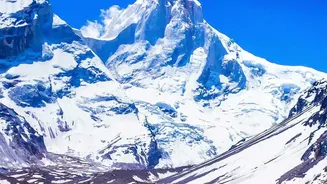
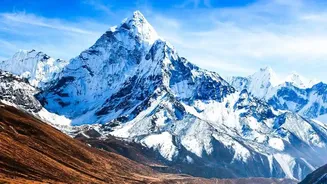
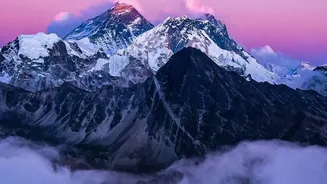
The Himalayan region is warming at a rate nearly double the global average. This accelerated warming is causing its vast glaciers, which act as Asia's water towers, to retreat and thin at an alarming pace. According to a study by the International Centre
for Integrated Mountain Development (ICIMOD), the region's glaciers are shrinking faster than ever before. This isn't just about rising temperatures; factors like black carbon deposits from pollution also darken the ice, causing it to absorb more solar radiation and melt faster. As the ice vanishes, it leaves behind a landscape that is increasingly fragile and prone to sudden, violent changes.
The Anatomy of a GLOF
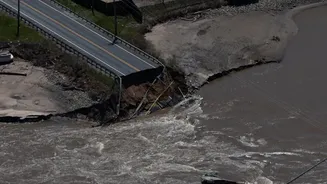
One of the most significant threats emerging from this rapid melt is the formation and expansion of glacial lakes. As glaciers retreat, they often leave behind depressions that fill with meltwater, dammed only by unstable mounds of loose rock and sediment called moraines. These natural dams are inherently weak and can fail without warning. When they breach, they release a devastating torrent of water, ice, and debris known as a Glacial Lake Outburst Flood (GLOF). A GLOF can discharge millions of cubic meters of water in just a few hours, creating a flash flood that surges down narrow mountain valleys, destroying everything in its path—villages, roads, bridges, and critical infrastructure like hydropower plants. Nepal has identified at least 21 glacial lakes that are potentially dangerous and pose a direct threat to downstream communities.
The Landslide Connection
The risk is not limited to GLOFs. The same forces destabilising glaciers are also priming the mountains for catastrophic landslides. As permafrost—the permanently frozen ground that glues high-altitude slopes together—begins to thaw, entire rock faces can become unstable. Furthermore, climate change is altering precipitation patterns, leading to more erratic and intense rainfall. This combination of thawing permafrost and supersaturated soil from heavy rains dramatically increases the likelihood of landslides, which can themselves trigger floods by blocking rivers. In August 2026, a massive ice-rock avalanche on the Nepal-China border, which registered as a magnitude 5.2 seismic event, resulted in a catastrophic flood that swept away entire villages and claimed hundreds of lives, highlighting the deadly potential of these cascading hazards.
The Human Cost and a Race Against Time
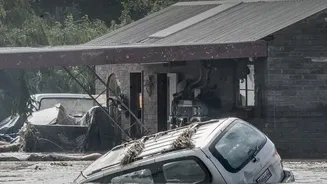
For the millions of people living in the valleys of Nepal, these climate-driven hazards are an existential threat. Communities that have lived for generations along riverbanks now find themselves on the front lines of a slow-motion disaster. The August 2026 floods, for example, affected over 84,000 people, including 32,000 children, destroying homes, schools, and health facilities. In response, Nepal is shifting from a reactive to a proactive stance. With support from international partners like the Green Climate Fund and UNDP, projects are underway to address the risk. These efforts include physically lowering the water levels in the most dangerous glacial lakes, installing community-based early warning systems, and building disaster-resilient infrastructure. However, the scale of the challenge is immense, as monitoring thousands of glaciers across the vast and remote Himalayas remains a significant obstacle.