





The Promise of a Constant Watch
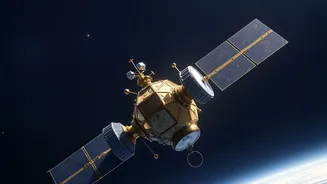
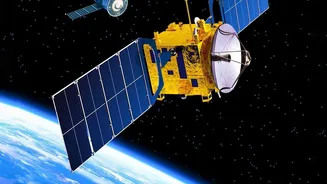
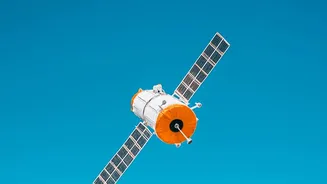
The Earth Observation Satellite-05 (EOS-05), also known as GISAT-1A, was designed to be a game-changer for India. Unlike conventional remote sensing satellites that orbit closer to Earth and pass over a specific location only periodically, EOS-05 was destined
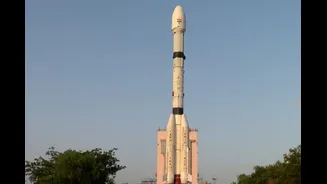
for a geosynchronous orbit approximately 36,000 kilometres high. At this altitude, its orbital speed would match the Earth's rotation, allowing it to remain seemingly fixed over the Indian subcontinent. This unique vantage point would have enabled near-real-time monitoring of the entire country, providing crucial data for disaster management by tracking cyclones, floods, and forest fires as they unfold. Furthermore, its strategic applications included enhanced border surveillance and monitoring of maritime activities, making it an invaluable asset for national security. Weighing approximately 2,367 kg, it was slated to be one of the heaviest and most advanced Earth-observation satellites launched by India's powerful Geosynchronous Satellite Launch Vehicle (GSLV).
A Setback in August 2021
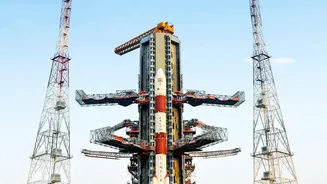
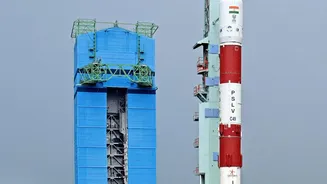
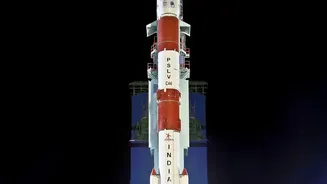
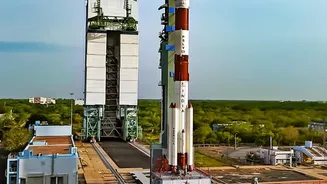
The original mission to place this advanced satellite in orbit, designated GSLV-F10/EOS-03, took place in August 2021. The initial stages of the launch from the Satish Dhawan Space Centre in Sriharikota proceeded without a hitch. The powerful rocket lifted off flawlessly, and the first and second stages performed exactly as planned. However, the mission-critical third stage, the indigenously developed Cryogenic Upper Stage (CUS), failed to ignite. This anomaly occurred nearly five minutes into the flight, preventing the rocket from delivering the satellite to its intended orbit. The satellite, which held so much promise, was ultimately lost due to the launch failure, marking a significant and public setback for the Indian Space Research Organisation (ISRO).
Pinpointing the Technical Failure
In the aftermath, ISRO constituted a Failure Analysis Committee (FAC) to determine the precise cause of the malfunction. The investigation revealed that the issue stemmed from a seemingly minor component with major consequences. According to the committee's findings, a leak occurred in a Vent and Relief Valve (VRV) of the Cryogenic Upper Stage. This leak resulted in lower-than-expected pressure in the liquid hydrogen (LH2) propellant tank. When the time came for the upper stage to ignite, the reduced pressure caused the Fuel Booster Turbo Pump to malfunction, leading to an insufficient flow of propellant into the engine's thrust chamber. The onboard computer detected the deviation and correctly issued an abort command, but the mission could not be salvaged.
Redemption: The Launch of the New EOS-05
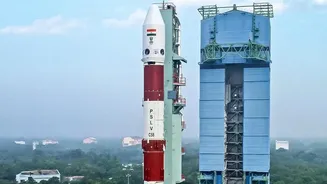
Proving its resilience, ISRO addressed the technical faults and prepared a replacement satellite. The "latest update" in this saga is a story of triumph. In early September 2026, ISRO successfully launched the new EOS-05 satellite aboard the GSLV-F17 rocket. This launch was not just a replacement; it was a powerful statement of the agency's recovery and mastery over the complex cryogenic technology that had previously faltered. The GSLV-F17 placed the 2,367 kg satellite—India's heaviest Earth observation satellite—into a sub-geosynchronous transfer orbit after a flawless 18-minute flight. The successful launch marked ISRO's first of 2026 and demonstrated the improvements made to the GSLV, which performed even better than expected, placing the satellite in a more optimal initial orbit.
The Road to a Fully Operational 'Sky-Eye'
Following its successful separation from the launch vehicle, the EOS-05 satellite began its own journey. Its solar panels were deployed successfully, and the satellite's health was confirmed to be normal. Over the subsequent days, ISRO's scientists and engineers have been performing a series of crucial orbit-raising manoeuvres. These carefully calculated burns of the satellite's onboard engine are designed to gradually raise its orbit from the initial sub-GTO to its final destination—the geosynchronous orbit at 36,000 km. The second of these manoeuvres was successfully completed on September 6, 2026, bringing the satellite closer to its operational home where it will begin its mission of providing continuous, high-resolution imagery of India.