




Eyjafjallajökull, Iceland (2010): The Eruption That Halted the World
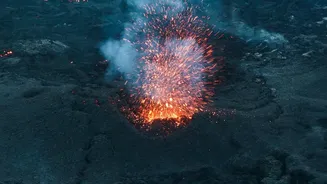
Many people first learned how to pronounce 'Eyjafjallajökull' in April 2010, when the Icelandic volcano erupted in a uniquely disruptive way. It wasn't the largest eruption in terms of sheer explosive power, but its effects were profoundly global. The
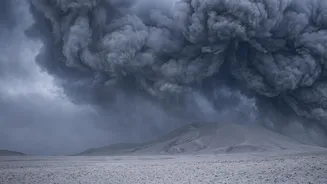
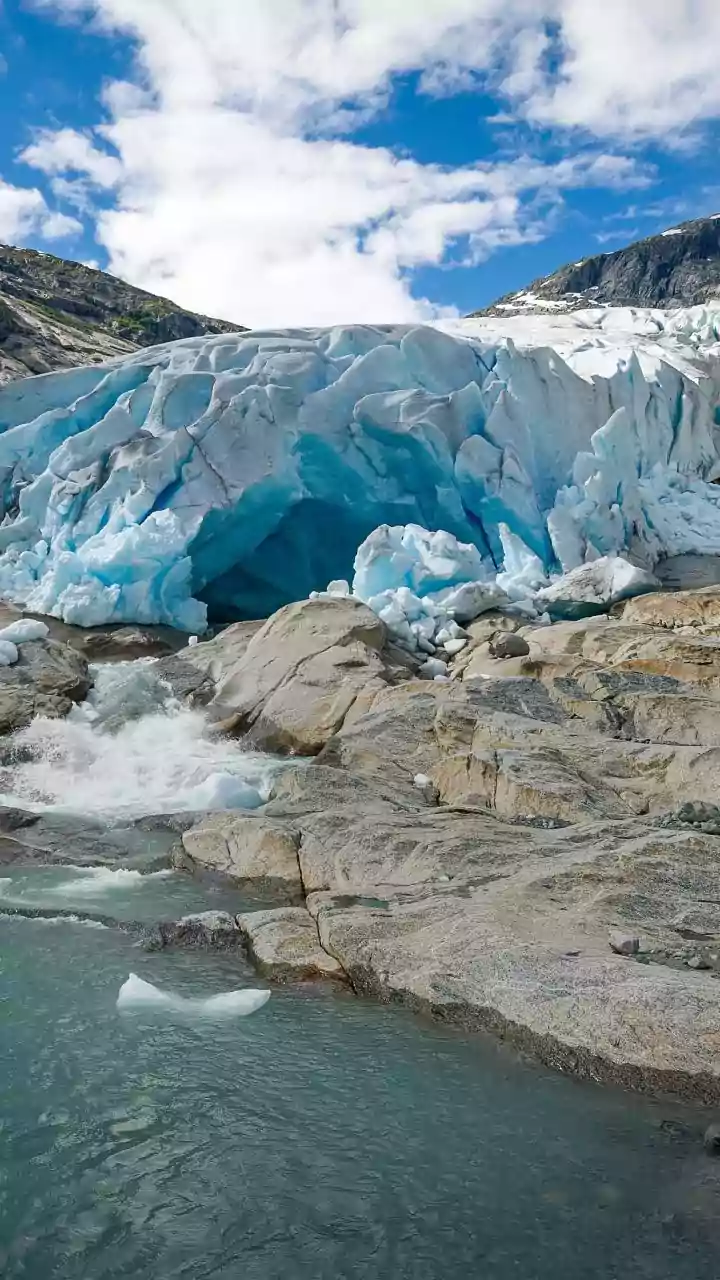
eruption occurred under a glacier, and the interaction of hot lava with cold meltwater created a plume of extremely fine, glassy ash. This ash was then funneled directly into the jet stream, which carried it over Europe, home to some of the world's busiest airspace. The result was the largest air-traffic shutdown since World War II. Worried that the abrasive ash particles would damage jet engines, aviation authorities closed the airspace of numerous European countries. For nearly a week, over 100,000 flights were cancelled, affecting around 10 million passengers and stranding travellers worldwide. The economic impact was staggering, with the airline industry losing an estimated $1.7 billion. The chaos highlighted the vulnerability of modern global travel and supply chains to a single, localized natural event thousands of kilometres away.
Puyehue-Cordón Caulle, Chile (2011): An Ash Cloud That Circled the Globe
Just a year later, the Southern Hemisphere experienced its own volcanic disruption. The eruption of the Puyehue-Cordón Caulle volcanic complex in Chile was immensely powerful, spewing an estimated one hundred million tons of ash, sand, and pumice into the atmosphere. This massive cloud was blown east across Argentina, forcing evacuations and blanketing towns in thick layers of ash. But its journey didn't stop there. Carried by strong stratospheric winds, the ash cloud embarked on a global tour. Within two weeks, it had completely circled the Earth. Its path caused widespread travel chaos, with flights cancelled not only in South America but as far away as Australia, New Zealand, and South Africa as the plume drifted through their airspace. The event was a stark reminder that the atmosphere has no borders, and a major eruption on one side of the planet can ground flights on the other. It demonstrated how volcanic plumes can persist and travel vast distances, creating prolonged hazards for aviation across an entire hemisphere.
Hunga Tonga-Hunga Haʻapai, Tonga (2022): The Unprecedented Underwater Blast
The eruption of the Hunga Tonga-Hunga Haʻapai submarine volcano in January 2022 was unlike any other in the satellite era. Officially confirmed as the largest explosive eruption of the 21st century, its power was equivalent to hundreds of atomic bombs. The blast generated atmospheric shockwaves that circled the globe multiple times and triggered tsunami waves across the Pacific. But its most unique impact came from what it shot into the sky. As an underwater eruption, it injected an unprecedented amount of water vapour—not just ash and gas—directly into the stratosphere, increasing the stratosphere's total water content by about 10%. This had a complex and counterintuitive effect. Unlike large eruptions like Mount Pinatubo in 1991, which cooled the planet by reflecting sunlight with sulfur aerosols, the water vapour from Hunga Tonga led to a slight stratospheric cooling. It also caused temporary, localized disturbances in the ozone layer and affected radio communications and navigation systems. The event provided scientists with a new understanding of how water-rich eruptions can uniquely perturb Earth's atmospheric chemistry and dynamics.