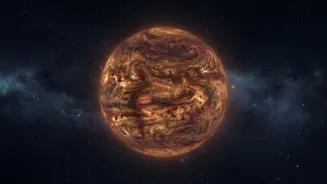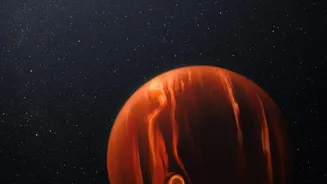





In the vast cosmic theatre, some objects are neither stars nor planets but something in between. These are brown dwarfs, often called 'failed stars'. A new NASA mission is poised to reveal why these mysterious celestial bodies never made the stellar cut.
Cosmic Misfits: What Is a Brown Dwarf?
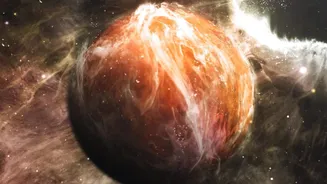
Imagine an object that forms from a collapsing cloud of gas and dust, just like a star, but never quite makes it to the big leagues. That's a brown dwarf. These intriguing bodies occupy a mysterious middle ground: they are more massive than even the largest gas giants like Jupiter, but fall short of the mass needed to become a star. The dividing line is generally considered to be between 13 and 80 times the mass of Jupiter. Below this range, you have a planet; above it, you have a star. In this gap, brown dwarfs exist, glowing faintly from the leftover heat of their formation rather than the brilliant, sustained fire of a true star.
The Engine of a Star: Understanding Hydrogen Fusion
To appreciate why brown dwarfs 'fail', we first need to understand what makes a star 'succeed'. The defining characteristic of a star is its ability to sustain nuclear fusion in its core, specifically by fusing hydrogen atoms into helium. This process requires almost unimaginable conditions. The immense gravitational pull of a star's mass creates crushing pressure and temperatures of millions of degrees in its core. This extreme environment is the only thing capable of forcing hydrogen nuclei together, overcoming their natural repulsion to release a tremendous amount of energy. This energy, radiating outwards, is what makes stars shine and provides the pressure that counteracts gravity's inward crush, keeping the star stable for billions of years.
The Missing Ingredient: Not Enough Mass
The simple reason brown dwarfs cannot sustain hydrogen fusion is that they lack sufficient mass. Their gravitational force isn't strong enough to compress their core to the extreme temperatures and pressures needed for this fusion to ignite and continue. While some of the most massive brown dwarfs might briefly start fusing hydrogen, they can't maintain the process; the energy output isn't enough to balance the heat lost at their surface, and their core temperature eventually drops below the required threshold. However, this doesn't mean they are completely inert. Many brown dwarfs are hot and dense enough to fuse deuterium, a heavier isotope of hydrogen, for a short period early in their lives. This deuterium-burning phase is a key feature that distinguishes them from large planets, but the fuel runs out relatively quickly, and the brown dwarf is destined to cool and fade over cosmic time.
Enter SPHEREx: NASA's Cosmic Detective
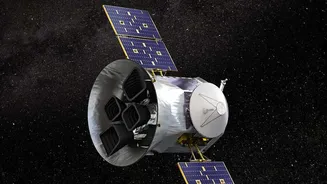
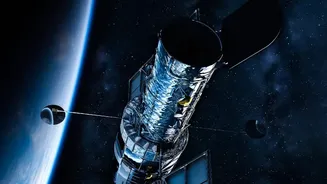
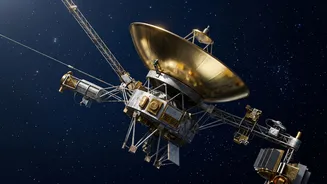
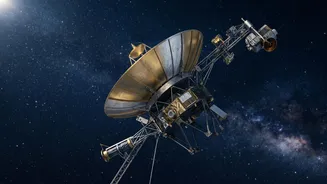
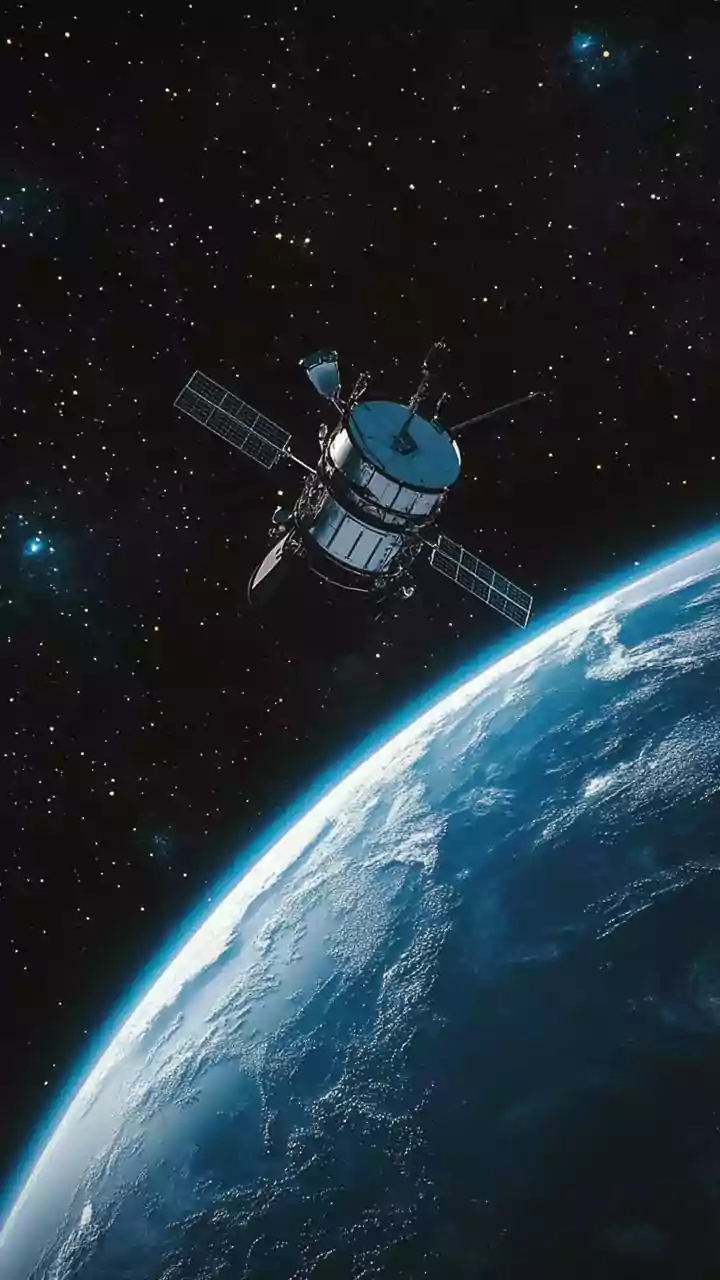
Because they are relatively cool and dim, brown dwarfs are incredibly difficult to spot, emitting most of their light in the infrared spectrum. This is where NASA's SPHEREx (Spectro-Photometer for the History of the Universe, Epoch of Reionization, and Ices Explorer) comes in. Launched in March 2025, SPHEREx is an orbiting observatory designed to survey the entire sky in near-infrared light, creating a comprehensive map in 102 different colour bands. While its primary goals involve studying the early universe and the origins of galaxies, its unique capabilities make it a perfect tool for hunting brown dwarfs. The mission will create an unprecedented all-sky spectral survey, allowing scientists to spot these faint objects and analyse their composition.
What SPHEREx Will Find
By mapping the entire sky, SPHEREx is expected to identify thousands of new brown dwarfs, dramatically increasing the number available for study. Early results from the mission, based on an initial analysis of 37 brown dwarfs, have already revealed that they have chemically rich atmospheres containing water, methane, carbon monoxide, and carbon dioxide. This helps scientists understand the atmospheric chemistry of objects that are part star, part planet. By analysing the light signatures, or spectra, of these 'goth' worlds that drift alone in the dark, researchers can better understand their temperatures, composition, and weather patterns. This provides crucial data to test and refine models of how both stars and giant planets form and evolve, filling in a major gap in our cosmic family album.