


Cosmic Lookalikes
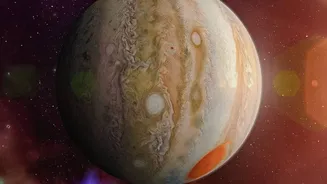
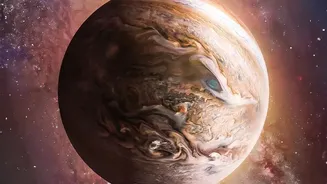
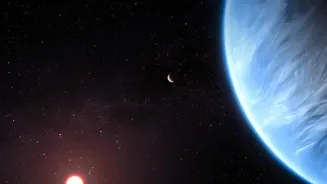
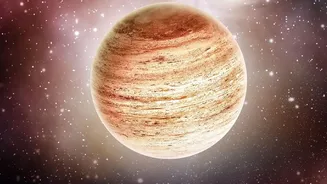
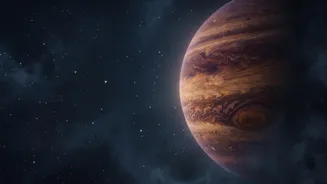
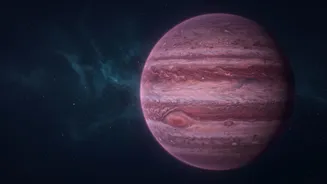
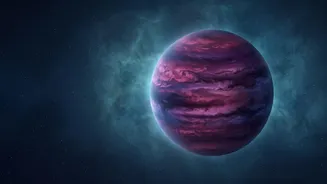
At a glance, telling a large gas giant planet from a small brown dwarf is a challenge for even the most powerful telescopes. Both are massive, gaseous worlds, often around the size of Jupiter. Their atmospheres can host similar clouds and molecules, and their
temperatures can overlap, especially as a brown dwarf cools over billions of years. Astronomers often use a rough mass guideline: objects between 13 and 80 times the mass of Jupiter are typically classified as brown dwarfs. Below this line, you have a planet; above it, you approach a true star. But this mass-based definition is more of a guideline than a strict rule, as the true distinction lies not in their size, but in their birth.
The Failed Star
A brown dwarf is born like a star. It begins its life as a vast, collapsing cloud of gas and dust that spins and gathers material under its own gravity. This process, known as gravitational collapse, is the standard way stars form. However, a brown dwarf is a case of cosmic ambition falling just short. It never accumulates enough mass—about 80 times that of Jupiter—to ignite stable, long-term hydrogen fusion in its core, the process that makes stars shine. It may briefly fuse a heavier isotope of hydrogen called deuterium, which provides a fleeting burst of energy, but it ultimately cools and fades over time, glowing dimly in the infrared spectrum. For this reason, brown dwarfs are often called 'failed stars'.
The Built-Up Planet
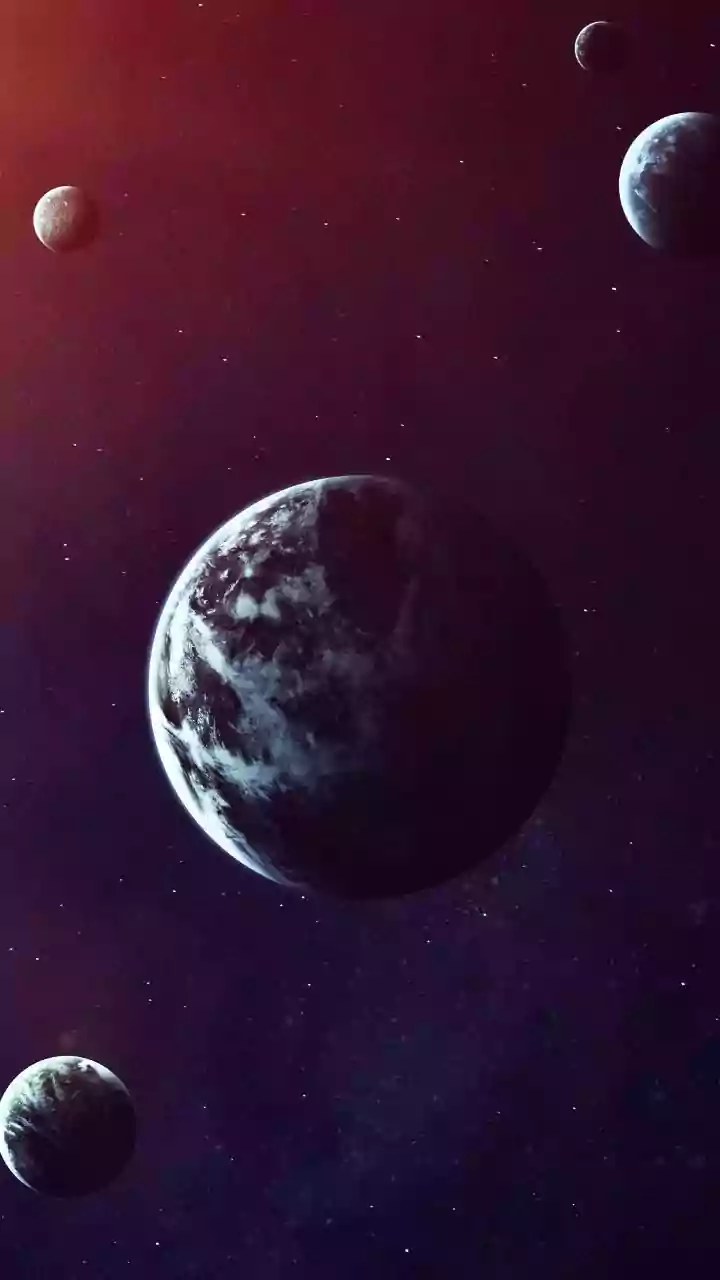
Giant planets, on the other hand, are typically built from the ground up. The leading theory for their formation is called core accretion. This process starts within the swirling protoplanetary disk of gas and dust that surrounds a young star. Small particles of rock and ice collide and stick together, gradually building a solid core. Once this core becomes massive enough—about 10 times the mass of Earth—its gravity becomes powerful enough to rapidly pull in enormous amounts of gas from the surrounding disk, forming the thick atmosphere of a gas giant like Jupiter. It’s a slower, more methodical bottom-up process compared to the top-down collapse that forms a brown dwarf.
Two Distinct Paths
So, the fundamental difference is one of origin: top-down versus bottom-up. Brown dwarfs form directly from the collapse of a gas cloud, just like stars. Planets form via accretion within a disk orbiting a parent star. This difference in formation also leaves clues in their orbits. Planets formed by core accretion tend to have more circular, orderly orbits within the plane of their solar system. Brown dwarfs that orbit a star, having formed through a more chaotic collapse, often have more eccentric, or squashed, and unpredictable orbits, similar to a binary star system. While mass is a useful starting point for classification, astronomers increasingly believe that the story of an object’s formation is the truest way to define it.
Why This Distinction Matters
Understanding the difference between these cosmic objects is more than just an exercise in classification. It's crucial for refining our models of how solar systems form and evolve. By studying the dividing line between planets and brown dwarfs, astronomers can test theories about the limits of planetary growth and the minimum requirements for star formation. Each brown dwarf and giant exoplanet discovered provides a data point that helps piece together the complex puzzle of where our own solar system came from, and how many other worlds like Jupiter—or even Earth—might be waiting to be found in the galaxy. The story of their birth helps us understand the story of our own cosmic neighborhood.